A sleeping place has to replace gravity’s job
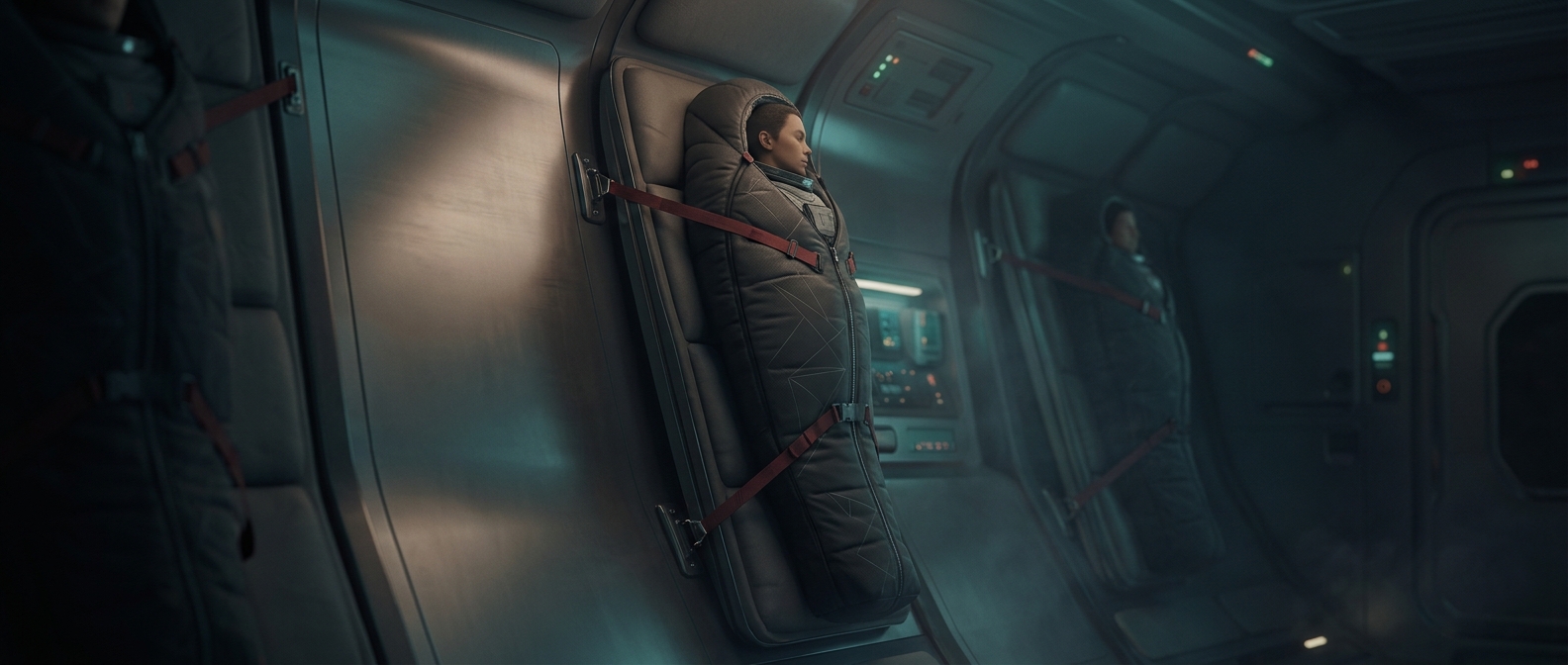
On Earth, gravity quietly keeps a sleeper on a mattress and gives the body a clear sense of “down.” In orbit, that steady pull is not strong enough to hold a person against any surface. A spacecraft therefore treats sleep as a restraint problem: the sleeping bag is secured to a cabin structure so the astronaut stays in a chosen spot rather than floating through the module.
The restraint is usually snug, not a rigid harness. It keeps the sleeper from drifting while allowing room to shift position. Since there is no natural up or down, astronauts can sleep facing any direction; the important part is that the sleeping area is fixed and out of the way.
The cabin still has to work overnight
A spacecraft is a tightly packed workplace, not a collection of separate bedrooms. Restraining a sleeper helps keep a floating body from brushing equipment, blocking a passage, or colliding with another crew member. It also keeps the sleeping bag positioned near the cabin’s ventilation, which matters because a person’s exhaled air and body heat do not simply sink or rise away in weightlessness. Fans circulate the air instead.
Sleep stations may offer some privacy, but they cannot fully isolate a person from the shared cabin’s sounds, lights, and routines. The practical solution is modest: secure the sleeper, leave the airflow unobstructed, and fit the sleeping space into the same compact environment that supports the rest of the mission. In orbit, even bedtime depends on arranging the cabin so a person—and the life-support system—can stay where they need to be.