The wheel trades spin for a change in direction
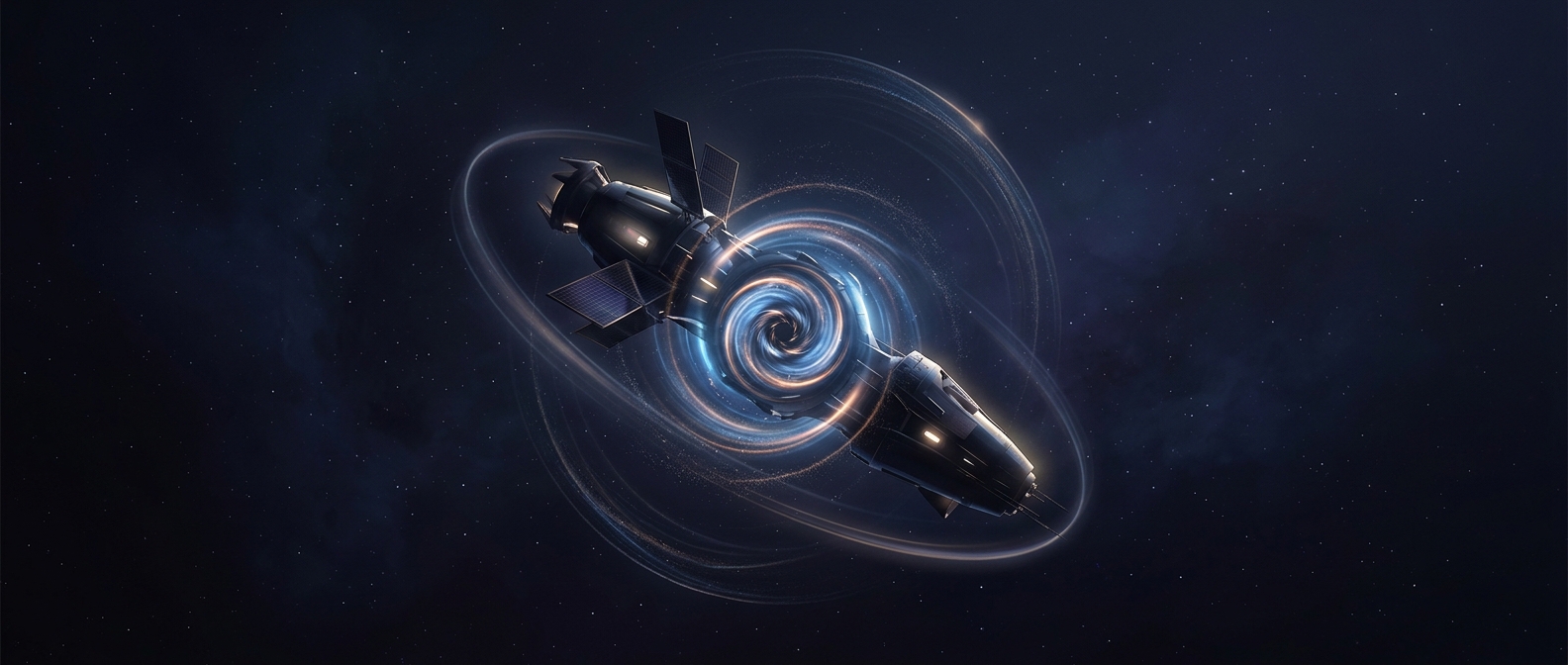
Inside a spacecraft, a reaction wheel is a motor-driven flywheel. When the motor speeds it up or slows it down, the wheel’s angular momentum changes. The spacecraft’s body responds with an opposite rotation, so the total angular momentum of the spacecraft-and-wheel system stays balanced.
The motor supplies the energy for the maneuver; the wheel provides the internal exchange of momentum. Because nothing has to be expelled, the spacecraft can make small, controlled turns without a rocket plume. But the wheel does not keep turning the craft just by spinning steadily: once the wheel’s speed stops changing, the torque that caused the turn stops too.
Several wheels make three-dimensional pointing possible
A spacecraft needs to aim in more than one direction. It can use several wheels mounted along different axes, speeding up or slowing down selected wheels to rotate the vehicle as needed. Flight computers adjust them in carefully measured increments, allowing a telescope to hold a distant target in view or a communications antenna to point toward Earth.
Momentum cannot build up forever
Each wheel has a limited range of speeds. Repeated maneuvers can leave it spinning faster and faster in one direction, using up its capacity to make further changes. This condition is called wheel saturation. The spacecraft then needs another way to shed the accumulated momentum—often small thruster firings or, in some Earth-orbiting craft, magnetic devices that push against Earth’s magnetic field.
That tradeoff is why a spacecraft can point precisely without constantly firing engines, but cannot rely on its wheels indefinitely. The wheels handle routine steering; occasional momentum cleanup keeps them able to steer again.