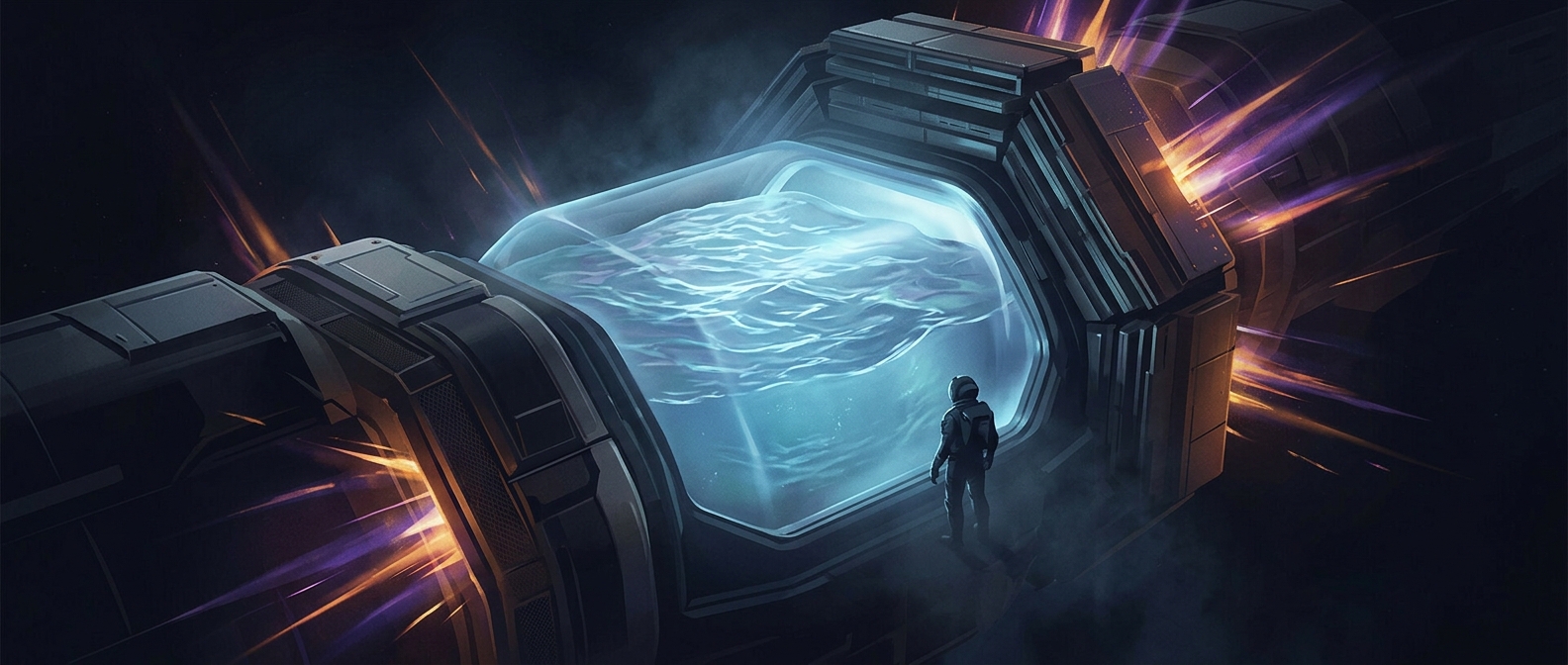
Why Water Belongs Between Astronauts and Space
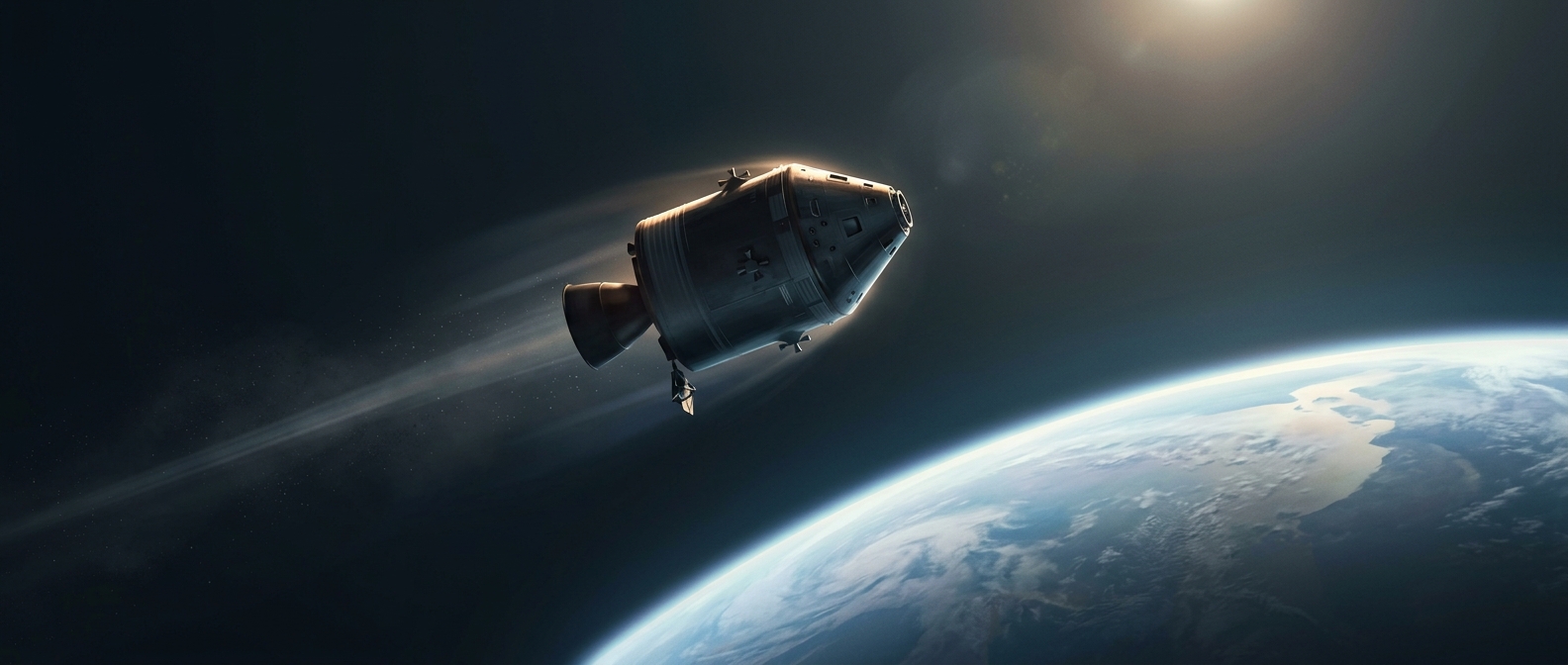
Outside Earth’s protective atmosphere and magnetic field, spacecraft crews face radiation from the Sun and from energetic particles arriving from beyond the solar system. A storm of solar particles can deliver a concentrated dose; galactic cosmic rays are harder to stop because many are extremely energetic. Spacecraft cannot simply carry enough shielding to make every kind of radiation disappear, so designers look for materials that reduce exposure without consuming space and mass unnecessarily.
Water helps because its molecules contain many hydrogen atoms. Hydrogen nuclei are especially effective at slowing some fast particles, and water is rich in hydrogen for its weight. As radiation passes through a layer of water, interactions with the material can reduce the energy of particles before they reach the crew. The shielding is not perfect: some particles can pass through, and interactions can also create secondary radiation. But hydrogen-rich materials can be useful because they tend to produce less of that secondary radiation than some heavier materials do.
Turning Supplies Into Part of the Structure
A spacecraft needs water for drinking and other crew needs regardless of its shielding plan. Storing some of that supply around occupied areas lets one essential cargo serve two purposes: consumable resource and protective mass. Water containers can be arranged near crew quarters or other places where astronauts spend time, creating a practical buffer without adding an entirely separate load of shielding material.
The arrangement is a design tradeoff, not a free shield. The water has to remain accessible, its storage must fit the spacecraft’s layout, and the protection depends on how much material lies between the radiation source and the crew. Still, the idea captures a useful principle of spaceflight: when every kilogram must earn its place, a drinking-water tank can do more than keep astronauts hydrated—it can also put a layer of hydrogen-rich material between them and space.