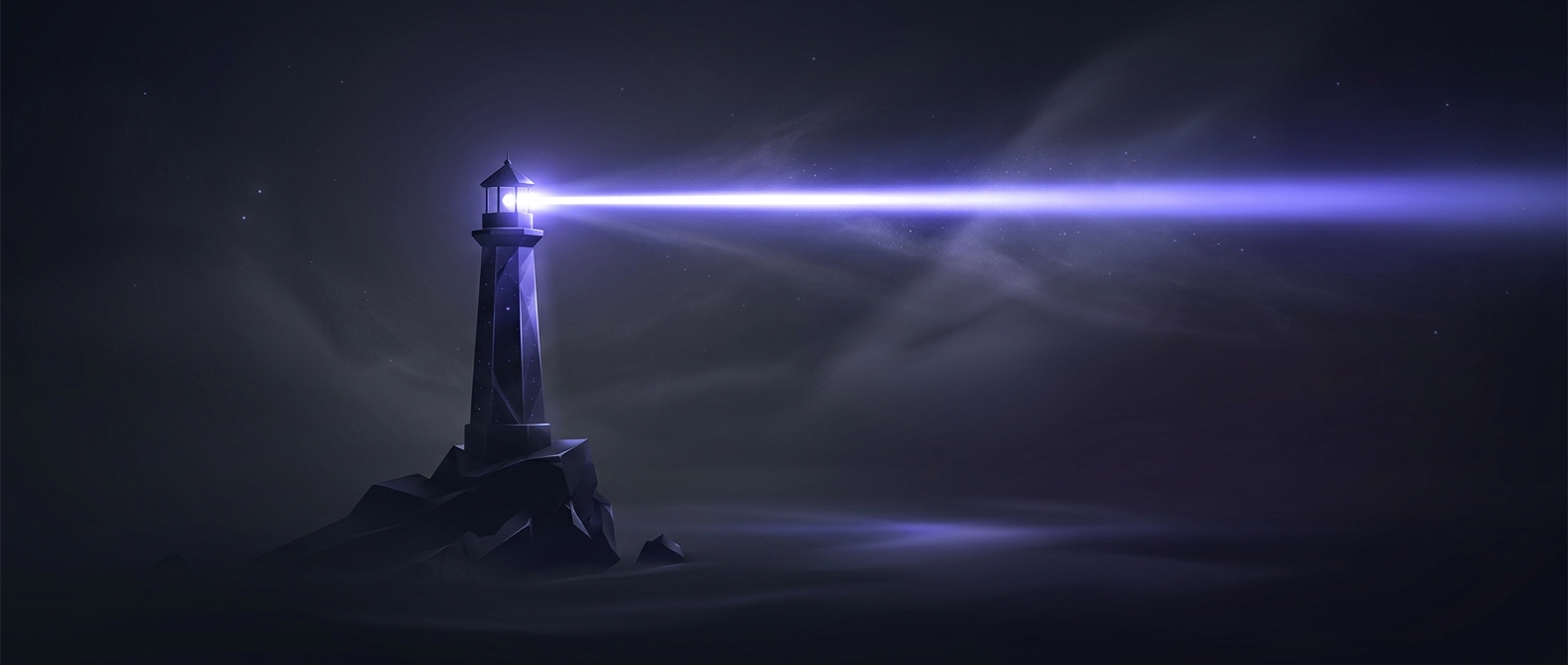
Why a pulsar’s beam sweeps past Earth
A pulsar is a neutron star: the compact remnant left when a massive star’s core collapses. It can pack more mass than the Sun into a sphere only a few dozen kilometres across. The star’s magnetic field is not necessarily aligned with its spin axis, so its radiation beams point in different directions from the way the star turns. As the neutron star rotates, each beam traces a circle through space. If that circle crosses Earth, our telescopes register a pulse on every pass.
The beam is not a flash switched on and off. The radiation continues as the star spins; the apparent blinking comes from our position outside its path. If the beam misses Earth, the pulsar may be invisible to us as a pulsed source.
What keeps the timing so steady
A neutron star’s extraordinary compactness helps it rotate with remarkable regularity. Its matter is packed so tightly that the star resists changes to its spin, much as a figure skater’s rotation becomes harder to alter when their mass is drawn close to their body. Some pulsars turn many times each second, sending a beam past Earth at intervals that can be measured with great precision.
That rhythm is not perfectly unchanging. A pulsar gradually loses rotational energy, and its spin slows; sudden changes can also occur. But over many rotations, the intervals are stable enough that a pulse train can act as a cosmic clock.
A beacon with a narrow route
The lighthouse comparison has a practical limit: pulsar beams are not visible shafts of light, and the star does not aim them at Earth. We detect only the radiation that reaches our telescopes, often at radio wavelengths. A pulse marks the moment the rotating beam crosses our line of sight—not a burst created at that moment. The same geometry that makes a pulsar seem to blink also means that many neutron stars remain hidden from us simply because their beams sweep elsewhere.