A ship built to be destroyed
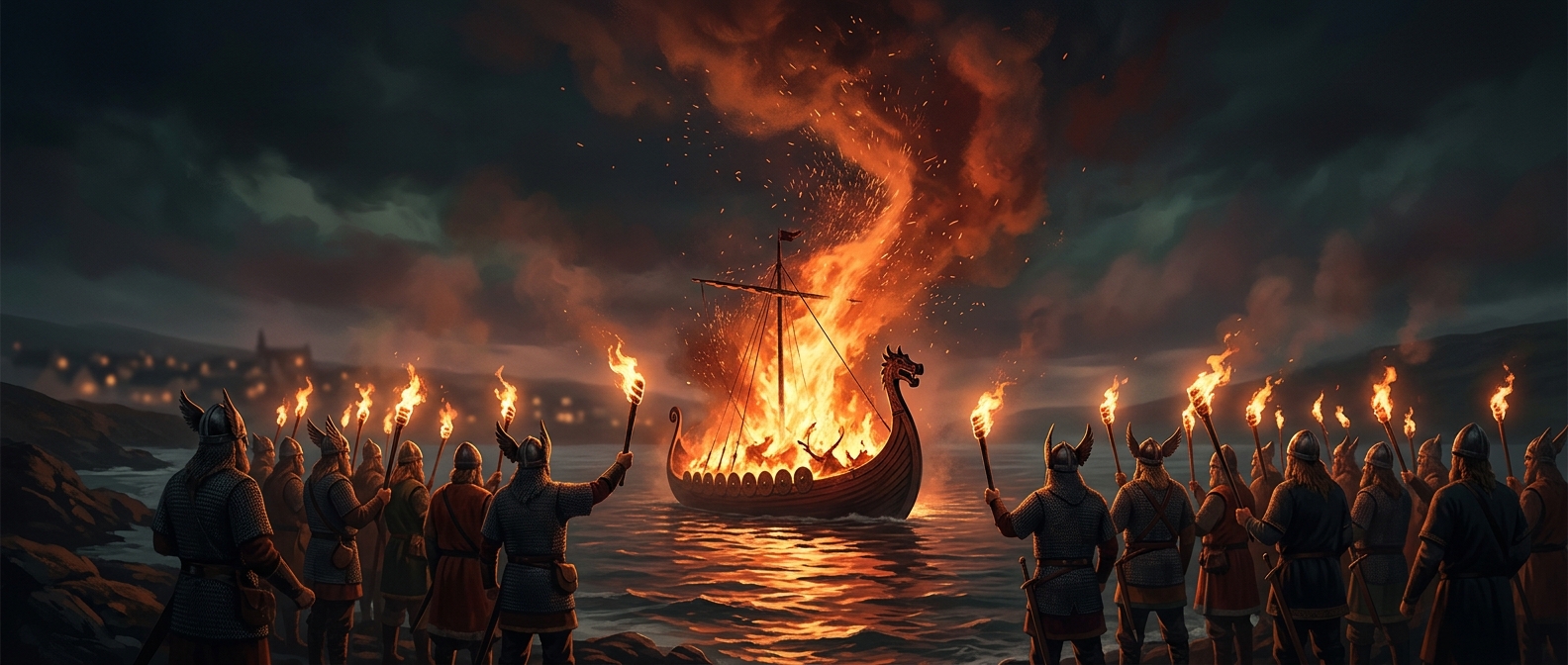
The burning longship is the climax of Lerwick’s Up Helly Aa, but the procession leading to it is part of the point. The galley— a ceremonial Viking-style ship, not an ancient vessel—takes shape over months of collective work. Building it gives the event a physical centerpiece and turns preparation into a shared responsibility, rather than leaving the festival to a single night of spectacle.
On the day, the Jarl Squad leads a torchlit procession through town. The torches make the ship’s final destruction a coordinated public ritual: the crowd helps bring the handmade object to its intended end. Its flames are not meant to preserve a Viking ship; they mark the close of the celebration.
Norse heritage, made local
Shetland’s Norse connections are part of the island’s history and local identity. Up Helly Aa gives that heritage a visible form through Viking-inspired dress, a galley, and a procession. It is a modern community festival, not a reconstruction of a specific Viking ceremony. The distinction matters: the event’s meaning lies in how people in Lerwick choose to celebrate their history now.
The ship’s brief life makes that meaning especially clear. A year of work produces something designed to disappear in minutes, while the procession and shared labor are what participants carry forward. The spectacle ends in fire; the tradition depends on the people who build it again.