A railway that made the grounds part of the show
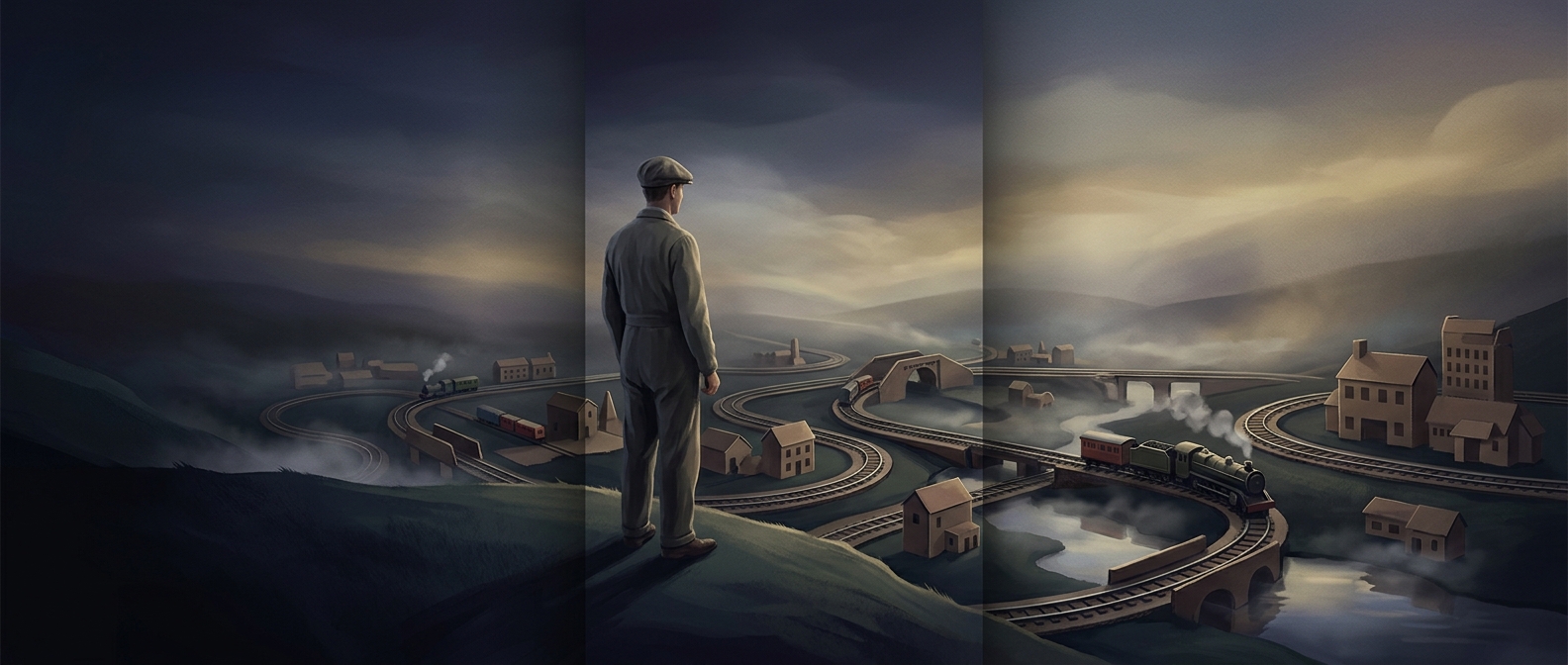
At Battersea Park’s Festival Pleasure Gardens, the miniature railway did more than shorten a walk. It gave visitors a way to travel through a large, purpose-built entertainment landscape while making the journey itself part of the outing. Instead of seeing the gardens as a sequence of distant attractions, passengers could take them in from a moving carriage.
That mattered in a site designed for wandering. A small train could carry families between areas of the grounds and offer a useful pause for visitors who might otherwise have to cover the distance on foot. Its scale also suited the setting: this was not a commuter railway, but a playful ride woven into a day of shows, displays and amusements.
Practical transport, staged as leisure
The railway solved a familiar problem for big public events: how to help crowds circulate without making movement feel like a chore. Its route could connect attractions, while the train’s slow, visible progress gave the grounds a sense of activity and discovery. The ride turned getting from one place to another into another reason to stay.
That blend of function and entertainment was the point. In a country still facing postwar limits, the pleasure gardens offered visitors an expansive setting for a day out. The railway made that promise tangible: even crossing the grounds could feel like an attraction, not merely the distance between one and the next.