When the deity comes out to meet the crowd
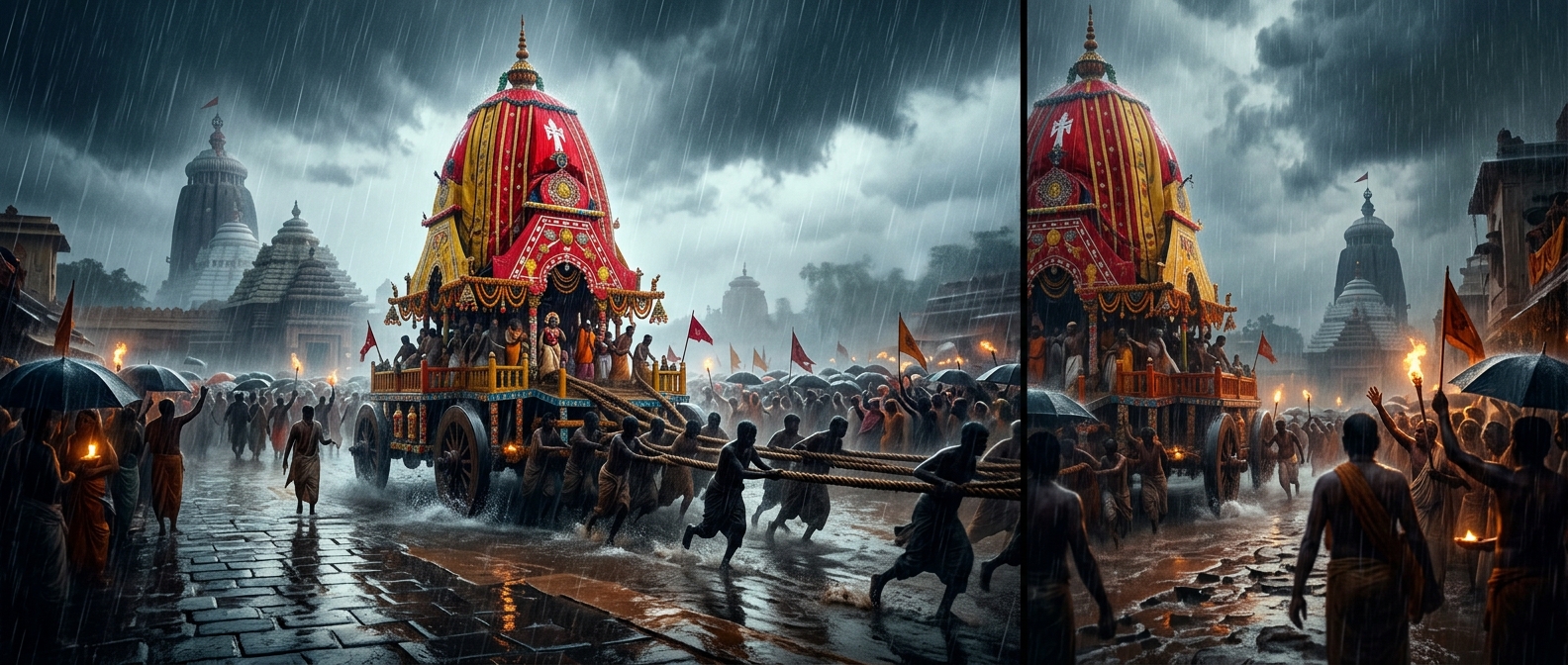
Rath Yatra is centered on a public journey: images of Jagannath, Balabhadra, and Subhadra are taken from the Jagannath Temple and placed on separate chariots for the procession through Puri. For devotees, this changes the usual direction of worship. Instead of entering a temple to approach the deities, people can gather along the route as the deities pass through the city.
That shared encounter helps explain why the procession draws such a vast crowd. The chariots are not merely vehicles in a parade; they make the sacred journey visible and participatory. People pull together on the ropes, turning movement itself into an act of devotion.
Why rain can feel like a blessing
Rath Yatra falls during Odisha’s monsoon season, when rain is part of the landscape rather than an unexpected interruption. In the festival’s devotional understanding, a downpour can be received as an auspicious blessing. That meaning changes how people interpret discomfort: wet clothes and muddy streets become part of being present for a sacred event, not simply reasons to leave.
The rain also makes the procession feel especially tied to Puri’s season and setting. The towering wooden structures move through an open city under monsoon skies, surrounded by a crowd that treats the weather as part of the occasion. The rain is welcomed not because it makes the journey easier, but because devotees can experience it as part of the blessing.