Why Sajjangarh was built above the city
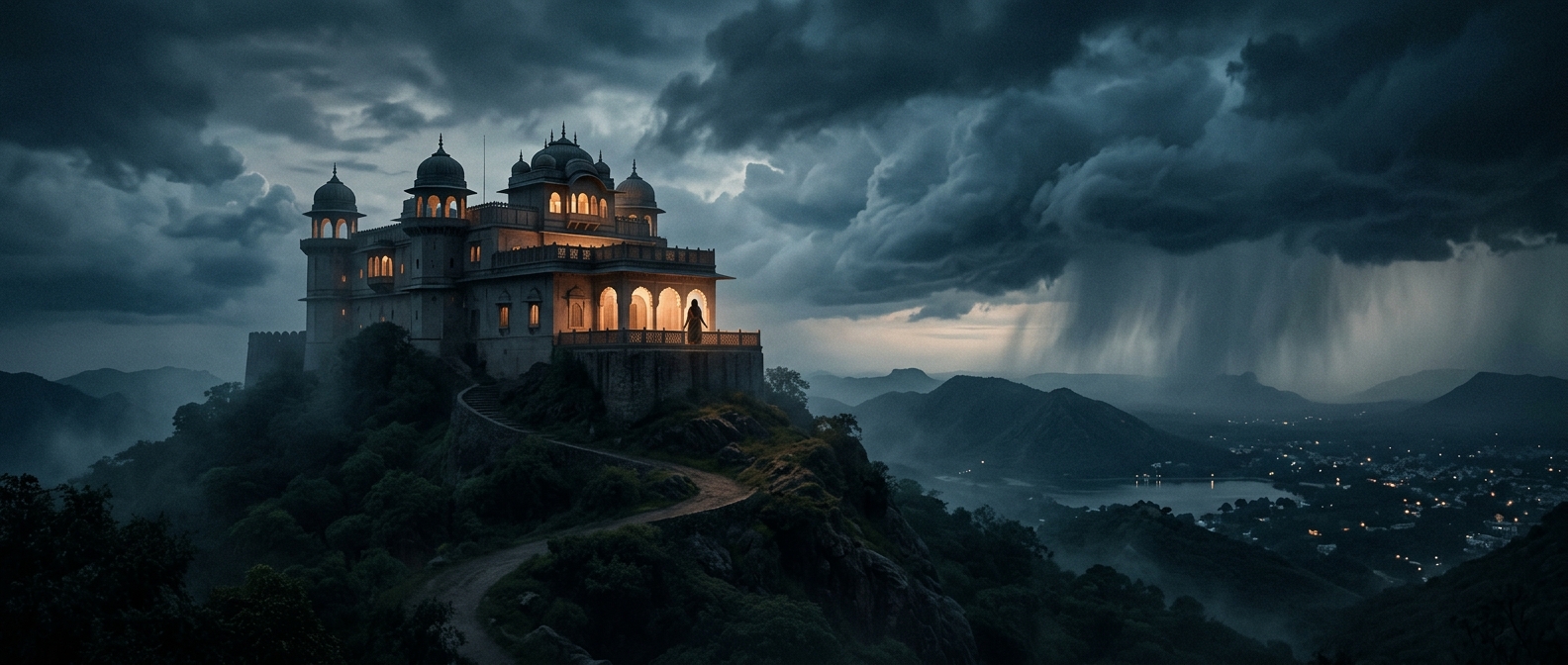
Sajjangarh’s hilltop location made the sky part of the palace’s purpose. Maharana Sajjan Singh planned it as an astronomical center, where an elevated, open outlook offered a broad view of the heavens. The same position also made the building a natural place to watch monsoon weather approach and change over the surrounding landscape.
From below, clouds can appear as a distant backdrop. From a high ridge, they become a moving event: gathering over the hills, shifting across the horizon, and changing the light over Udaipur. The palace’s appeal comes from that relationship between architecture and weather, not only from its rooms or decoration.
A palace shaped by changing skies
Sajjangarh also served as a monsoon palace and hunting lodge. Those uses put it within a landscape that was valuable to experience outdoors, as the season transformed the view. Its elevation offers a vantage point for observing those changes, while its connection to astronomy reflects an interest in looking upward as well as outward.
The result is a building that works less like a self-contained monument than a viewing place. At Sajjangarh, the most memorable feature is the spectacle beyond the palace: clouds arriving over the hills and making the landscape itself feel in motion.