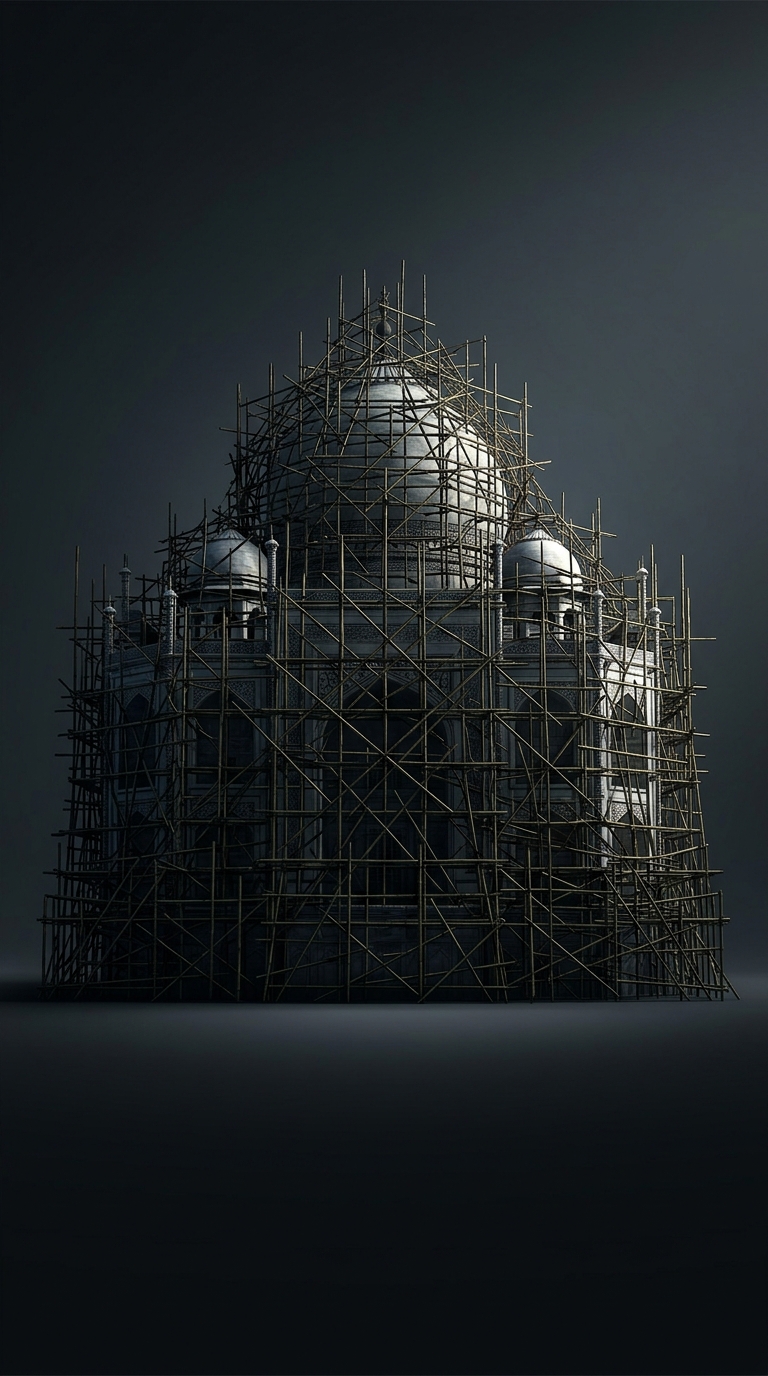
A Mausoleum Built for Mumtaz Mahal
The Taj Mahal was commissioned by Mughal emperor Shah Jahan as a tomb for his wife, Mumtaz Mahal, who died in 1631 after giving birth to their fourteenth child. Its purpose was therefore both intimate and imperial: to memorialize a beloved partner and to give her burial place a scale and permanence befitting a ruler’s court.
From Private Grief to Monument
A mausoleum is a grand tomb built above ground. The Taj Mahal’s central white-marble building contains the cenotaphs—memorial markers—of Mumtaz Mahal and Shah Jahan; their actual graves lie in a chamber below. The distinction allowed the upper chamber to serve as a carefully composed space for remembrance while the burials remained beneath it.
The complex took shape over many years, with gardens, a mosque, and other buildings surrounding the tomb. That setting matters: visitors encounter not just a single structure, but a planned approach that draws attention toward the central mausoleum. The river, garden, and architecture frame the tomb as the focus of the whole site.
A Monument to Loss—and Power
The Taj Mahal’s beauty can make its origin seem abstract, but its central purpose was concrete: Shah Jahan wanted a lasting tomb for Mumtaz Mahal. At the same time, the enormous, carefully coordinated project displayed the resources and craftsmanship available to the Mughal court. A personal act of mourning became a monument designed to endure for generations.