Why the river becomes a winter road
In Zanskar, high mountain passes can be blocked by snow, leaving some communities difficult to reach by land. When winter cold turns stretches of the Zanskar River into a walkable surface, the river corridor can offer a route through terrain where steep valley walls leave few alternatives. The journey is often called the Chadar trek—chadar means “blanket,” a reference to the sheet of ice.
A route made of changing ice
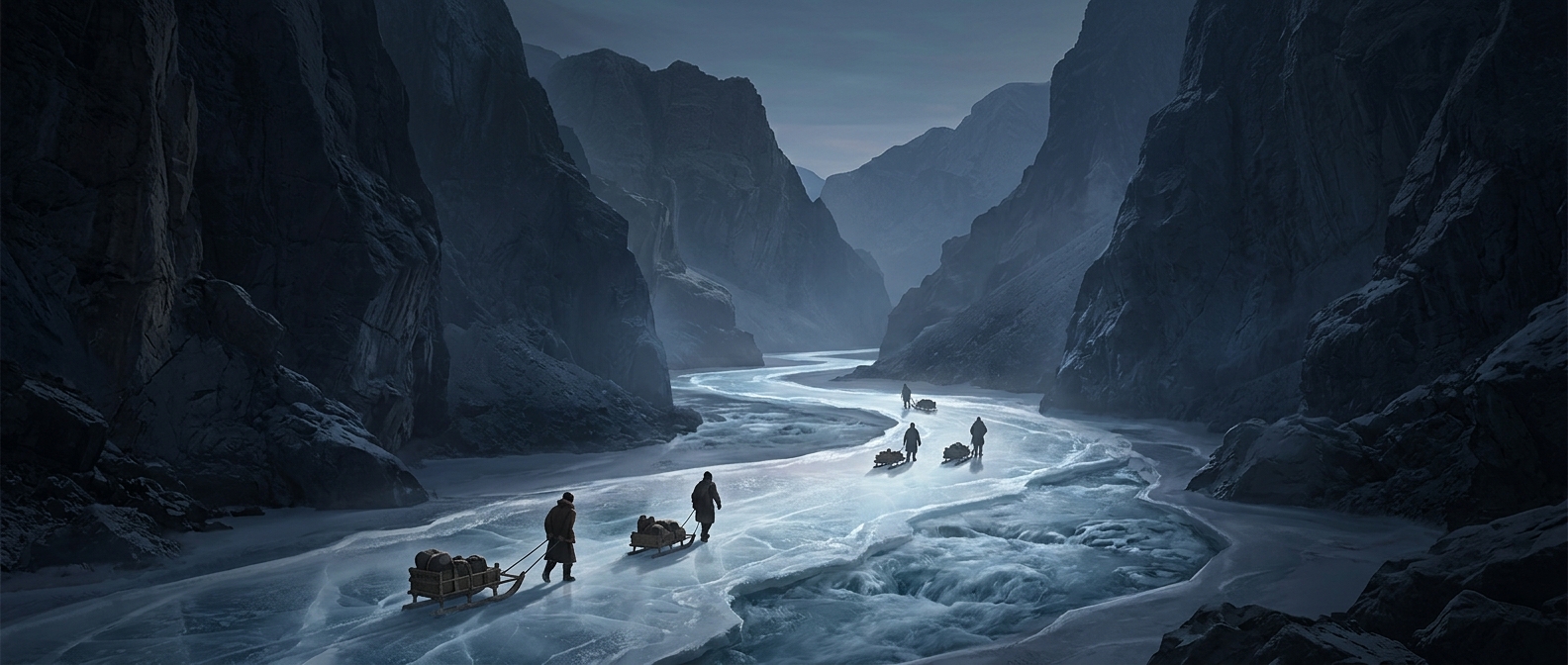
The frozen river is not a solid road laid over still water. Current continues beneath the surface, and the ice forms unevenly: a stretch may be firm, thin, broken, or open to flowing water. Travelers have to read the conditions as they go, choosing a safe line around cracks and exposed pools rather than assuming yesterday’s path is still sound.
That makes the route both a transport link and a demanding piece of local knowledge. Residents hauling supplies by sled must manage the load while navigating the ice; visitors follow a journey shaped by the same practical constraints, not a marked trail with a dependable surface.
The cost of the shortcut
The river offers passage precisely because the surrounding landscape can make other routes impractical, but its surface is never guaranteed. A change in temperature or current can alter the crossing, so travel depends on conditions along the way. What looks from a distance like a white corridor is, underfoot, a shifting boundary between frozen river and moving water.