How Bamboo Could Hide a Marble Landmark
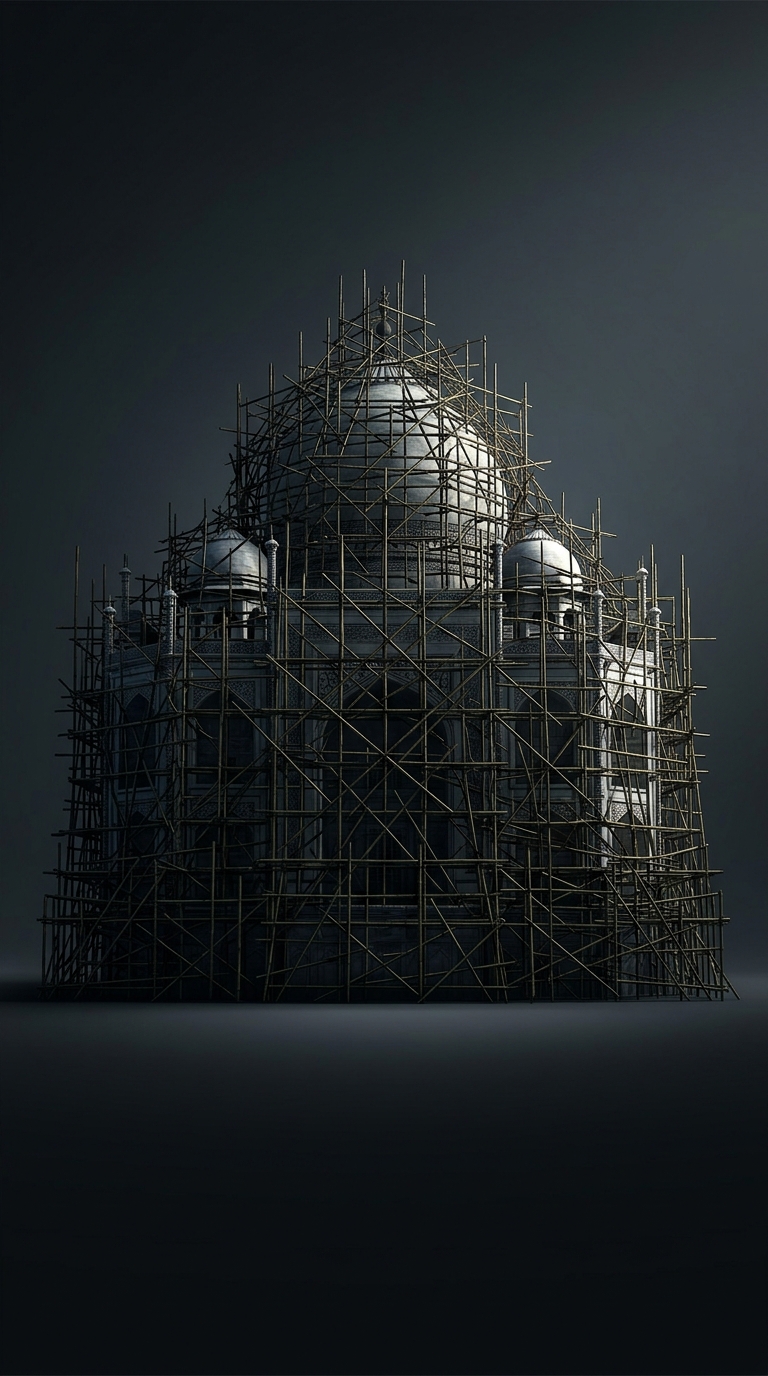
In wartime, camouflage does not have to make a building disappear. It only has to make it harder for an observer to recognize quickly. The Taj Mahal’s bright marble dome and balanced outline make it distinctive from the air; a large bamboo framework could break up that familiar shape and make the monument look less like an unmistakable target.
Bamboo was useful for the job because it was light, plentiful, and could be assembled into a structure surrounding the monument. From above, the framework would alter the Taj’s clean silhouette and interrupt the broad, pale surfaces that helped it stand out against the surrounding landscape. The aim was not to protect the marble from a direct hit, but to reduce the chance that a bomber crew would identify the landmark as a target.
A Landmark Turned Into a Wartime Problem
The disguise reflects a basic challenge of protecting famous buildings: their beauty also makes them easy to recognize. A monument designed to dominate its setting cannot simply be moved or hidden indoors. Instead, camouflage changes what an observer sees, using a temporary structure to make a familiar shape harder to pick out during a brief aerial pass.
Accounts describe the bamboo covering as a wartime measure intended to conceal the Taj Mahal from Japanese aircraft. The practical effect is difficult to separate from the deterrent value: even an imperfect disguise could make identification less certain. For a time, the world-famous white dome was treated not as a view to preserve, but as a silhouette that needed to vanish from the sky.