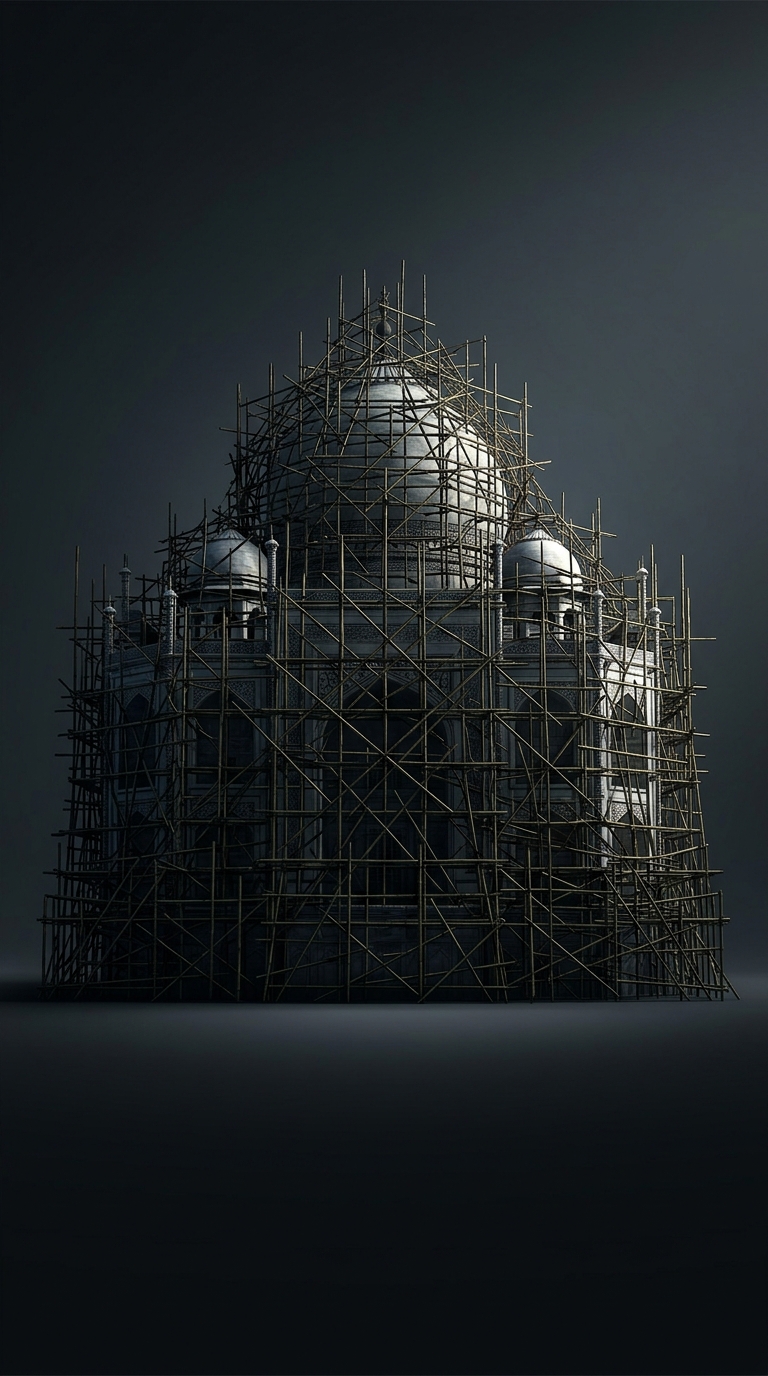
Why the Taj’s marble needs a deep clean
The Taj Mahal’s white marble is exposed to a mix of airborne particles and gases from the polluted air around Agra. Dust and soot can settle directly on the stone; some pollutants can also react with moisture and contribute to chemical weathering. Together, these deposits can dull the marble or tint its surface, making the monument look less white than it does in carefully controlled photographs.
A mud-pack treatment is a careful form of surface cleaning, not a coat of paint. Conservators spread a fine, absorbent clay paste over the marble and let it dry. As the paste dries, it draws some surface grime into the clay; workers then remove it and rinse the stone. The process can lift deposits without the aggressive scrubbing that could damage the carved surface. It treats visible staining, however, rather than stopping new pollution from reaching the monument.
The river is part of the same problem
The Yamuna beside the Taj is heavily polluted by wastewater and other discharges upstream. When contaminants meet conditions such as low water flow, they can produce conspicuous foam. That foam is a visible sign of poor water quality, not a complete measure of what is happening in the river: pollution can affect aquatic life even when the surface looks calm, and foam alone does not establish that a river is literally lifeless.
The contrast is striking: a monument built to appear luminous sits beside a river whose condition reflects the pressures of a densely populated, industrial region. Cleaning can restore the marble’s brightness for a time, but keeping it bright depends on reducing the pollution that settles back onto it.