A practical concern at the table
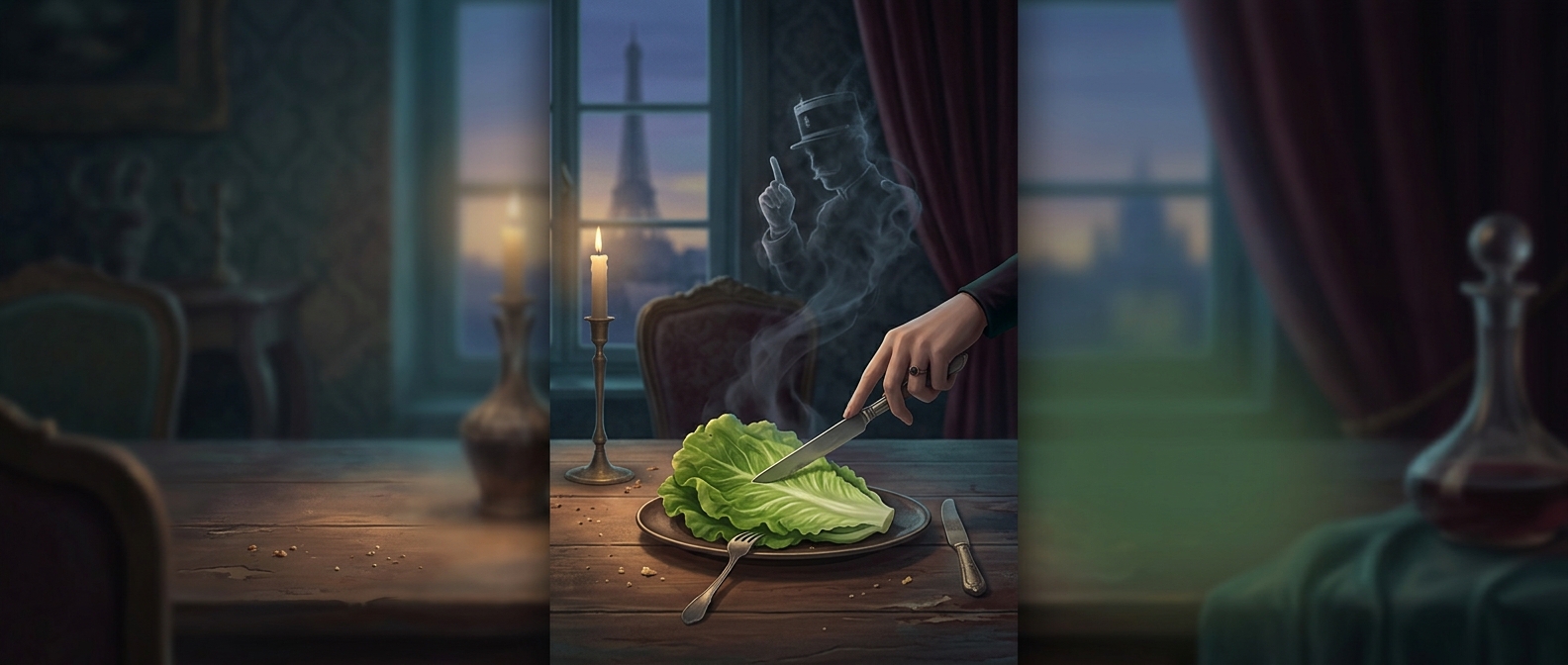
For diners eating with silver cutlery, lettuce dressed in vinaigrette posed an awkward problem: the dressing could leave silver looking dull or discolored. Vinegar is acidic, and contact between acidic foods and silver can affect the metal’s surface. The risk mattered more when silver knives were common tableware than it does with today’s stainless steel.
Tearing leaves by hand offered a simple workaround. It kept a knife from pressing through the dressed greens and touching the plateful of vinaigrette, while also making it easy to divide delicate leaves into bite-sized pieces. The custom was not a rule of food chemistry so much as a habit shaped by the materials people used at dinner.
Why the gesture lasted
Once a practical adjustment becomes part of how a dish is served, it can outlive the original inconvenience. Even when ordinary knives no longer tarnish, tearing lettuce still signals a familiar style of French table manners and preparation. It also suits leafy salads: hand-torn pieces have irregular edges that hold dressing differently from clean, straight cuts.
The small gesture carries a trace of an older dining room into a modern one: a salad is prepared by hand, not because a steel knife would ruin it, but because the old workaround became tradition.