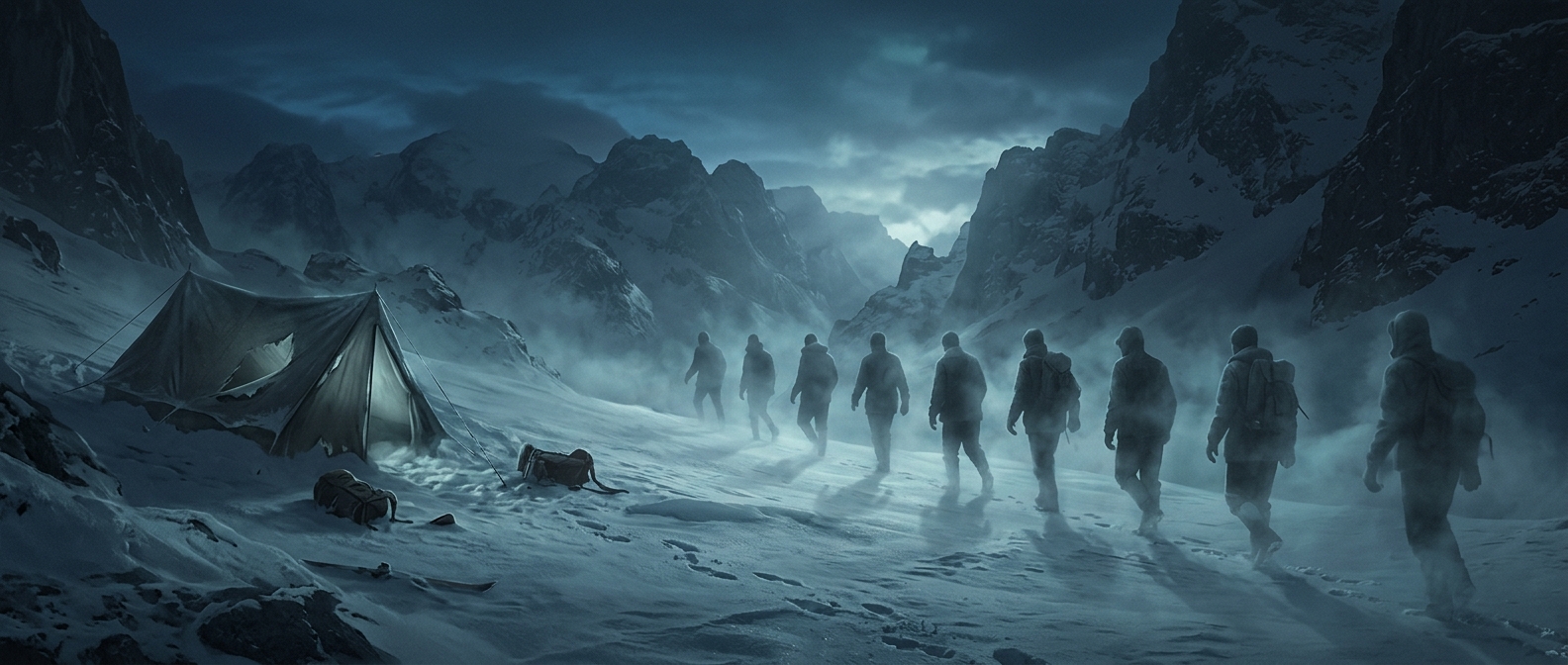
What the Dyatlov Pass evidence can—and cannot—tell us
In February 1959, nine hikers died in the northern Ural Mountains after leaving their tent during severe winter weather. Searchers later found the tent damaged and the group’s bodies scattered downslope. Some were dressed too lightly for the conditions; several had no shoes. The scene suggested a sudden departure, but it did not reveal exactly what prompted it.
That gap between evidence and explanation is why the incident became a durable mystery. A blizzard can make a familiar slope dangerous within minutes: visibility collapses, wind strips away body heat, and people who leave shelter may struggle to find their way back. Yet the hikers’ injuries and the circumstances of the tent’s damage have also fueled competing accounts. The surviving evidence does not establish one universally accepted sequence of events.
Why the radioactive clothing did not settle the case
Tests detected radioactivity on some clothing. That is a specific finding, not proof that radiation caused the deaths. A trace on fabric does not, by itself, identify where it came from, when it got there, or whether it harmed the wearer. The reported result therefore adds a question to the record rather than supplying a complete explanation.
The distinction matters because dramatic details can seem more conclusive than they are. The clothing result cannot explain why the hikers left the tent, while the cold and injuries do not by themselves reconstruct every moment of the night.
The enduring mystery is about the missing sequence
The hikers did not simply disappear: they were found, and investigators documented parts of what happened. What remains uncertain is the chain of decisions and events between the damaged tent and the bodies discovered in the snow. The mystery persists not because there is no evidence, but because the evidence preserves fragments without a definitive account of how they fit together.