What the Dyatlov Pass Searchers Found
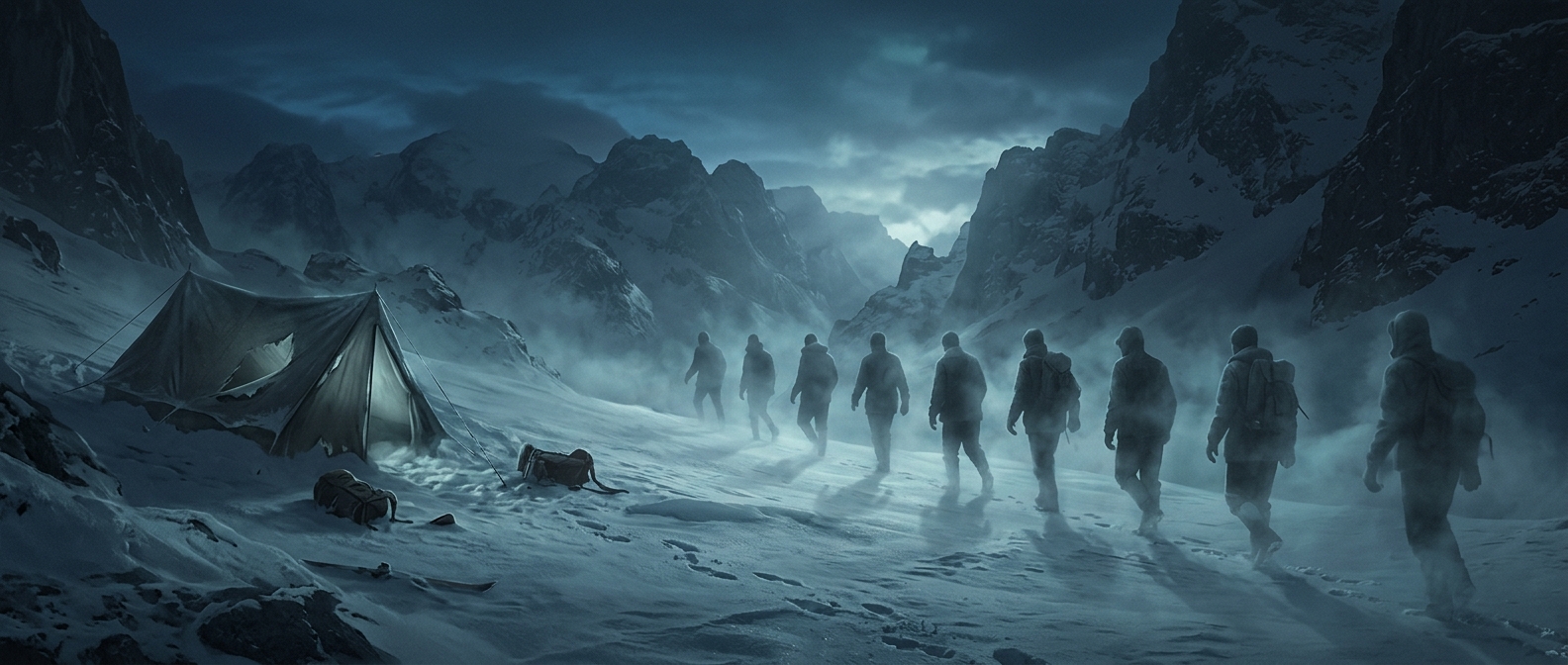
In February 1959, a group of nine experienced hikers died during an expedition in the northern Ural Mountains of the Soviet Union. When rescuers reached their abandoned campsite weeks later, the tent stood on a snowy slope, with gear and warm clothing still inside. The fabric had been slashed from within, and tracks led away downhill toward the forest. Some hikers had left in socks or without shoes.
Those details made the scene feel almost impossible to explain: why would people leave shelter in freezing weather, and why would they cut their way out rather than use the entrance?
How a Camp Became a Mystery
The hikers had split up after leaving the tent. Searchers found some bodies near a forest, while others were discovered farther away, including in a ravine. Their separation, the cold, and the lack of a clear account of what happened created gaps that later theories could fill. Over time, the pass became associated with rumors of secret weapons, strange lights, and supernatural forces.
The setting helped the story endure. A remote mountain slope is difficult to reach in winter, and a campsite left in apparent haste offers few witnesses and many unanswered questions. The name commonly used for the incident, the Dyatlov Pass incident, comes from the expedition’s leader, Igor Dyatlov.
Why the Details Still Resonate
The tent cuts and tracks are real features of the search accounts, but they do not by themselves reveal what the hikers believed or what prompted them to leave. That distinction is part of the mystery’s pull: the evidence gives a vivid scene, but not a complete sequence of events. On that snowy slope, ordinary traces—fabric, footprints, abandoned gear—became the enduring material of a legend.