How a Pile of Stones Becomes an Altar
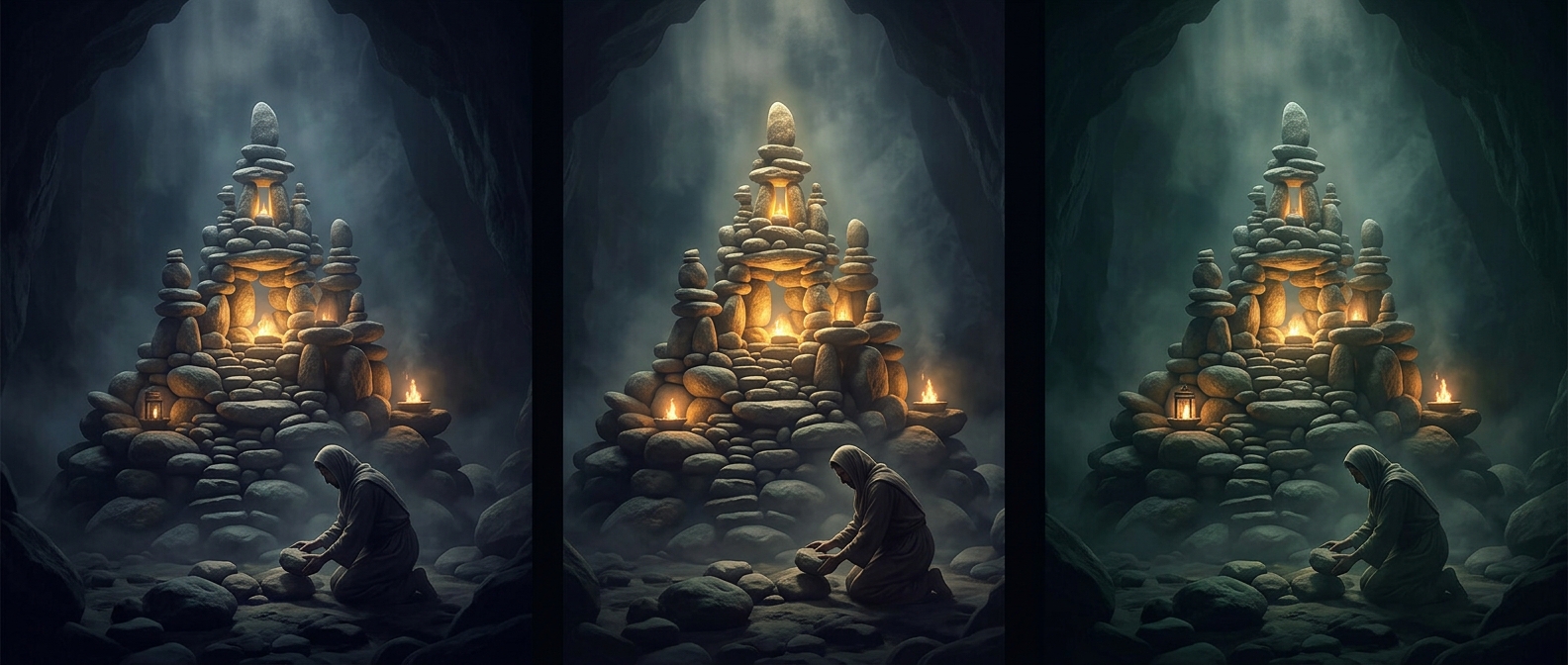
The stones do not need to be rare or specially carved. Their role changes through the care devoted to arranging them: a practitioner chooses where each one will sit, tests its balance, and builds a form that marks a place for religious attention. In that sense, the altar is not just an object made of rocks. It is a small, intentional space set apart from its surroundings.
Balance as Part of the Practice
A stable arrangement depends on close observation. A stone that looks level may tip when another is added, so the builder has to notice the shape and weight of each piece and adjust patiently. The process gives focus a physical task: attention is expressed through repeated choices rather than through words alone.
The finished shrine can make a devotional place visible without relying on elaborate materials. Its meaning comes from the practice and beliefs of the people who build and use it, not from a claim that ordinary stones have a special power on their own. What looks simple from a distance may embody many small acts of judgment—each stone resting securely because the builder found its place.