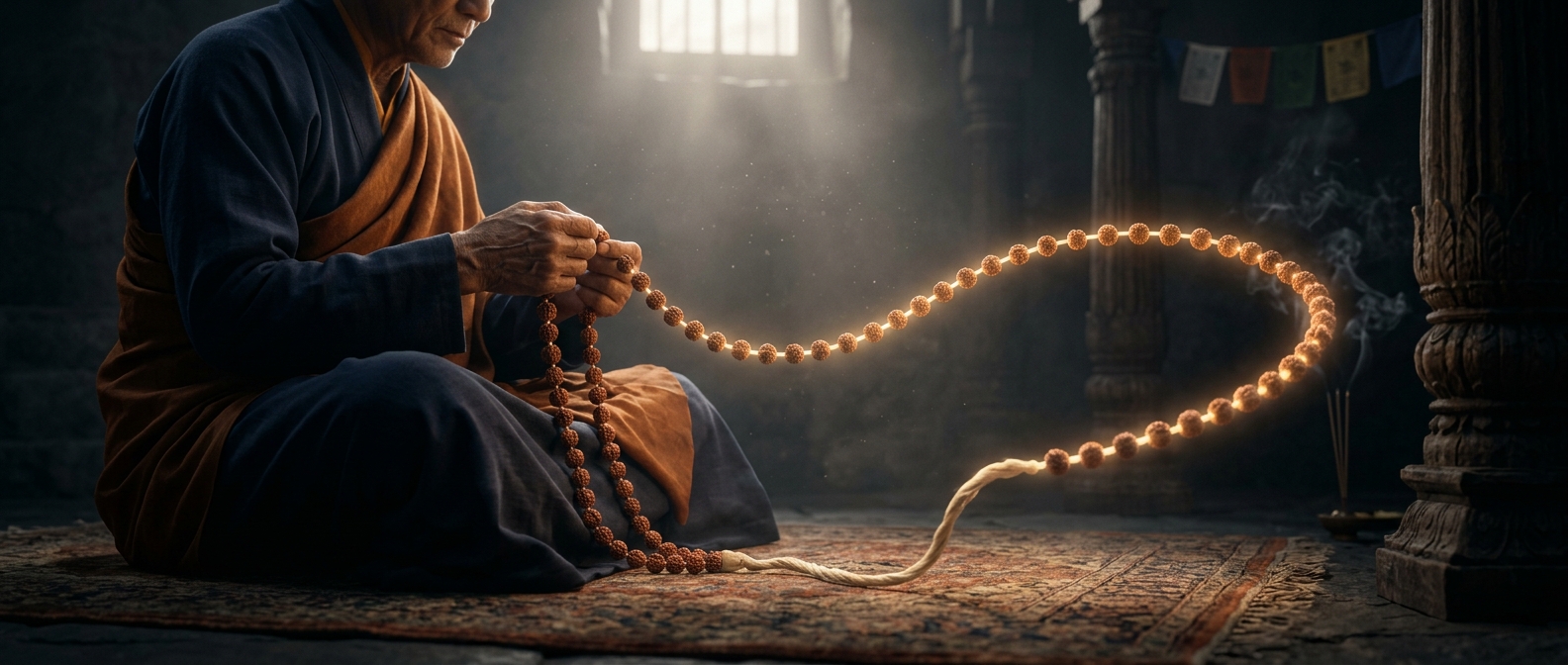
Why a Small Flame Can Carry a Large Meaning
In many devotional settings, lighting an oil lamp is more than a way to brighten a room. The act gives an inward idea a visible form: a wick is lit, darkness recedes, and the worshipper has a simple image to contemplate. The lamp’s meaning lies in that ritual symbolism, not in a claim that its flame physically removes ignorance.
From Ritual Action to Reflection
A lamp also changes how attention is directed. Its steady, bounded glow can draw the eye away from surrounding distractions and toward a shared point of focus. Practitioners may use that moment to pray, meditate, or mark the beginning of worship. The action is concrete and repeatable, making an abstract spiritual aspiration easier to hold in mind.
The materials reinforce the meaning. Oil feeds the flame; the cotton wick carries it. Together they make illumination something tended rather than merely switched on. In settings where the lamp is consecrated, its place and use are treated as part of the devotional practice, not as ordinary room lighting.
A Symbol That Can Be Seen
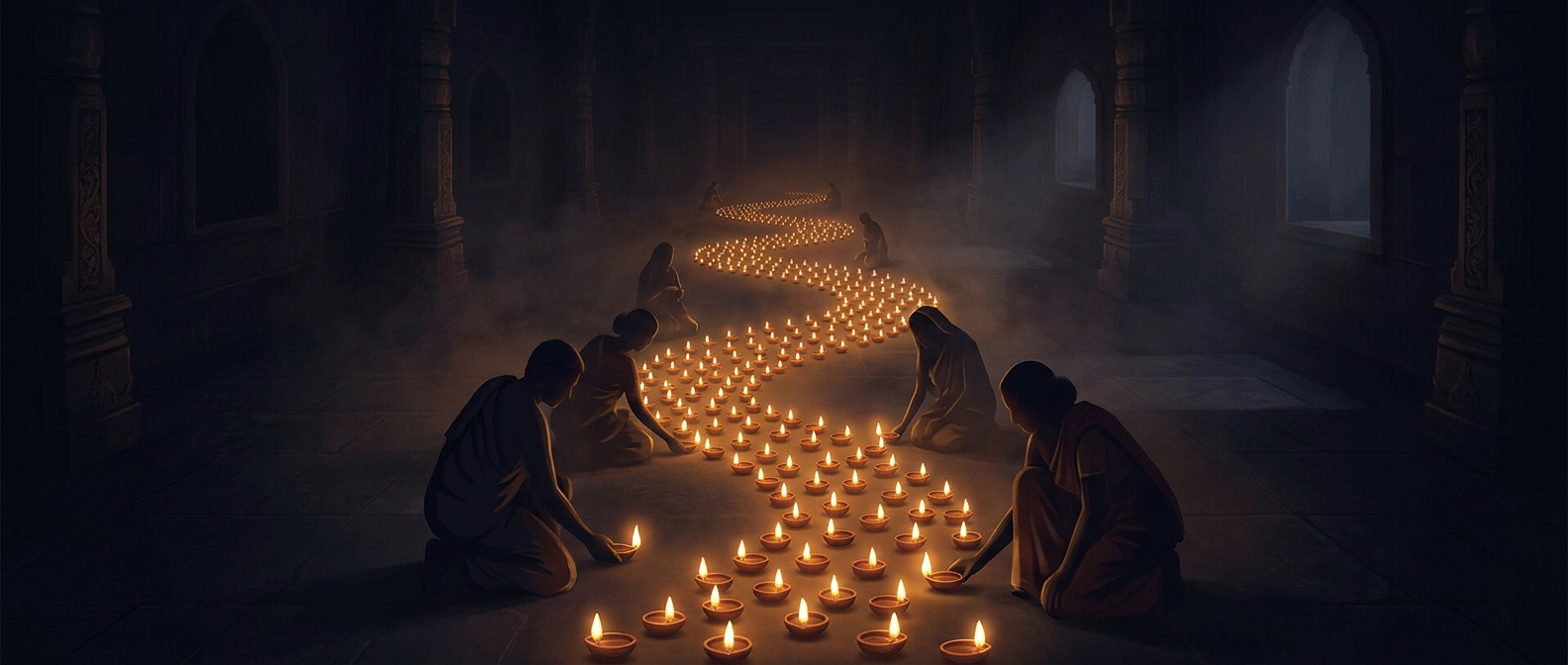
The lamp’s value is especially clear in a communal ritual: everyone present can witness the same small flame, even if each person’s reflection is private. The light turns an inner hope for clarity into a shared, visible act. When the ceremony ends, the image remains easy to remember—a flame that must be nourished, and a mind that practitioners seek to keep attentive.