How a bead strand keeps the count
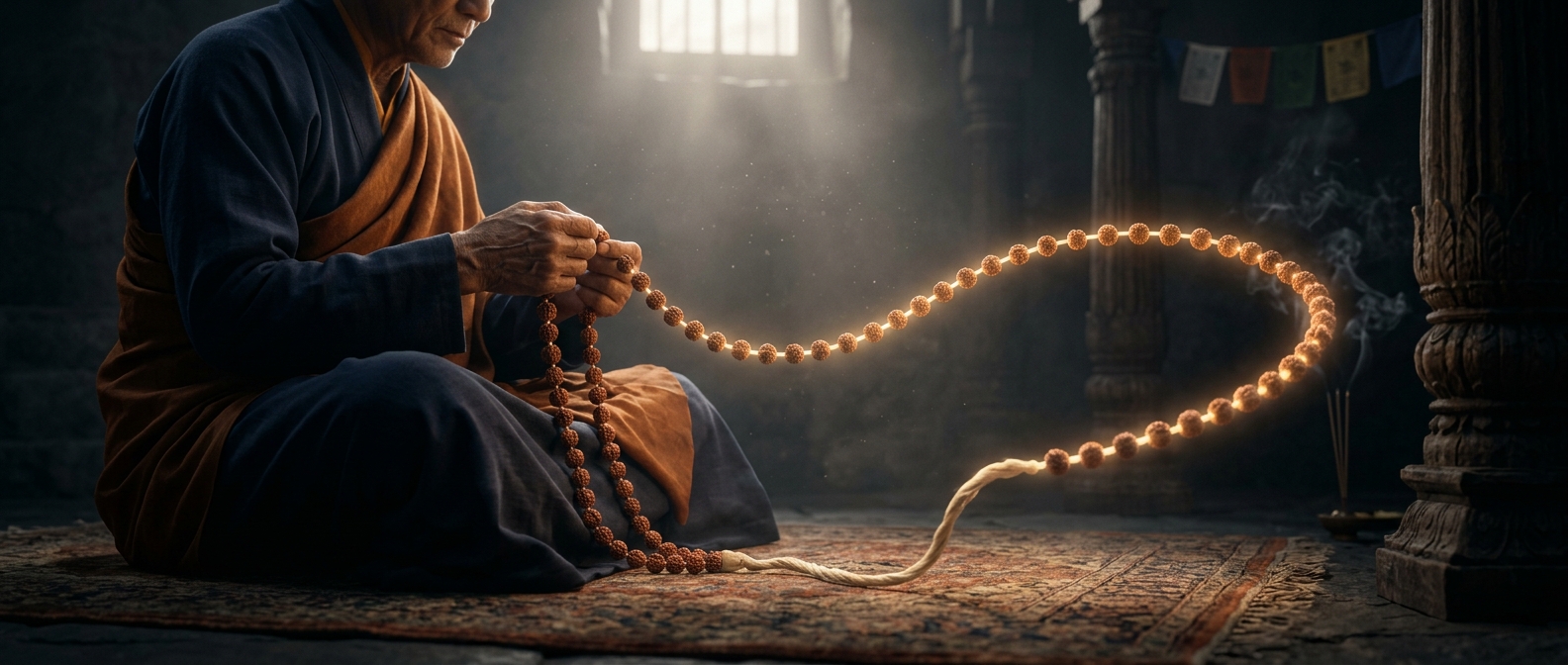
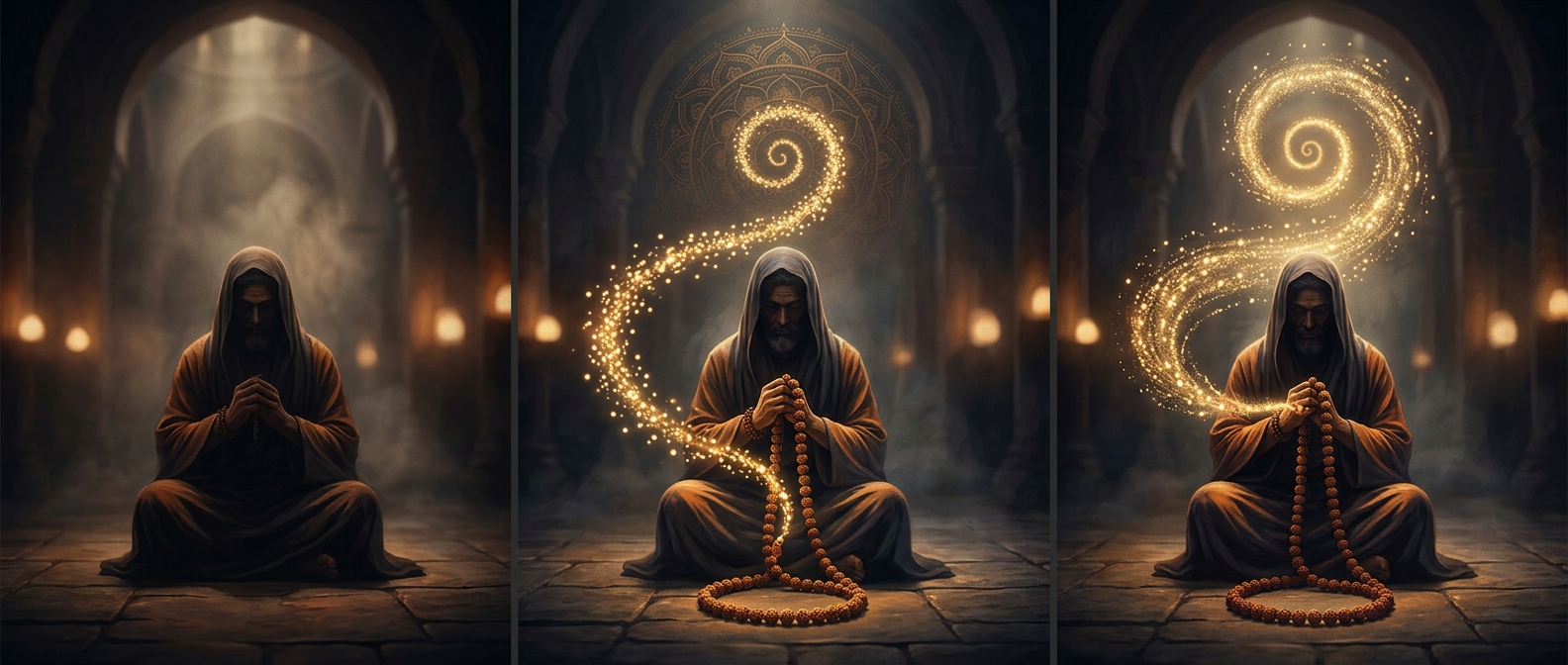
A devotional bead strand turns a sequence of repeated words or prayers into something the fingers can follow. The practitioner moves one bead at a time, so each touch marks a repetition. The strand acts as a simple external counter: attention does not have to keep a running total while the words continue.
A rhythm carried by the hands
That small physical action can make repetition easier to sustain. Fingers return to a familiar motion, while the words or phrases provide the focus. Beads also make it possible to notice progress through a set without repeatedly checking or calculating; a larger marker bead or a change in the strand’s arrangement may signal a transition, depending on the tradition and design.
Malas are used in several religious settings, but bead counts, materials, and the words recited vary. The beads are not merely a gadget for tallying: for practitioners, handling them may itself be part of a devotional routine, giving the practice a steady, embodied rhythm.
Why the tactile cue matters
Mental counting competes with the task it is meant to support. A bead shifts that bookkeeping into touch, leaving the practitioner freer to attend to the sound, meaning, or cadence of the repetition. The practical result is modest but useful: the next bead tells the hand where to go, even when the mind is occupied with the prayer.