Why a Gear-Up DC-4 Landing Was So Demanding
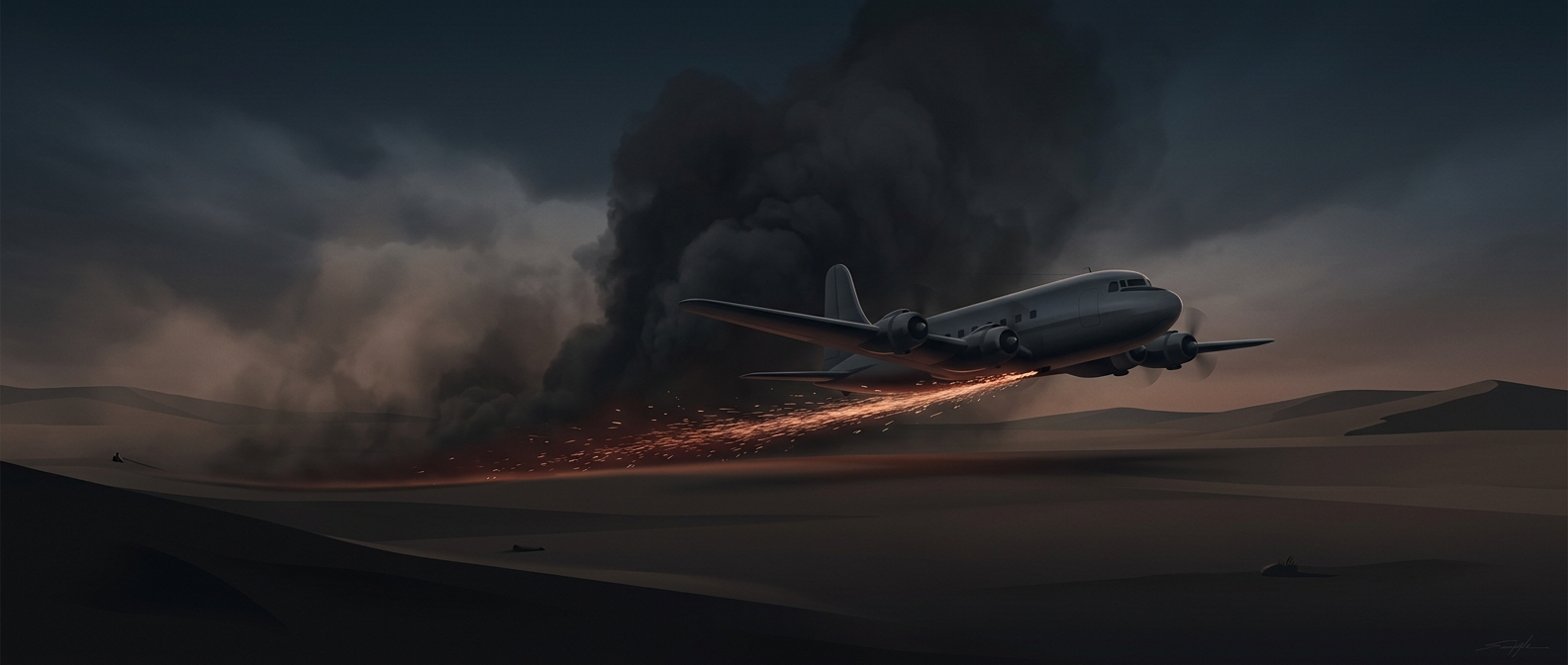
A DC-4 is a large, four-engine propeller aircraft, and its landing gear normally carries the aircraft’s weight while its tires roll across the runway. With the gear retracted, the fuselage instead had to take the contact. The crew’s challenge was not simply to touch down gently: they had to keep the aircraft level and moving straight as its underside scraped along the pavement.
That scrape could produce heat, sparks, and damage to fuel lines or tanks. Fuel therefore mattered before the aircraft reached the runway. Reducing the amount aboard could limit what might spill, while shutting down engines and electrical systems when conditions allowed could reduce possible sources of ignition. The crew also needed to avoid a hard impact or sudden turn, either of which could tear open the structure or send the aircraft veering off course.
The Runway Became Part of the Emergency
The runway’s broad, relatively smooth surface gave the fuselage room to slide and helped keep the aircraft’s path predictable. But it was also abrasive: friction wore away the underside as the plane slowed. In that sense, the pavement acted like an enormous sanding belt—helpful for bringing the aircraft to a stop, but destructive to the metal and structure in contact with it.
Modern fire-suppressing foam can coat a runway and help reduce the chance that leaking fuel will ignite. Without it, responders had fewer ways to manage that danger, making control of the aircraft and any fuel spill especially important. A successful gear-up landing was therefore a balancing act: use the runway to scrub off speed, while keeping the scrape and any ignition risk from becoming a fire. The aircraft might stop, but its underside would pay for every foot of the slide.