A fire at the end of Arthur’s presidency
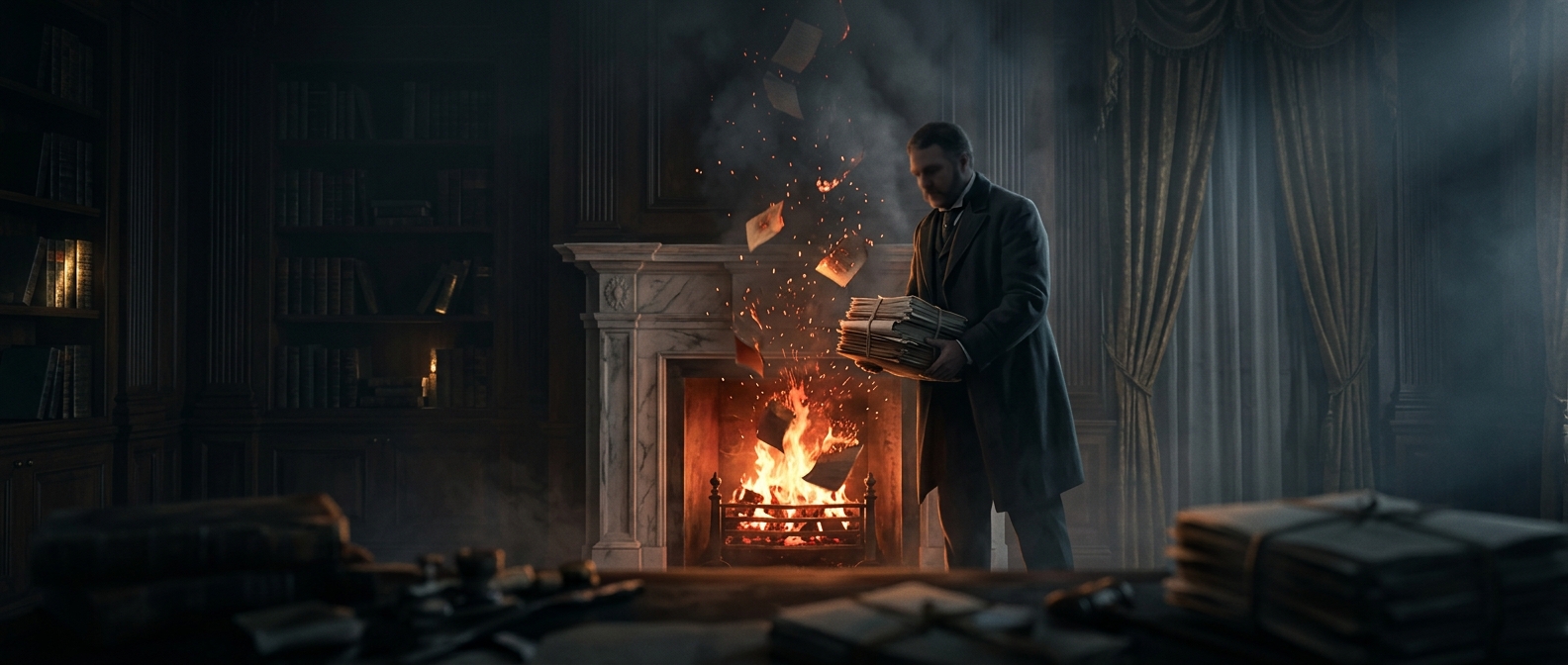
As Chester A. Arthur prepared to leave the White House in 1885, he ordered several garbage cans of papers burned. The material included both personal papers and official documents. That distinction matters: a president’s papers can contain private correspondence, but they can also preserve drafts, notes, and exchanges that show how decisions took shape.
What disappears when papers burn
A finished law or public announcement records an outcome. The papers around it may reveal what options officials considered, which concerns they raised, and how a decision changed along the way. When those records are destroyed, historians may still know what the administration did from surviving government documents, newspapers, and other people’s accounts—but they have fewer direct traces of the process inside the president’s circle.
The loss is not the same as erasing an entire presidency. It makes some questions harder to answer and leaves gaps that other records may only partly fill. Because Arthur’s burned papers included personal as well as official material, the fire also blurred a boundary that historians now try to keep clear: a president’s private life and the record of public power.
The surviving account establishes that Arthur ordered the papers destroyed, but not why. What it does establish is a lasting consequence: part of the documentary trail historians might have used to reconstruct his presidency was gone before he left office.