Why the Magna Carta unraveled so quickly
The Magna Carta was not a modern constitution imposed on a willing government. It was a peace settlement made under pressure. In 1215, rebel barons had seized London and forced King John to accept limits on how he used royal power. The agreement addressed immediate grievances, including disputed taxes and the treatment of heirs and property. But neither side trusted the other to honor it.
That made enforcement the crucial problem. The charter included a committee of 25 barons empowered to act if John broke its terms—a provision that effectively threatened renewed coercion. John rejected that arrangement, while the rebels had little reason to believe promises from a king they considered untrustworthy.
A royal appeal becomes a papal ruling
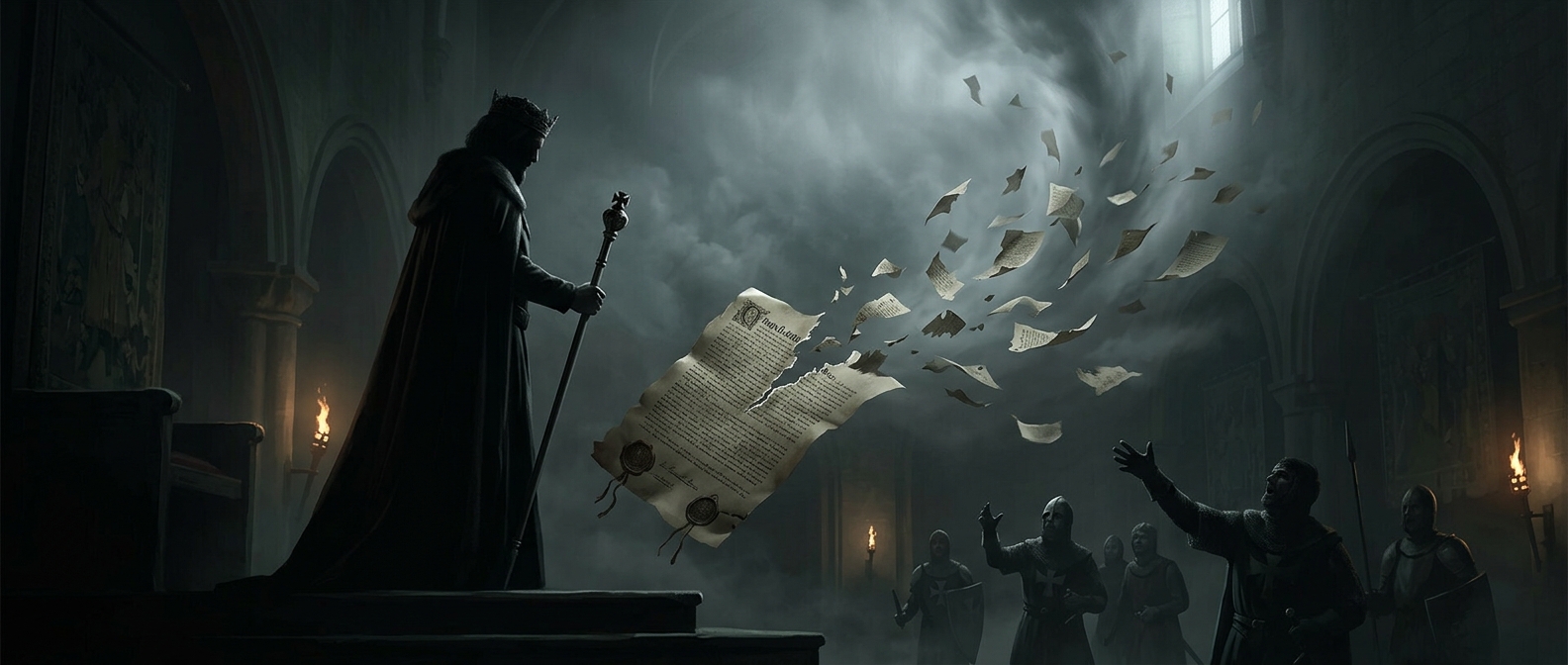
John asked Pope Innocent III to intervene. The pope treated the agreement as invalid, arguing that it had been forced on the king and compromised royal authority. In August 1215, he issued a ruling that annulled the charter. This was more than a diplomatic objection: the pope was the head of the Western Church and could use religious authority to support John’s position.
The ruling did not settle the dispute. The barons rejected it, and the political bargain collapsed into the First Barons’ War. The episode shows how little force a written agreement could have on its own when the parties disagreed over who had the right to enforce it.
The failed settlement’s afterlife
The 1215 charter did not survive as a working peace treaty. Later versions were issued after John’s death, and those revisions helped Magna Carta acquire a lasting place in English political history. Its famous reputation grew from that later legacy—not from a single agreement that immediately curbed the king. In 1215, the parchment could state limits; it could not make John and the barons accept them.