The peace conference that danced between negotiations
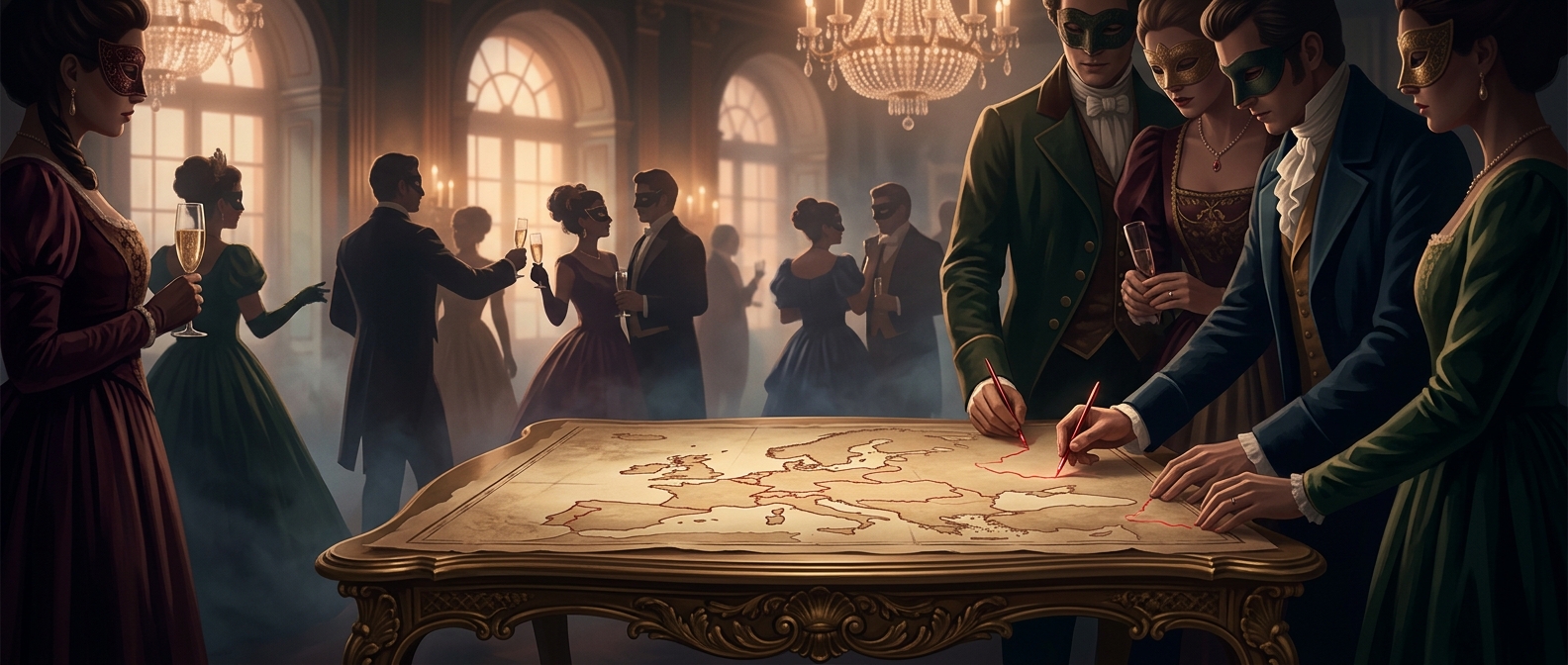
The Congress of Vienna was not a single meeting where every European ruler sat down to draw borders. From late 1814 into 1815, diplomats and monarchs gathered in Vienna to settle the map and political order left unsettled by the French Revolution and the Napoleonic Wars. The host city filled with receptions, dinners, and balls—but the festivities were also part of the work. They brought influential people together, helped build alliances, and gave negotiators room for informal bargaining.
A map designed to prevent another conquest
The negotiators’ central problem was how to contain France without making the settlement so punitive that another war became more likely. They aimed to restore established ruling families where possible and create stronger states around France. The idea was a balance of power: no single country should be able to dominate its neighbors as Napoleonic France had.
That logic shaped the new borders. The Netherlands was joined with Belgium to form a stronger northern neighbor to France. Prussia gained territory along the Rhine, while Austria strengthened its influence in northern Italy. Russia received most of the former Duchy of Warsaw, and the German lands were reorganized into a looser confederation rather than restored as the old Holy Roman Empire.
Bargaining, not simply celebration
The powers did not agree automatically. Russia’s claims in Poland and Prussia’s ambitions in Saxony alarmed other delegates, prompting negotiations over how much each could gain. France, though defeated, was eventually brought back into the diplomatic settlement rather than treated as permanently outside it. That helped make the new order broader—and more workable—than a map imposed by victors alone.
The result did not erase conflict or satisfy every population whose homeland changed hands. But the parties and the bargaining served the same practical purpose: to turn victory into an arrangement that Europe’s strongest states might have reason to preserve.