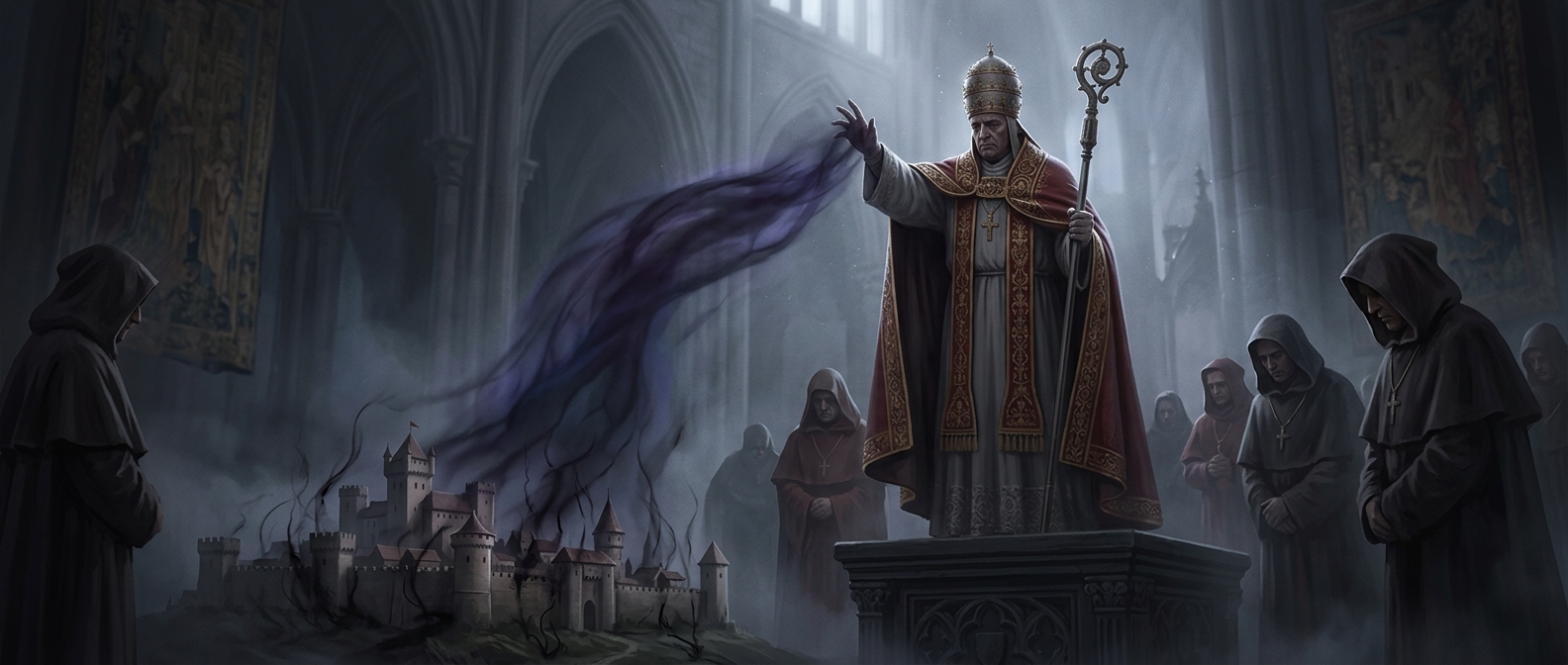
How an interdict reached beyond the king
In medieval Christian Europe, a ruler’s authority rested partly on more than armies and laws. The Church shaped public worship and marked major moments in life, from marriage to burial. A papal interdict was a way to use that influence: the pope could order clergy in a territory to suspend many public religious services, putting pressure on a ruler without directly attacking his government.
The sanction did not simply erase every religious practice. Its scope could vary, and some rites might still be allowed under particular conditions. But when churches fell quiet and familiar public ceremonies were unavailable, the consequences were visible in daily life. The measure’s force came from disrupting a shared religious world, not from physically compelling every resident to act.
A political dispute became a local burden
The interdict shifted the cost of a conflict between pope and ruler onto people who had little say in it. Parish clergy had to carry out the restriction; families faced interruptions to important ceremonies; and the ruler risked losing support as subjects blamed him for the spiritual and social disruption.
That pressure could make an interdict politically useful: if discontent grew, a king might be pushed to negotiate or change course. But it was no guaranteed weapon. The ruler could resist, and the suspension of public rites could also deepen resentment toward the Church. Its distinctive power—and its danger—lay in making a dispute at the top of society felt at the parish level.