A treaty oath turned betrayal into a visible threat
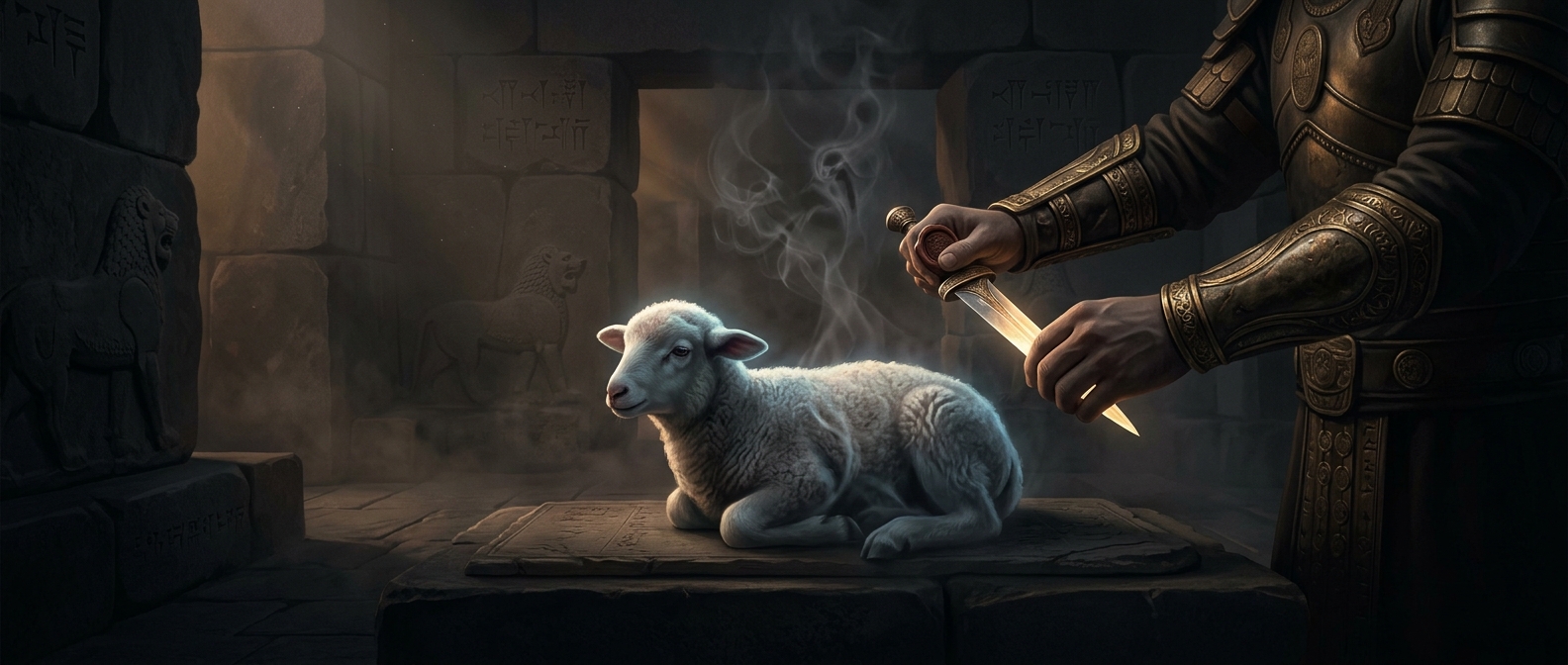
A treaty could demand more than a ruler’s promise. Vassals—less powerful leaders bound to a stronger ruler—were expected to keep their terms, and the oath ritual made the cost of breaking them imaginable. A sheep cut in half or a blindfolded woman gave the warning a physical form: the oath-breaker’s fate, the ritual suggested, would resemble what had been done before the witnesses.
Why invoke the gods?
An agreement can be broken in secret, and a ruler cannot always punish every defector. Calling the gods to witness the oath offered another kind of enforcement: if human authority failed, divine powers were expected to punish disloyalty. The threat extended beyond the oath-taker to family and army, making betrayal seem dangerous not only to one person but to the people and forces on whom that person depended.
The ritual made the promise harder to dismiss
The ceremony joined words to a disturbing image. Instead of hearing only a general warning, those present saw what the oath invoked and understood that disloyalty was being linked to injury and loss. The threat’s force lay in making a political promise feel like a consequence already staged in front of the community. For a vassal weighing whether to break a treaty, the oath cast the risk across an entire household and army—not just the ruler who had sworn it.