How a tavern quarrel can become a regional crisis
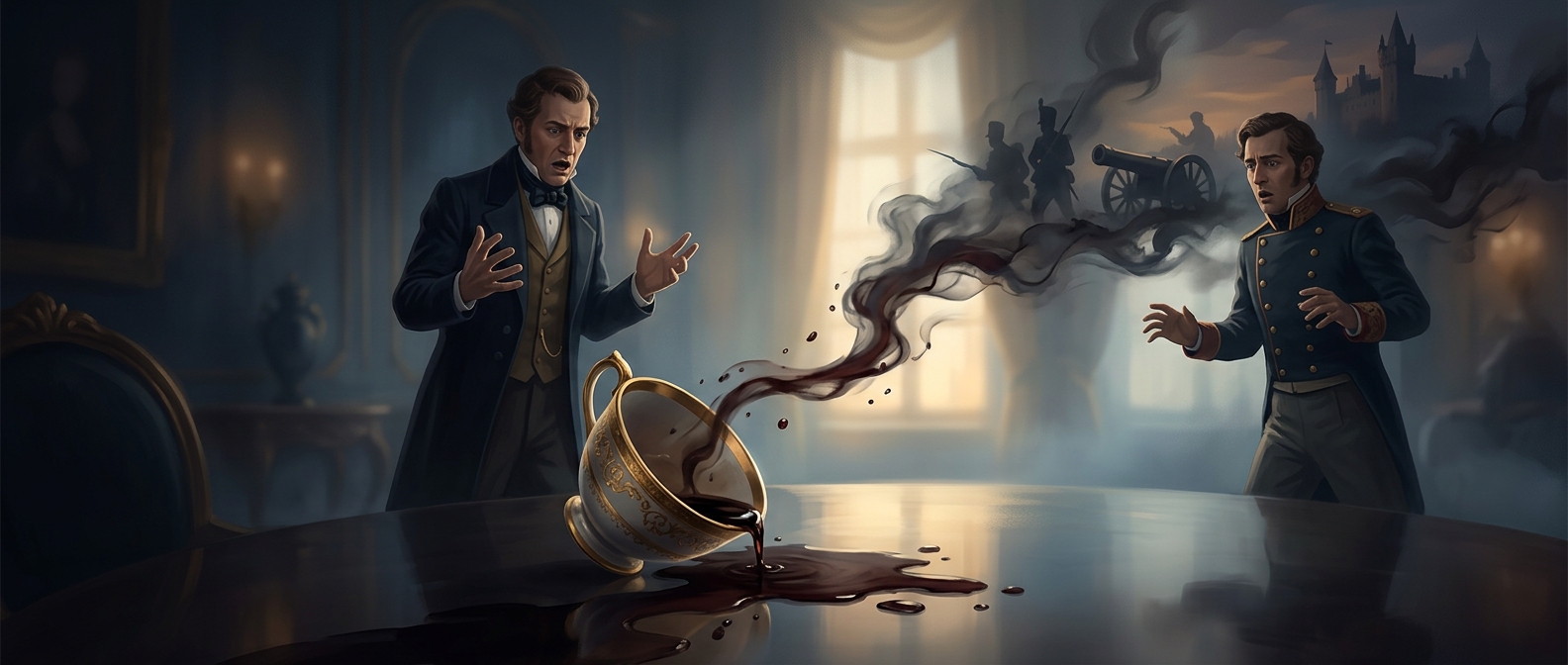
A spilled drink does not redraw borders by itself. The danger comes when an ordinary mishap lands in a place already strained by rivalry, wounded pride, or competing claims. In a crowded tavern, a spill can be read as an insult; a shove or retaliation then gives each side a reason to summon friends and allies.
That is the logic behind the story of a spilled pint helping set off a conflict. The drink is the memorable spark, while the fuel is the tension that made the quarrel hard to contain.
From personal insult to political commitment
Once influential people take sides, backing down can look like weakness. Local leaders may feel pressure to defend their followers, while neighboring powers see an opportunity—or fear that staying out will leave them exposed. What began as a private dispute can therefore acquire troops, resources, and political stakes far beyond the tavern.
This is how a small incident can help escalate a regional conflict: not through the force of the accident, but through the chain of decisions that follows it. Each response makes the next one harder to avoid, and a dispute over honor can become a contest over territory and authority.
The spark is not the whole explanation
Stories about wars beginning with one vivid mishap are easy to retell, but they can hide the longer tensions beneath them. The spilled pint is best understood as a reported trigger, not a complete explanation of why people fought—or why the fighting had lasting consequences. The quarrel may have started in a tavern; the conditions for a war had to exist beyond it.