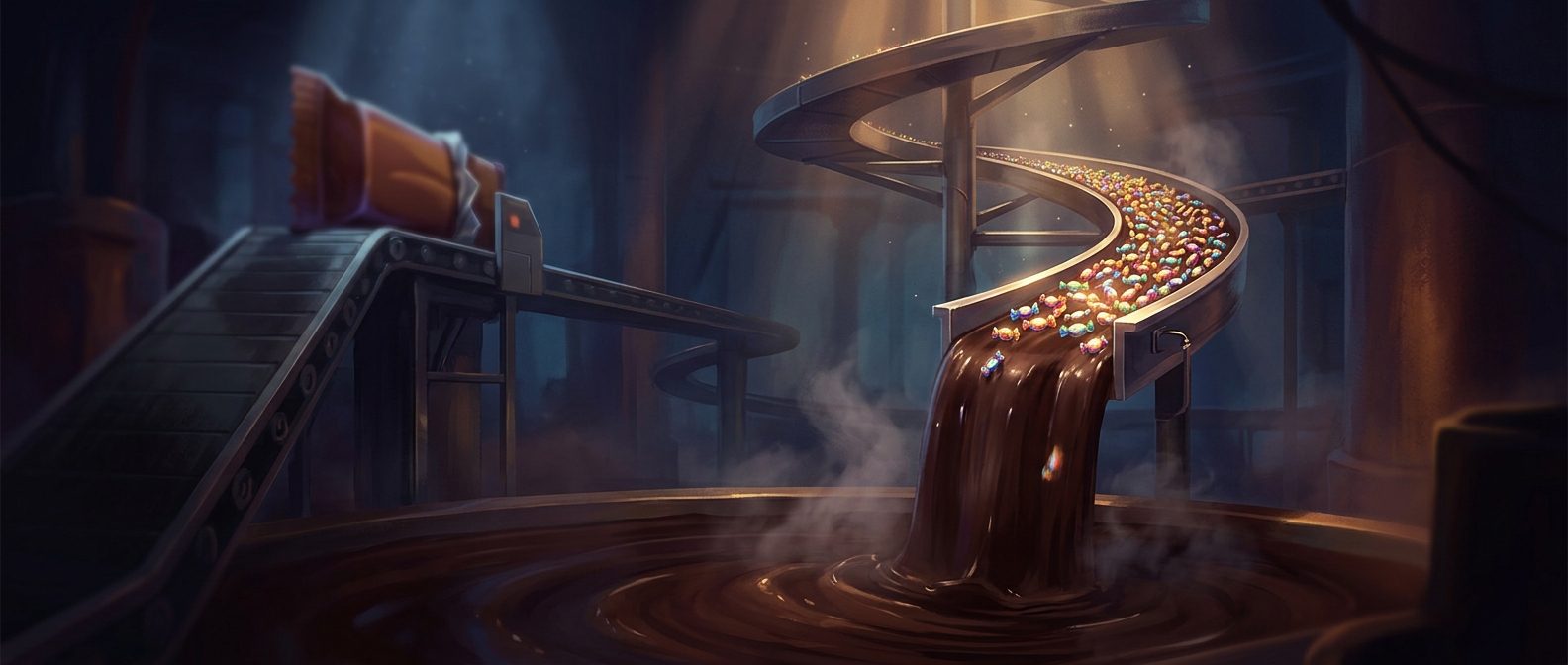
Why a Smaller Candy Can Cost Less to Make
A candy bar’s ingredients are only part of its production cost. Shrinking the portion means less chocolate, sugar, and filling are needed for each item. Across a large production run, saving a little material per piece can add up to a meaningful reduction in ingredient spending.
The savings are not automatic, though. Each piece still needs to be wrapped, packed, and moved through the factory. A smaller bar may use less candy but still require much of the same packaging and machine time, so the total cost does not fall in proportion to its size.
The Wrapper Changes the Tradeoff
“Fun size” helps position the smaller portion as a different kind of purchase: a little treat, a shareable snack, or a convenient add-on. That framing can make a reduced amount feel intentional rather than like a regular bar that has simply been cut down.
For the seller, the key comparison is not just how much candy goes into one piece. It is how much the piece costs to produce and package relative to the price shoppers will accept. If packaging and processing absorb too much of the ingredient savings, the smaller size may not improve the economics as much as it seems.
That is why the format can be useful at checkout or in multipacks: a smaller piece can offer a lower-cost entry point for the shopper while letting the company sell less candy per serving. The practical tradeoff is easy to miss—the portion shrinks, but the wrapper and the production line still have work to do.