Why a Sponge Can Regrow From What Remains
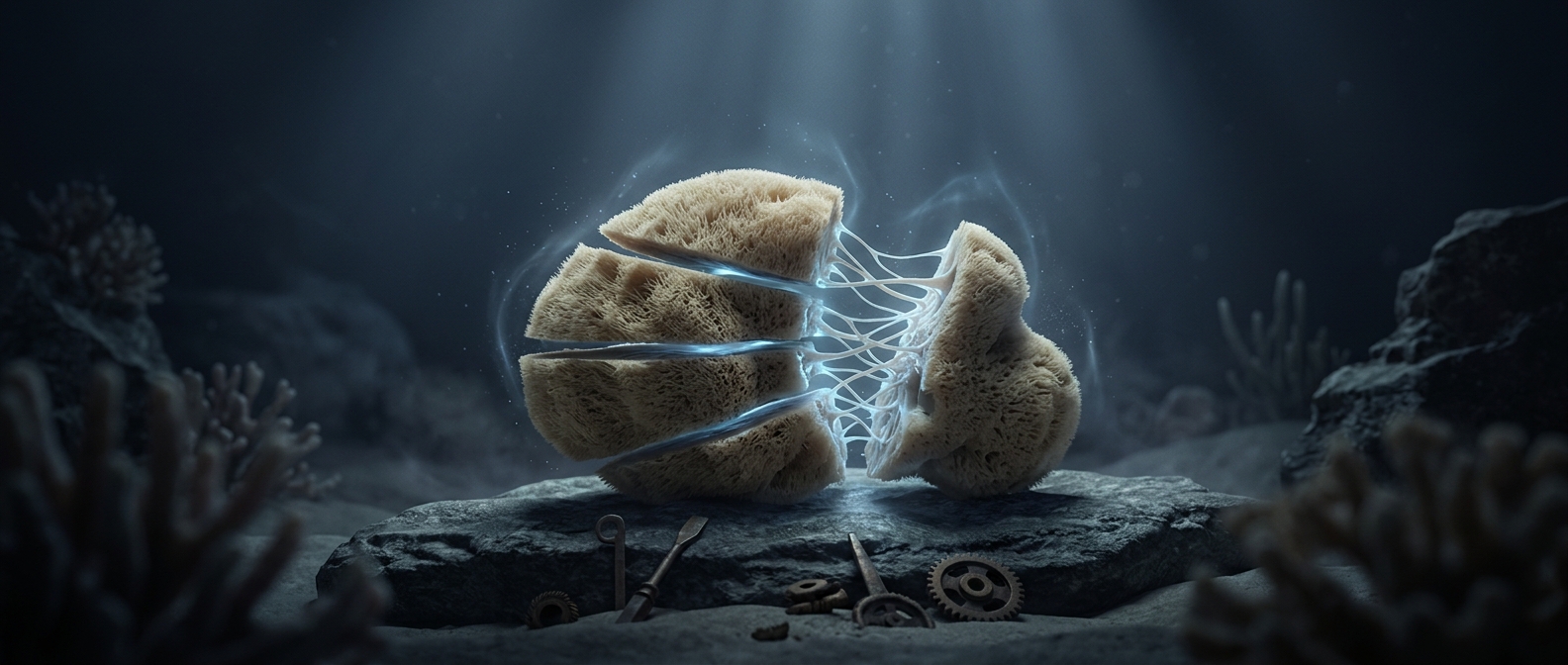
A sea sponge is an animal, but it has no bones or organs arranged like those of a familiar vertebrate. Its body is a living network of cells threaded with tiny openings and canals. Water moves through that network, bringing food particles and oxygen. When part of the sponge is removed, cells in the remaining tissue can reorganize and rebuild the body’s filtering structure, provided the base stays alive and conditions allow it to recover.
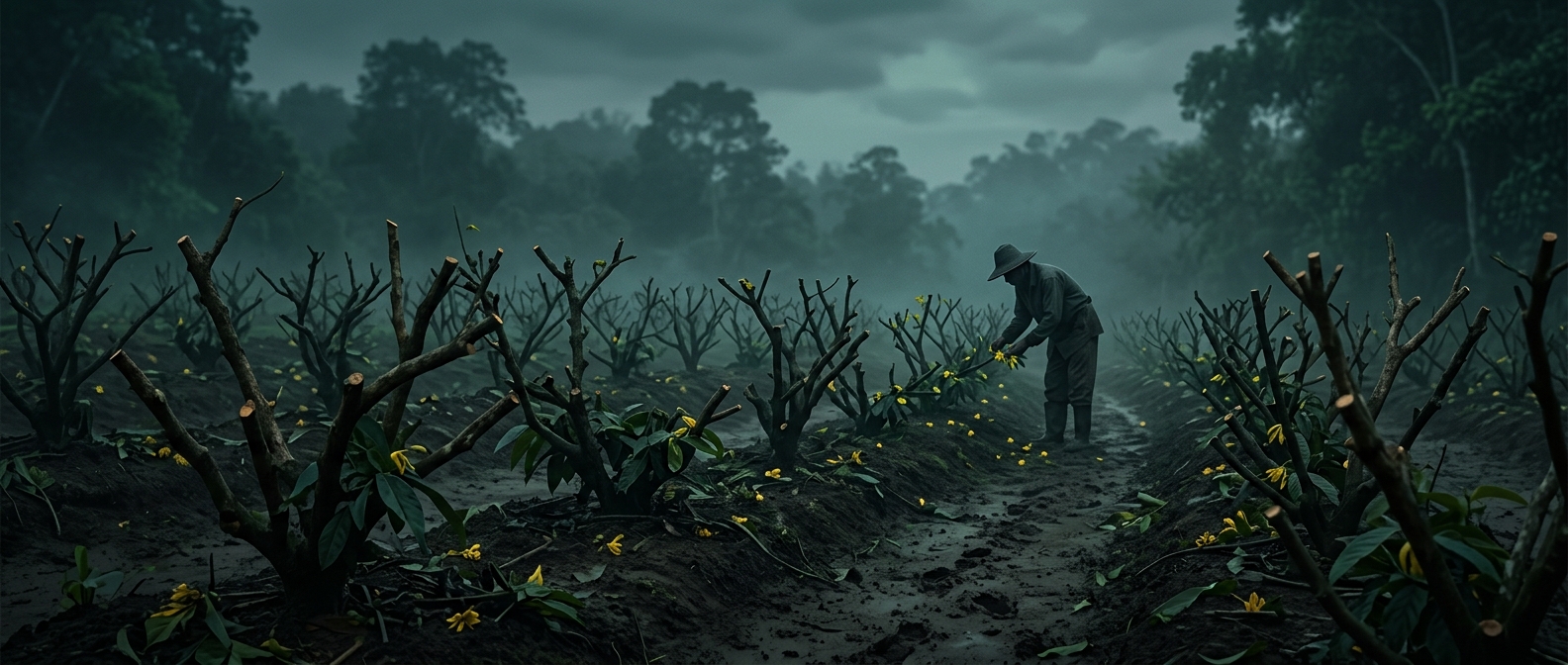
That makes the way a sponge is harvested economically important. Taking the whole animal ends its growth; cutting away the usable portion while leaving living tissue attached gives the same spot a chance to produce another crop. The reef is not simply a warehouse of ready-made goods: the harvest depends on keeping the living source intact.
Regrowth Is a Tradeoff, Not a Guarantee
Leaving a base behind does not make harvesting impact-free. Recovery takes time, and damage or poor conditions can prevent it. Harvesters therefore face a practical balance: take too much, too often, and there may be less to collect later; take less and allow recovery, and the site can remain productive over multiple harvests.
The principle is simple but consequential: the part left behind is not waste—it is the biological capital for a future harvest.