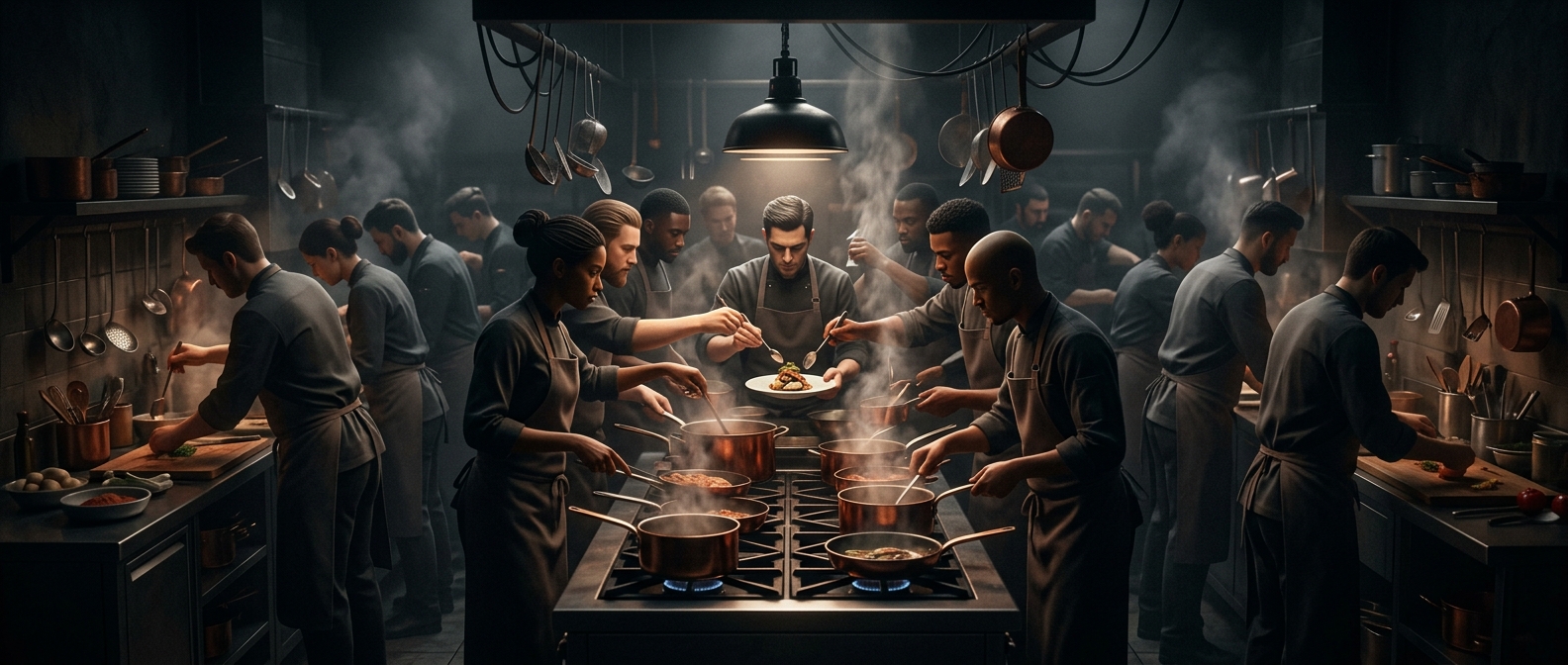
Why More Cooks Can Mean Fewer Meals
A kitchen has a limited amount of usable space: room to reach the stove, open the oven, set down a pan, and pass ingredients from one station to another. When a new cook joins, that person can take over a task. But they also occupy space and may need access to the same tools and work surfaces as everyone else.
At first, extra hands can speed up dinner. One person chops while another tends the stove, so tasks happen at the same time. As the kitchen fills, however, cooks must wait to reach equipment, sidestep one another, or pause while a colleague finishes using a crowded counter. The time saved by dividing the work gets eaten up by coordination and congestion.
The Cost of Coordination
This is a small-scale example of diminishing returns: each additional worker contributes less than the one before, and eventually the added costs can outweigh the extra labor. The bottleneck may not be the number of people at all; it may be a single oven, a narrow aisle, or one cook who has to finish a task before several others can continue.
Managers face the same tradeoff in workplaces. Hiring more people helps when there is enough equipment, space, and clearly separated work. If those supporting resources do not grow too, workers spend more time waiting and coordinating instead of producing. The practical fix is not always another hire: rearranging stations or assigning tasks to avoid competing for the same space can sometimes get meals moving again.