Why a jar of beluga caviar can cost so much
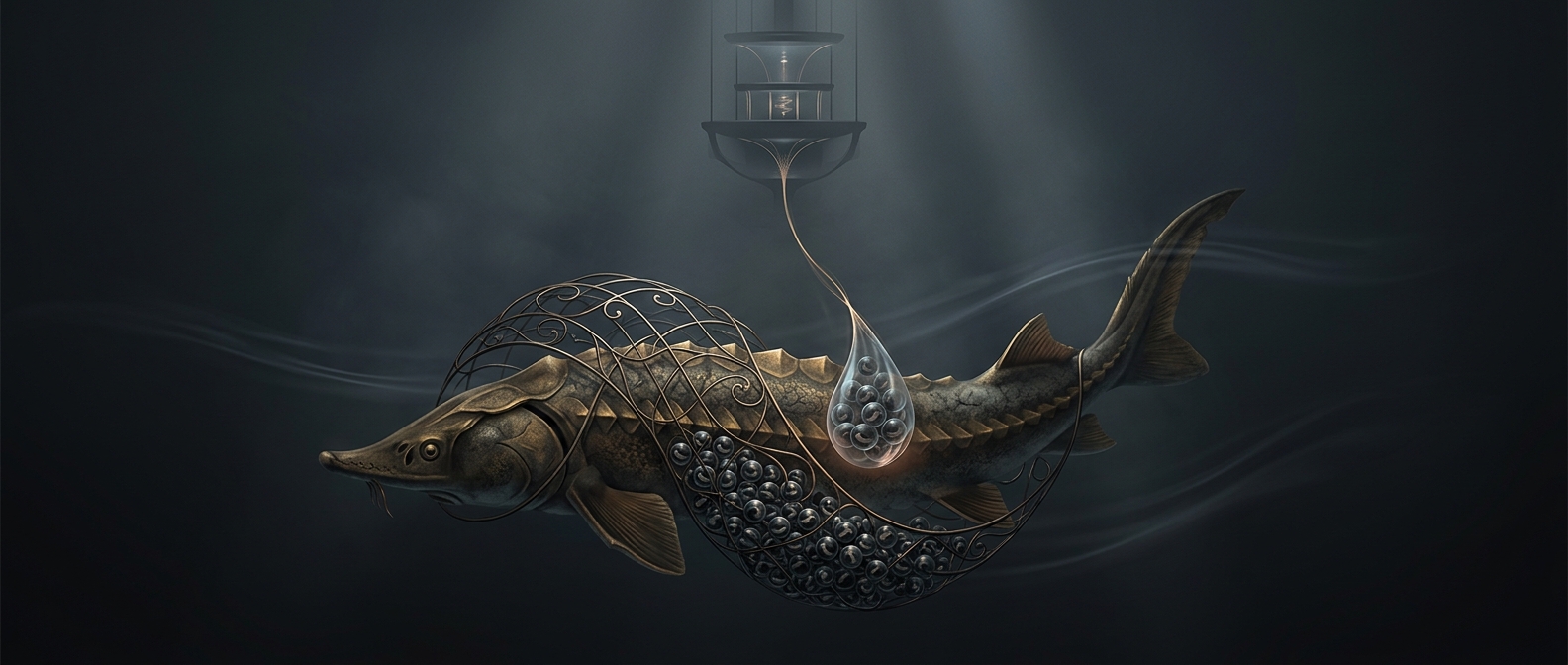
Caviar’s price reflects more than luxury branding. Beluga sturgeon take many years to mature, so a fish caught for its roe—the eggs used to make caviar—represents a long investment of growth that cannot quickly be replaced. Traditional extraction also kills the fish: the roe is removed from the body, rather than collected in a way that lets the female return to produce eggs again.
That biology makes the supply unusually slow to recover. If too many mature females are taken, fewer remain to spawn, and the next generation cannot replenish the population for years. Restrictions on wild harvest are meant to limit that pressure, but they also make legally available wild caviar scarce.
When scarcity creates a dangerous incentive
High prices can reward careful conservation, but they can also make illegal fishing lucrative. A poacher may see one large sturgeon as a valuable haul; the ecological cost is spread across the population and takes much longer to appear. As wild stocks shrink, the remaining fish can become even more tempting targets, creating a feedback loop between scarcity and illicit profit.
Farmed caviar offers another route to market, though raising sturgeon is a long-term undertaking: producers must feed and maintain the fish for years before females yield roe. The central economic tension is that the same slow growth that makes beluga caviar rare also makes wild populations especially vulnerable to a high-value market.