A validator reads more than the bill’s appearance
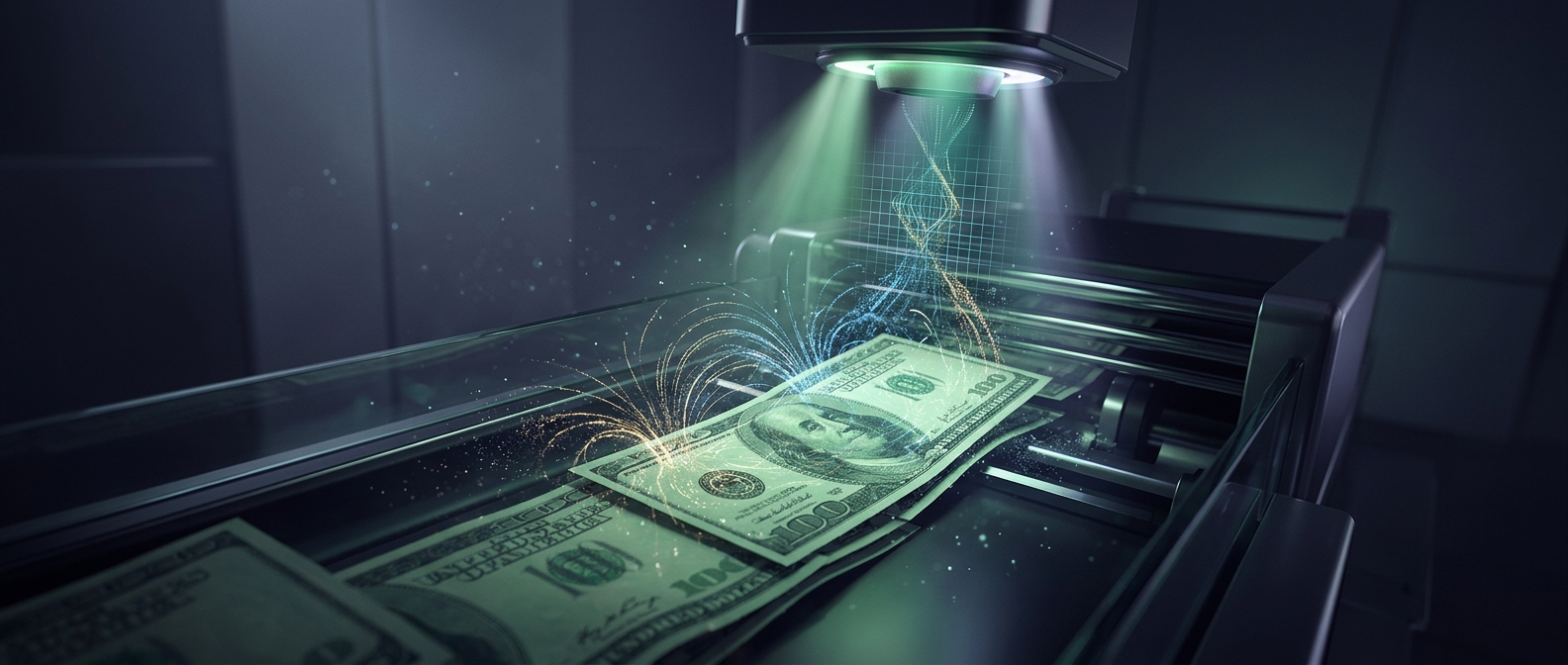
A vending-machine bill validator pulls a note through a narrow passage, where sensors inspect it as it moves. One check uses magnetic sensors: they detect how the note responds to a magnetic field, including the pattern made by magnetic ink in the printing. The machine compares that signal with the expected features of an accepted bill.
That gives the validator another clue beyond visible color and size. It is not simply looking for a magnetic stripe like the one on an old payment card; the magnetic information is part of the printed note.
Why a crumpled bill can fail
The note has to travel through the validator in a predictable way. A hard crease, a folded corner, dirt, or heavy wear can make it feed unevenly or change what the sensors detect. The resulting signal may be too weak or too irregular for the machine to accept confidently.
A rejection does not necessarily mean the bill is counterfeit. The validator is making a quick decision from several measurements, and a genuine but damaged note can fall outside the machine’s acceptance limits. For the machine, a usable signal matters as much as a genuine bill. That is why smoothing a folded note or trying another one can be enough to turn a failed snack purchase into a successful one.