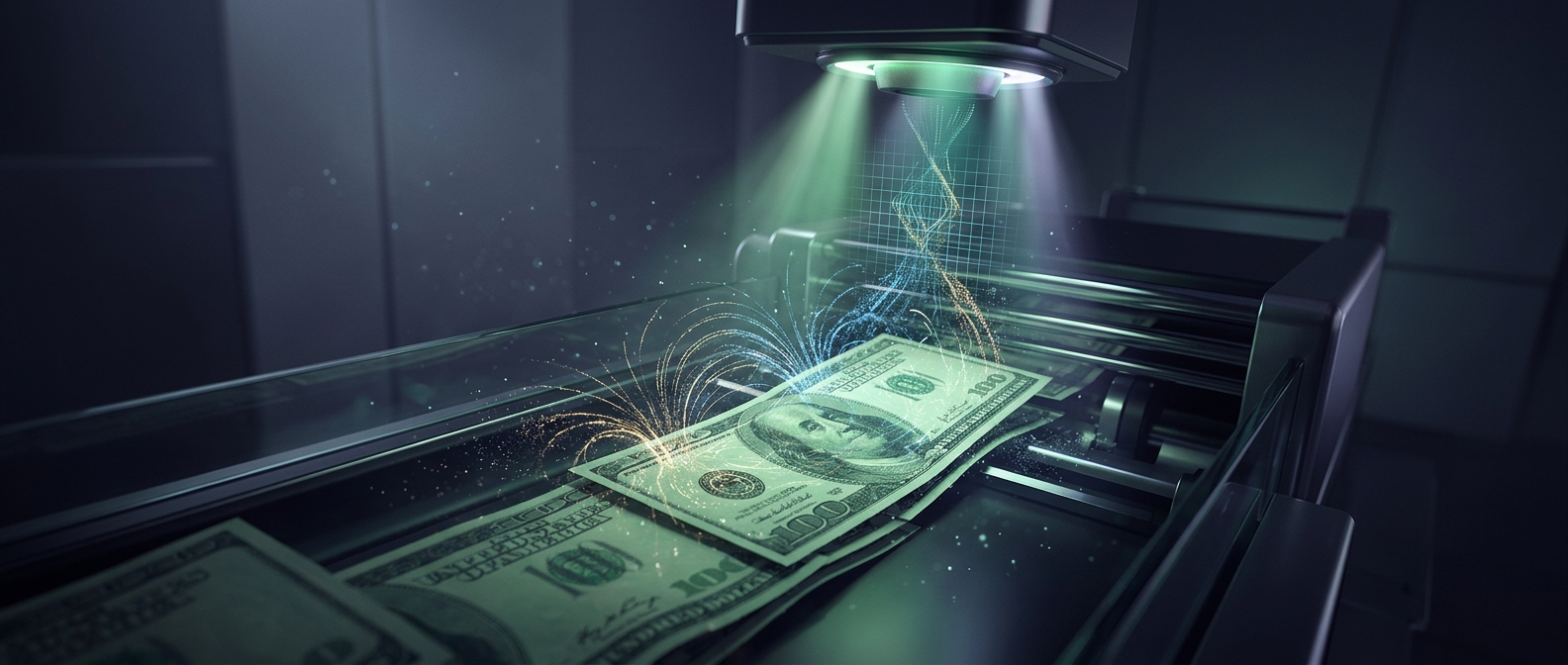
Currency ink has to survive a rough life
A banknote is handled, folded, rubbed against other bills, and exposed to moisture and dirt. Its printing must remain legible through that wear, so the ink has to bond reliably to the note’s unusual paper-like material rather than simply look dark when newly printed. Durability is a security concern as well as a practical one: details that blur or wear away become harder for people and machines to check.
Why keep the recipe private?
A counterfeit can be judged by more than its picture. The way ink sits on the surface, the way it wears, and how it looks under ordinary viewing all contribute to whether a note feels and appears genuine. If the ink formula were public, a counterfeiter would have one fewer obstacle when trying to imitate those qualities.
Keeping the recipe secret does not make copying impossible. It makes the job less straightforward: an imitation has to reproduce the finished note’s appearance and behavior without access to the same materials and production knowledge. The ink works alongside other features built into the note, rather than serving as a stand-alone test of authenticity.
A tradeoff built into the printing
The goal is to make notes that remain useful in everyday circulation while making convincing copies harder to produce. That means the ink must be dependable at enormous production scale, not just distinctive in a sample. The security value lies partly in the gap between seeing a printed note and knowing exactly how its materials were made.