The bead is only the starting shape
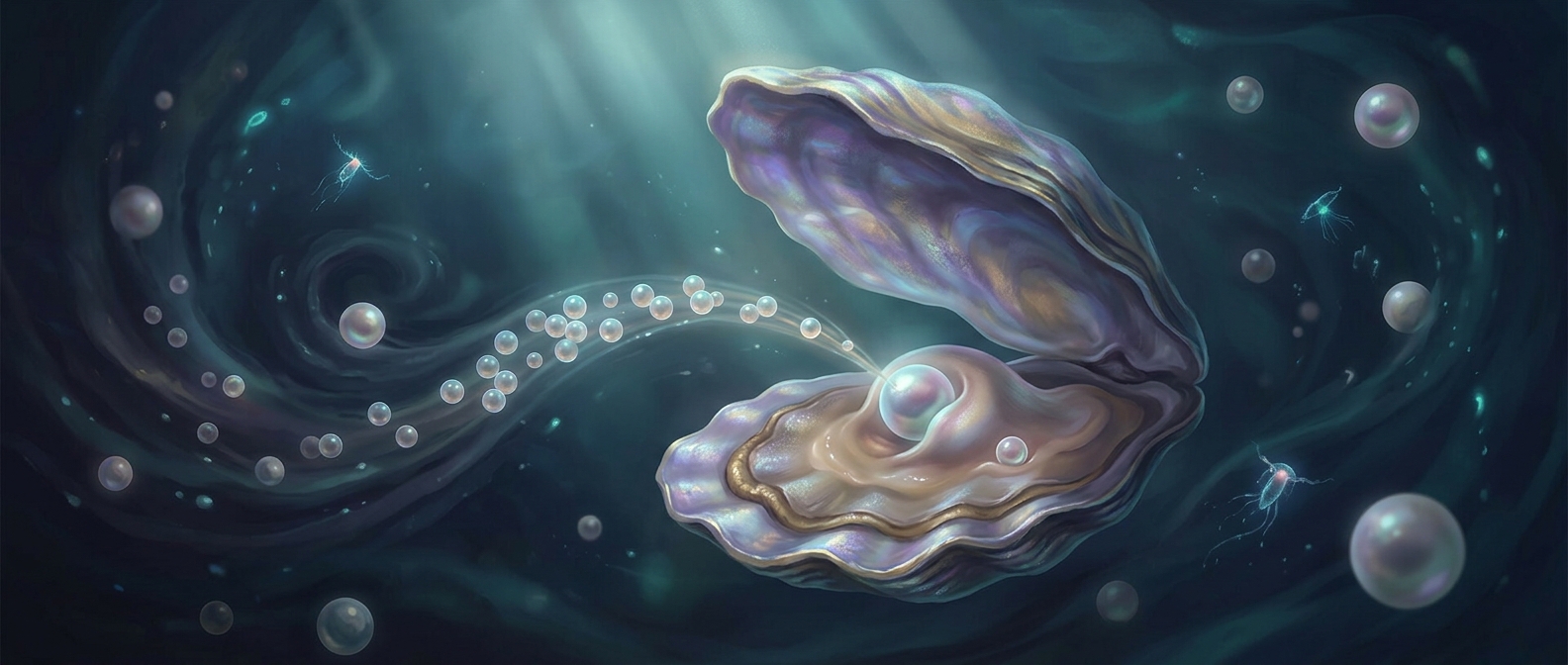
A bead does not become a pearl simply by sitting inside an oyster. In bead-nucleated pearl farming, a technician places a rounded shell bead alongside a small piece of mantle tissue—the oyster tissue that produces nacre, the material lining its shell. The living tissue grows around the bead and forms a pearl sac, a pocket of cells that deposits nacre onto its surface.
The bead helps determine the pearl’s basic shape and size, but it cannot dictate the finish. As the oyster lays down successive layers, small differences in how those layers form affect the pearl’s luster, surface, and roundness. That variation is why two pearls grown around similar beads can have very different value.
A delicate operation with an uncertain payoff
The bead and graft must be placed carefully. The oyster can reject the implant, fail to form a useful pearl sac, or produce a pearl with blemishes or an irregular shape. Even a pearl that looks promising from the outside may not meet the quality a farmer hopes for at harvest.
That uncertainty makes the procedure an economic gamble as well as a biological one. Farmers invest labor in the operation and then wait while the oyster grows nacre; harvesting too soon can mean a thin coating, while waiting longer ties up time and care without guaranteeing a better result. The final quality determines whether the harvest can command a high price or is worth much less.
The shell bead therefore does not manufacture a finished pearl. It gives the oyster’s own nacre-making tissue a form to build around—and the oyster, not the bead, determines how fine that finish will be.