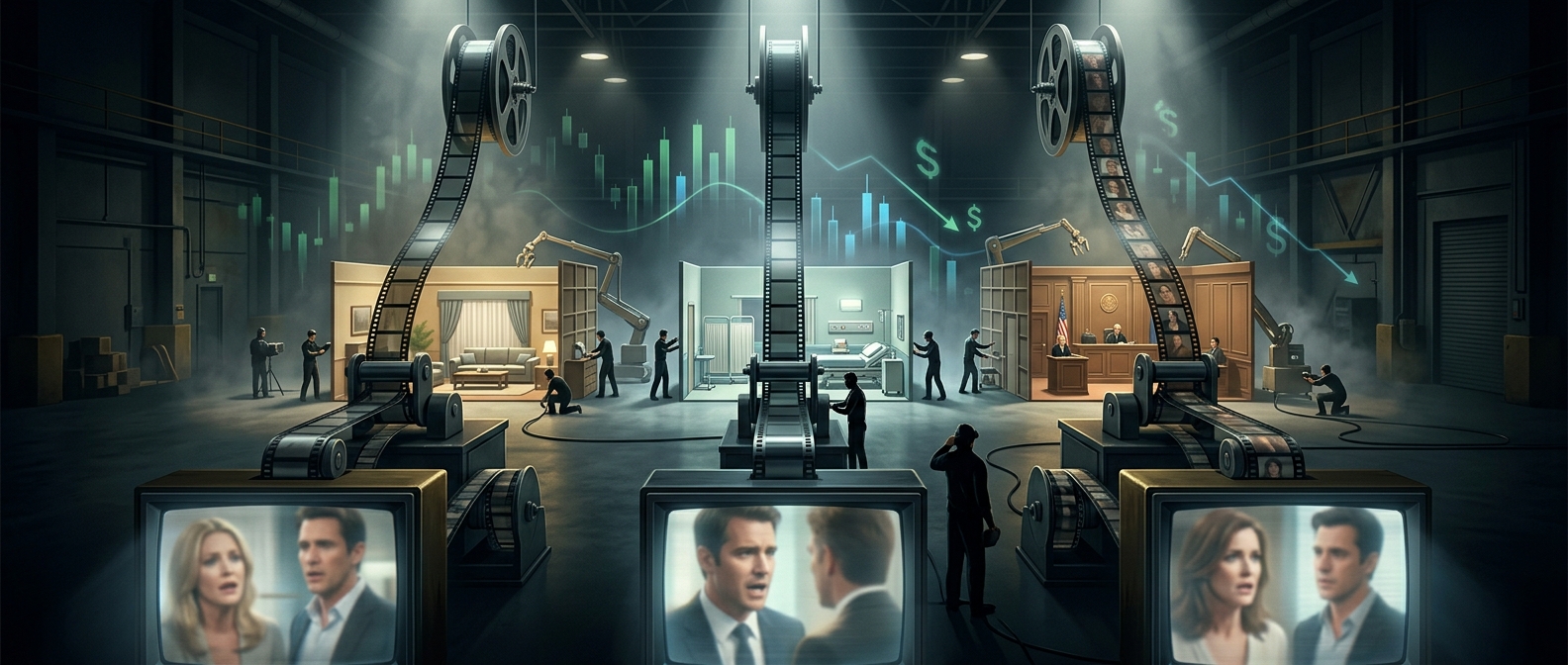
The expensive part is often the reset
A scene can take far longer to film than it takes to watch. Each change in camera angle may require crew to reposition equipment, adjust lights, and repeat part of the performance. Those transitions—often called setups—consume working time even when the finished scene lasts only a few minutes.
A production built around frequent episodes has strong reason to limit them. Holding a shot on one actor, or letting a conversation play without interrupting it for many angles, can reduce the number of setups and retakes. A pause or sustained reaction also gives the audience time to absorb a moment while the production avoids filming additional material.
A schedule shapes the storytelling
This is an economic tradeoff, not merely a visual style. More elaborate coverage—the collection of different angles and close-ups editors can use to assemble a scene—offers flexibility in the edit, but takes more time to capture. A simpler scene gives the crew fewer pieces to film and the editors fewer transitions to stitch together.
That constraint can influence how a story is written and performed. Dialogue-heavy scenes, familiar locations, and sustained exchanges are comparatively practical to produce repeatedly. The result may feel less visually restless than a tightly edited prime-time drama, but the format can keep its attention on changing relationships and reactions.
The useful trick is that a pause does two jobs: it can heighten tension for the viewer while also helping a production meet the clock.