How a growing crystal can trap a habitat
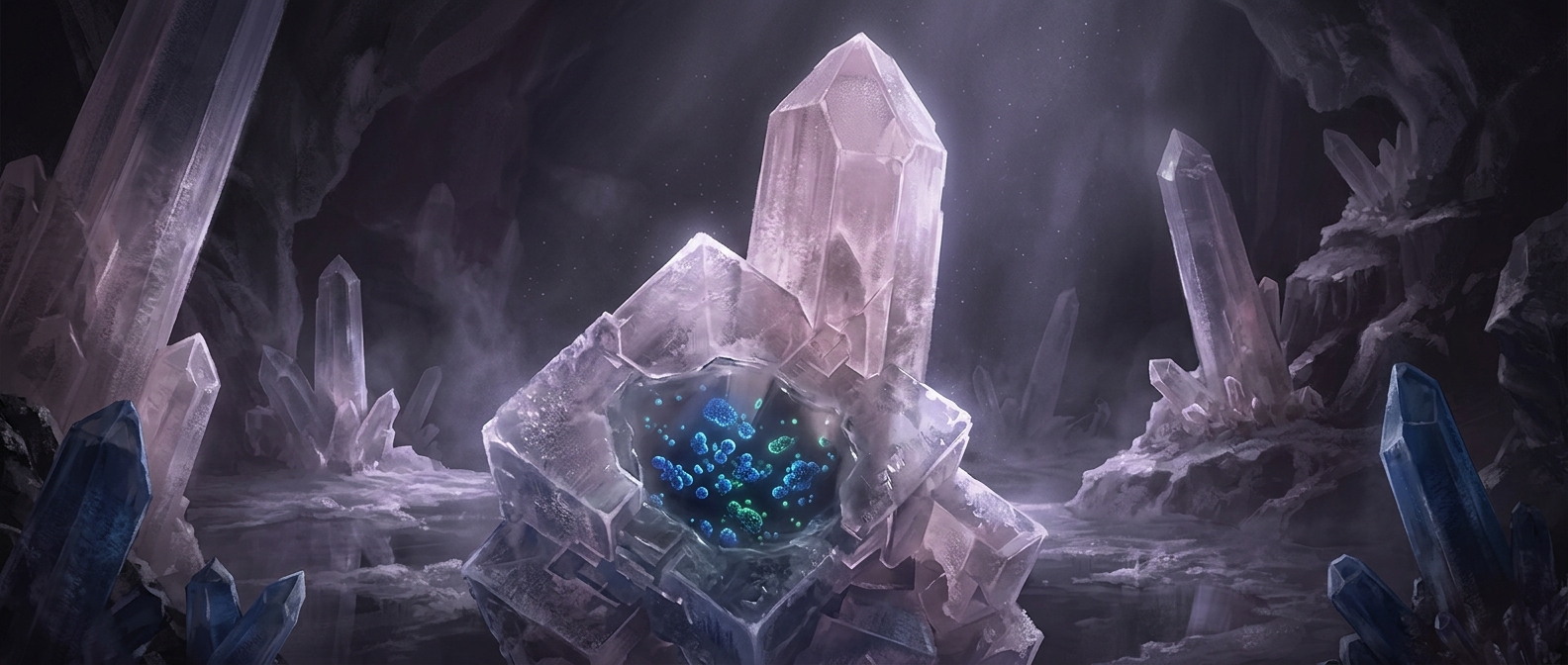
Rock salt, or halite, forms as salty water evaporates. As the crystal grows, it can enclose tiny pockets of the remaining liquid—called fluid inclusions. These pockets are miniature brine habitats, sometimes containing cells that were present in the water when the salt formed.
The trapped environment is harsh: extremely salty, isolated, and short on fresh nutrients. But some microbes are adapted to high-salt conditions. When conditions become unfavorable, they can enter dormancy, a state in which their activity drops sharply. Dormancy is not life without limits; it is a way of waiting out a stretch when growth and reproduction are not possible.
From sealed pocket to active cell
If the surrounding salt dissolves, water can reach the inclusion and release its contents. Under suitable conditions, a surviving dormant cell may resume activity. The crystal has not kept a microbe actively living all that time; it has, in effect, enclosed a small, difficult-to-reach refuge.
Establishing how long a microbe was sealed away is a separate challenge. A sample must be handled carefully so that newer microbes do not enter it, and the age of the salt does not by itself prove the age of a recovered cell. That is why claims about very ancient survivors are treated cautiously. Even so, the basic mechanism is striking: a crystal can preserve a fragment of brine—and potentially its dormant inhabitants—inside solid rock.