The Code Rain Was Built from Familiar Characters
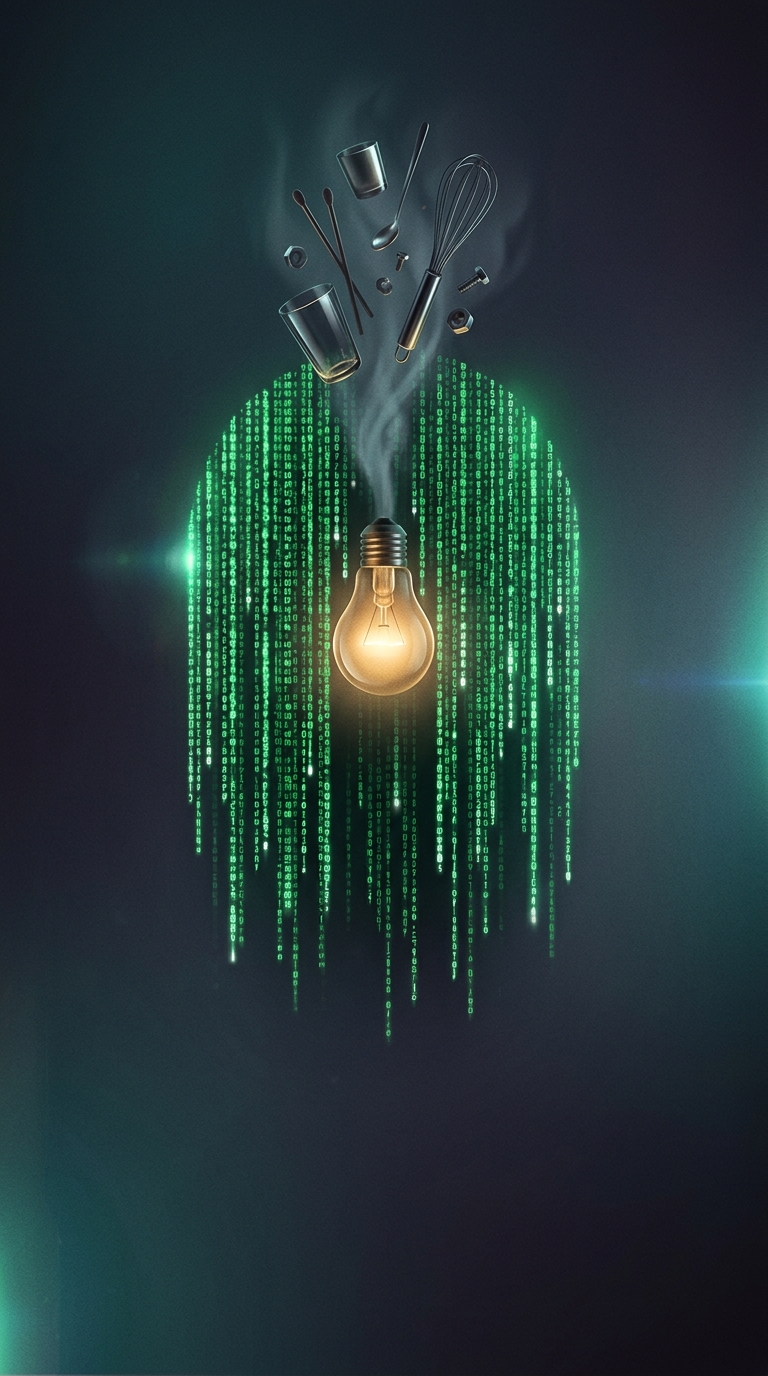
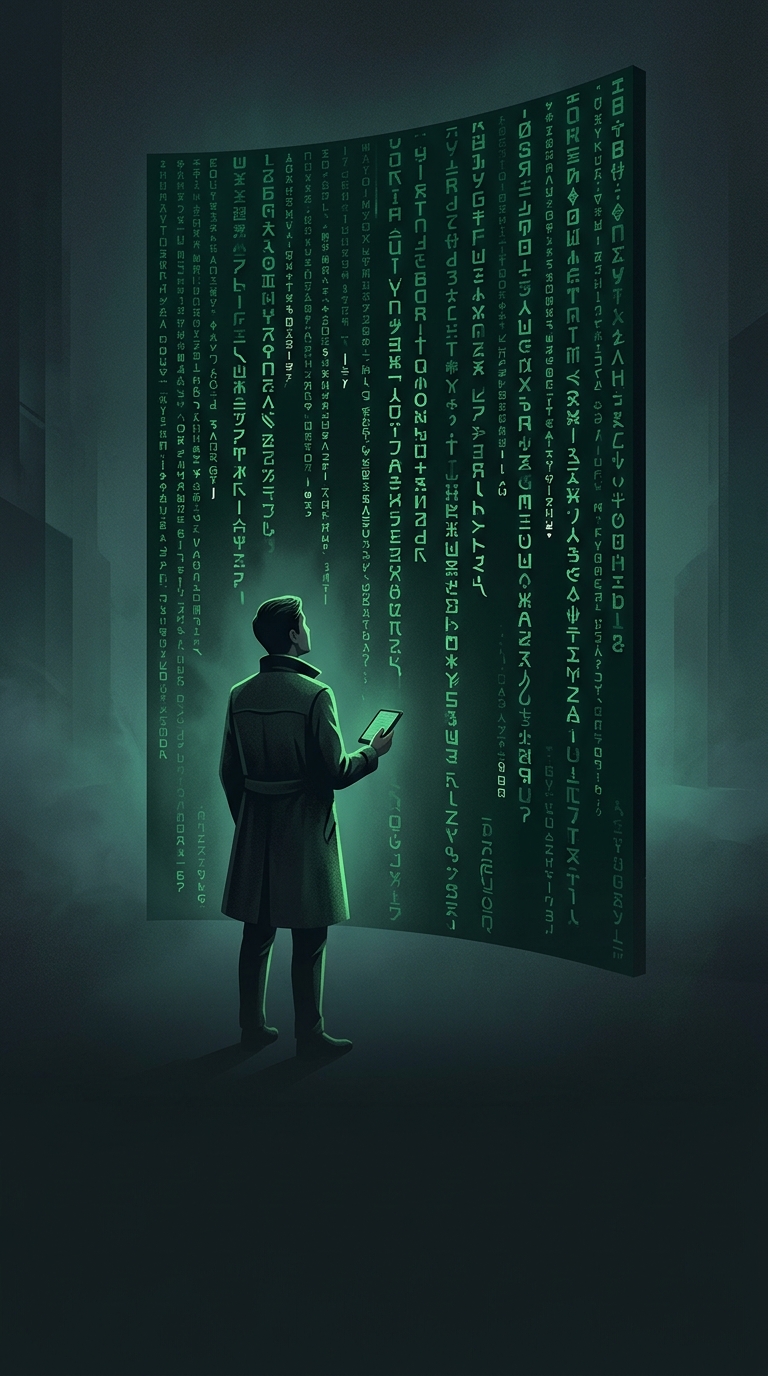
The cascading green marks in The Matrix are a designed visual texture, not a screenful of computer instructions. They combine Japanese katakana—the angular characters used to write foreign words and sounds—with Roman letters and numerals. In the film, the symbols stream down in columns against black, making the world seem as though it is assembled from hidden information.
Production designer Simon Whiteley has described drawing material for the design from Japanese cookbooks, including one belonging to his wife. The printed characters could be scanned, altered, and arranged into the falling columns. That everyday source helped give the code its distinctive mix of shapes: some look almost familiar, while others resist quick reading.
Why It Looks Like a System
The effect depends less on decoding each symbol than on how the marks move. Repeated vertical streams suggest data being processed, while changes in brightness and speed make the pattern feel active rather than like wallpaper. Green against black keeps the image stark and legible, even when the characters blur into motion.
That choice also fits the film’s central visual idea: the world people see is a surface generated by something underneath. The code does not need to function as a real program to make that idea visible. Its job is to make reality look readable to a machine—and strange to a person.