When barley became a test of guilt
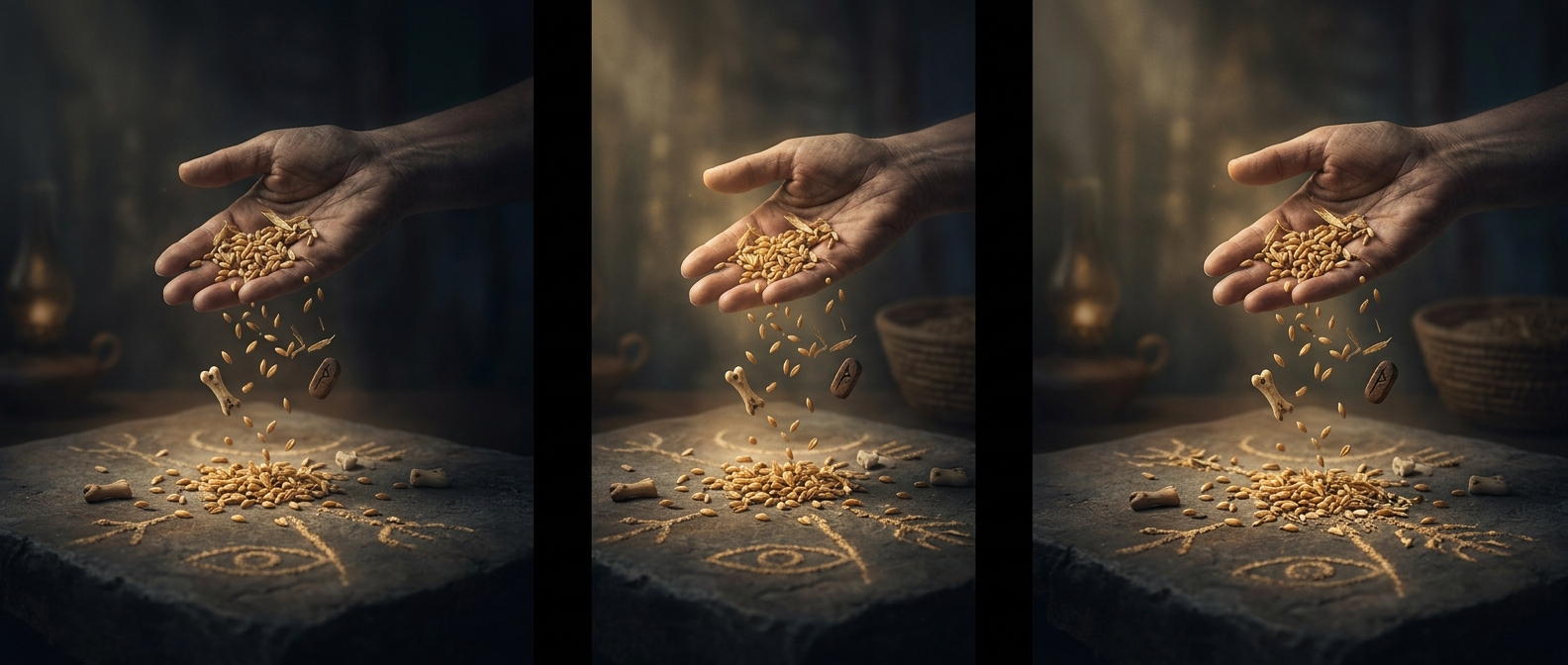
In this ritual, barley was more than food: it was treated as a means of exposing hidden wrongdoing. Suspects were given grain that had been ritually “enchanted,” and choking on it was taken as a sign of guilt. The test turned an uncertain question—who had committed an offense?—into a visible event that people could interpret as an answer.
The word enchanted describes the ritual’s role for the grain, not a known physical property. The barley was believed to carry a power that could distinguish the guilty from the innocent. That belief made an ordinary act of eating part of a judgment: the suspect’s body appeared to deliver the verdict.
A bodily reaction becomes evidence
Choking can happen for reasons unrelated to guilt, but within the ritual it could be read as meaningful because the test had already assigned the grain a special role. The outcome depended not only on what happened but on what the participants believed the barley was meant to reveal.
That is the striking feature of the practice: a handful of grain could serve as both the instrument of a test and its supposed interpreter. A physical mishap became an accusation when the ritual gave it that meaning.