Reading a Future in the Hearth
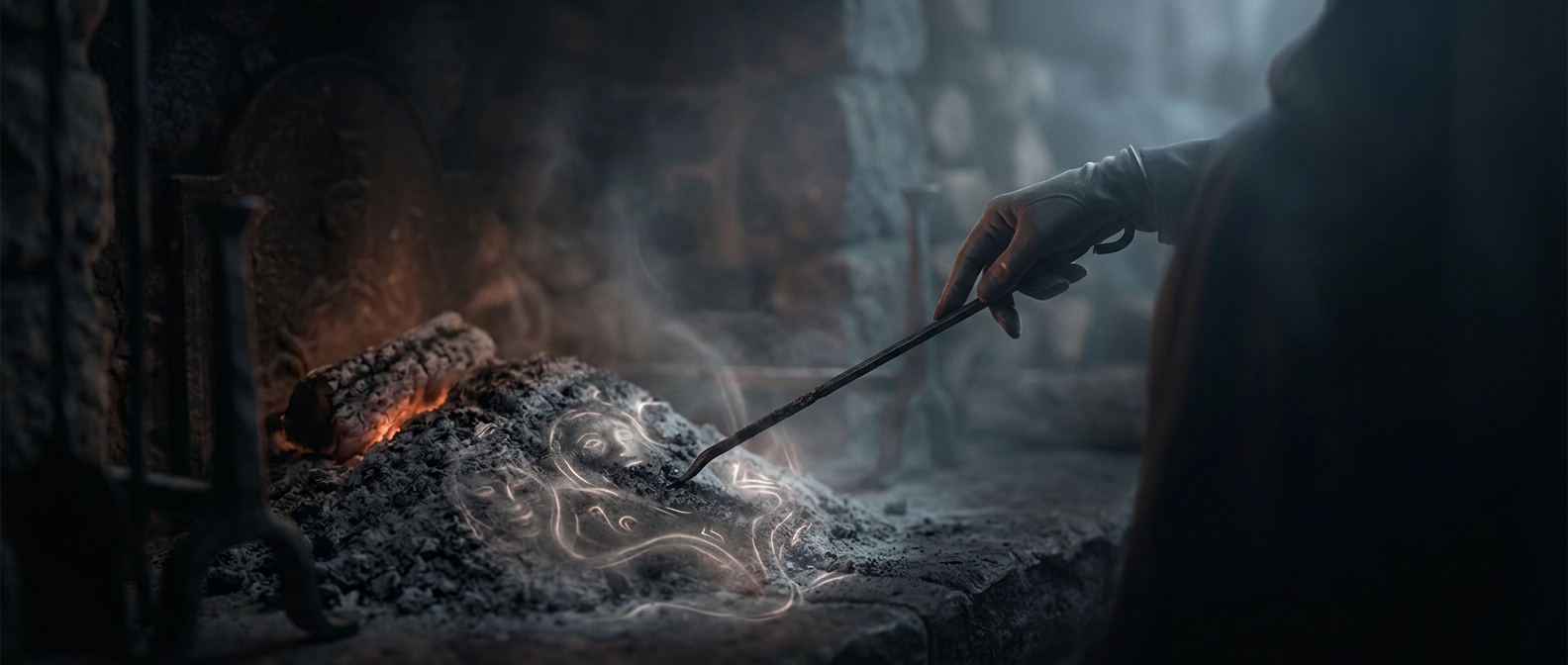
In this kind of folk divination, the fireplace is treated as more than a source of warmth: its leftover ash becomes a surface for interpreting signs. A dark, irregular clump might be taken to stand for a person, while its shape or position could be fitted to a question about what lay ahead. In the example described, the question is who someone might marry.
The reading depends on resemblance, not on a fixed code. Ash and charred wood form accidental shapes; a person looking at them supplies a possible meaning. That open-endedness is what makes a vague mark usable as an omen: it can be connected to the question on someone’s mind without having to resemble a future spouse in any precise way.
Why an Ambiguous Sign Can Feel Personal
An omen gains force from the act of interpretation. Someone examines the remains, notices a shape, and turns it into a story about an uncertain future. Because the story concerns a familiar hope—meeting a future partner—the ash can feel like a private message, even though the mark itself does not identify anyone.
Such a reading can also work as a small social ritual: people can compare what they see and discuss what the shape might mean. Its memorable detail is the contrast between the humble material and the large question placed upon it: a scrap of fireplace debris becomes a possible answer about whom a person will love.