What a reef sounds like when it is alive
A coral reef is not quiet between the waves. Snapping shrimp make sharp pops, fish produce grunts and chirps, and other animals add clicks, knocks, and calls. Together, these sounds form a shifting underwater soundscape—an acoustic record of animals feeding, communicating, and moving through the habitat.
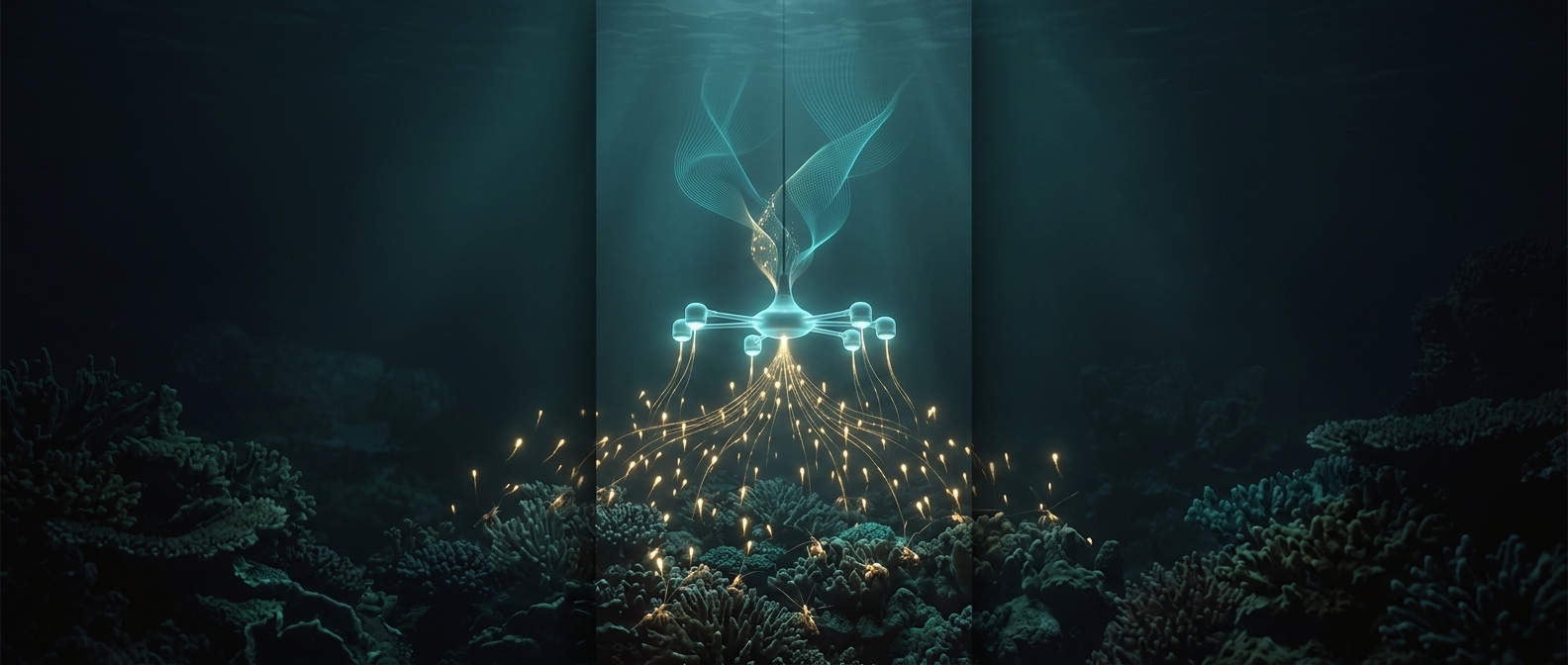
A hydrophone, an underwater microphone, can capture that mix over hours or days. Unlike a diver’s brief visit, a recording can sample a reef at different times, including at night, when many animals become active. Researchers can compare recordings from one site over time or between reefs, looking for changes in the soundscape that might be hard to notice by sight alone.
How software finds a change
The recordings can be long and crowded: waves, boats, rain, and many animals may overlap. AI tools help sort that audio by recognizing recurring patterns, such as the rapid pops associated with snapping shrimp or the calls of particular fish. Once those patterns are identified, researchers can track whether they become more or less common across recordings.
A shift can point to a change in the reef’s animal activity. For example, fewer sounds from a group of animals may warrant checking whether its habitat or population has changed. But a quieter recording does not explain why: weather, time of day, equipment position, or passing noise can also affect what a hydrophone captures. The sound is a signal to investigate, not a verdict on the reef’s condition.
Listening as an early warning
Repeated recordings give scientists a way to notice changes between surveys and decide where closer observation may be useful. The advantage is not that sound replaces visual checks, but that it can reveal patterns across time without requiring someone to be underwater for every observation. A reef’s soundtrack can therefore help direct attention to a place or moment that might otherwise go unnoticed.