How a household fan became a perceived danger
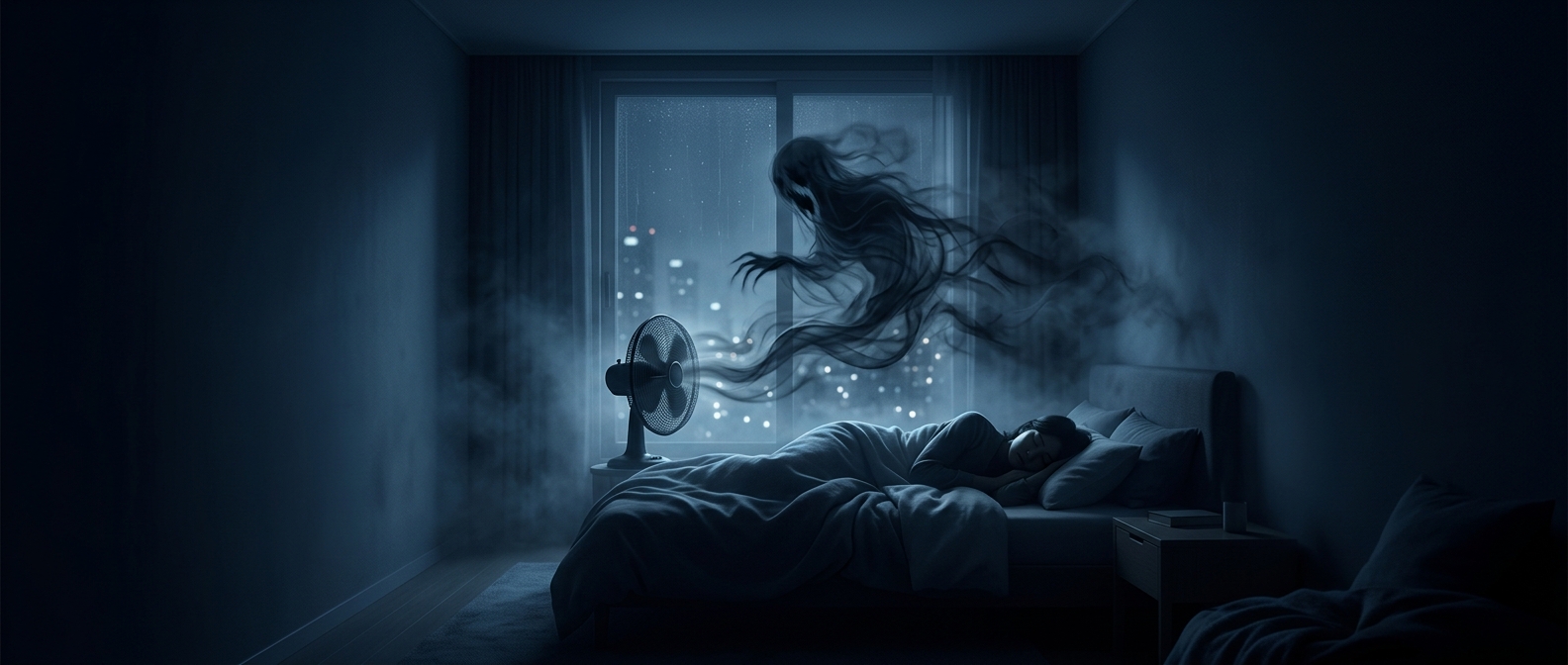
In South Korea, the fear known as “fan death” holds that running an electric fan in a closed room—especially overnight—can kill a sleeping person. The story has been repeated in news coverage and everyday warnings for decades, turning an ordinary appliance into something many people prefer not to leave on until morning.
The imagined danger is usually described in one of two ways: the fan supposedly uses up the room’s oxygen, or its moving air somehow makes a person’s body dangerously cold. Neither is how a household fan works. It moves existing air around; it does not remove oxygen from a room. And while airflow can make skin feel cooler, a fan does not chill a room the way an air conditioner does.
Why the timer feels reassuring
A timer gives people a simple way to stop the fan after they fall asleep. That feature fits the fear particularly well: the concern is not just about the fan, but about leaving it running unattended for hours. A shutoff control turns an uneasy choice into a routine—set the timer, then go to bed.
Timers also have ordinary uses, such as limiting energy consumption and preventing an appliance from running longer than needed. Their presence on Korean fans therefore reflects a practical feature as well as a familiar cultural concern; it should not, by itself, be read as evidence that a fan running overnight is lethal.
A belief built into bedtime habits
Once a warning becomes part of household advice, small design choices can help keep it visible. A timer on the control panel offers reassurance without requiring anyone to settle the question each night. The striking consequence is that a mundane switch can carry two meanings at once: a way to manage an appliance, and a reminder of a fear passed from one generation to the next.