Why a Deliberate Look Can Seem Less Mysterious
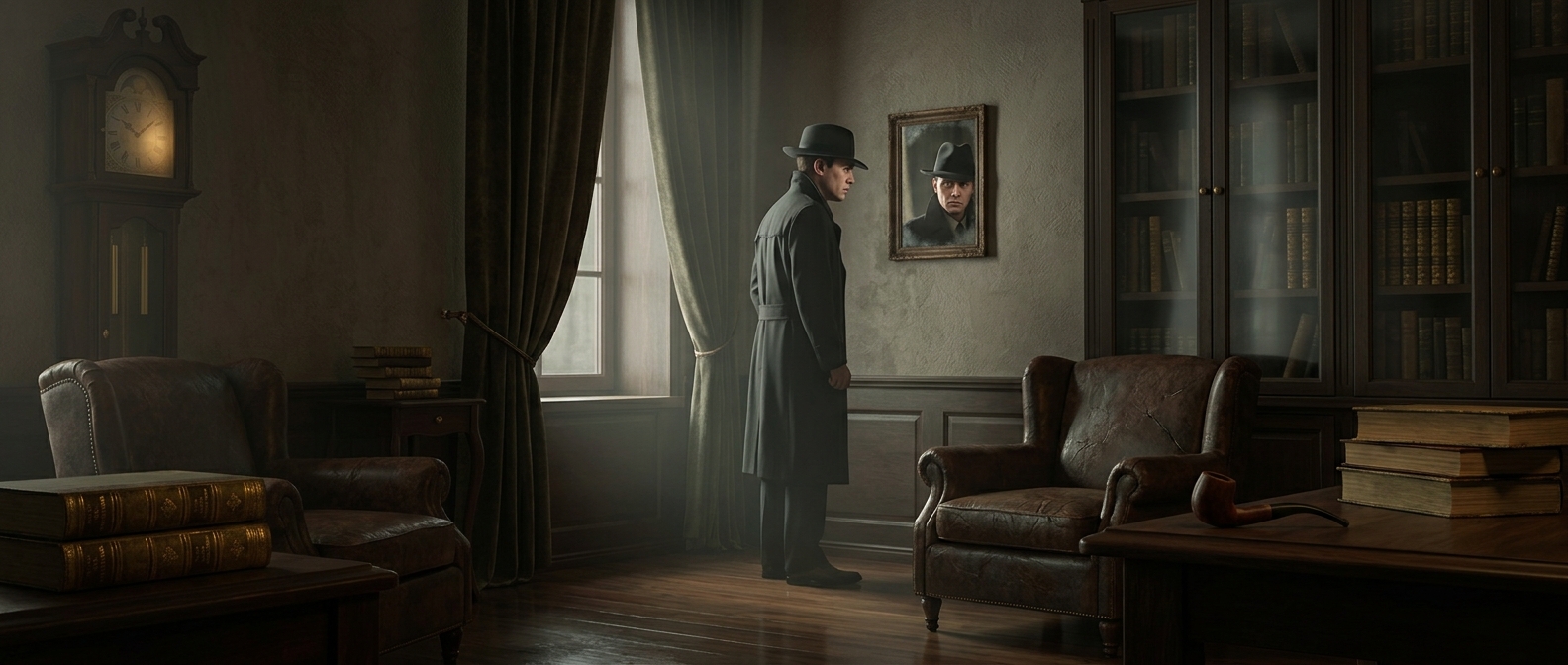
People do not read an accessory in isolation. They combine it with the setting, the wearer’s posture, and what the wearer seems to be trying to communicate. A fedora in a room where nobody else is wearing one is therefore not just a hat; it is a noticeable choice—and noticeable choices invite interpretation.
That creates a small problem for anyone aiming to seem enigmatic. Mystery suggests that there is more to a person than can be readily read. But when an outfit strongly announces “I am being mysterious,” it gives observers an easy explanation: the wearer is performing a role. The effort meant to create ambiguity can make the intention unusually clear.
The Audience Reads the Effort, Too
In social psychology, impression management means the ways people try to shape how others see them. It is ordinary: someone may dress formally for an interview or choose a costume for a party. But observers also notice the attempt itself. If a signal feels out of step with the setting, they may focus less on the intended image and more on why the person is working so hard to project it.
The result depends on context. A fedora may look natural at a themed event, theatrical in a casual office, or simply like someone’s usual style when worn without conspicuous behavior to reinforce it. The same object can carry different meanings because people judge the whole scene, not a fixed dictionary of symbols.
That is why trying to look mysterious can become self-defeating: the more insistently the look asks to be decoded, the easier it may be to decode the performance. The hat can start a story, but the room decides what kind.