Why a Feather Could Signal Status
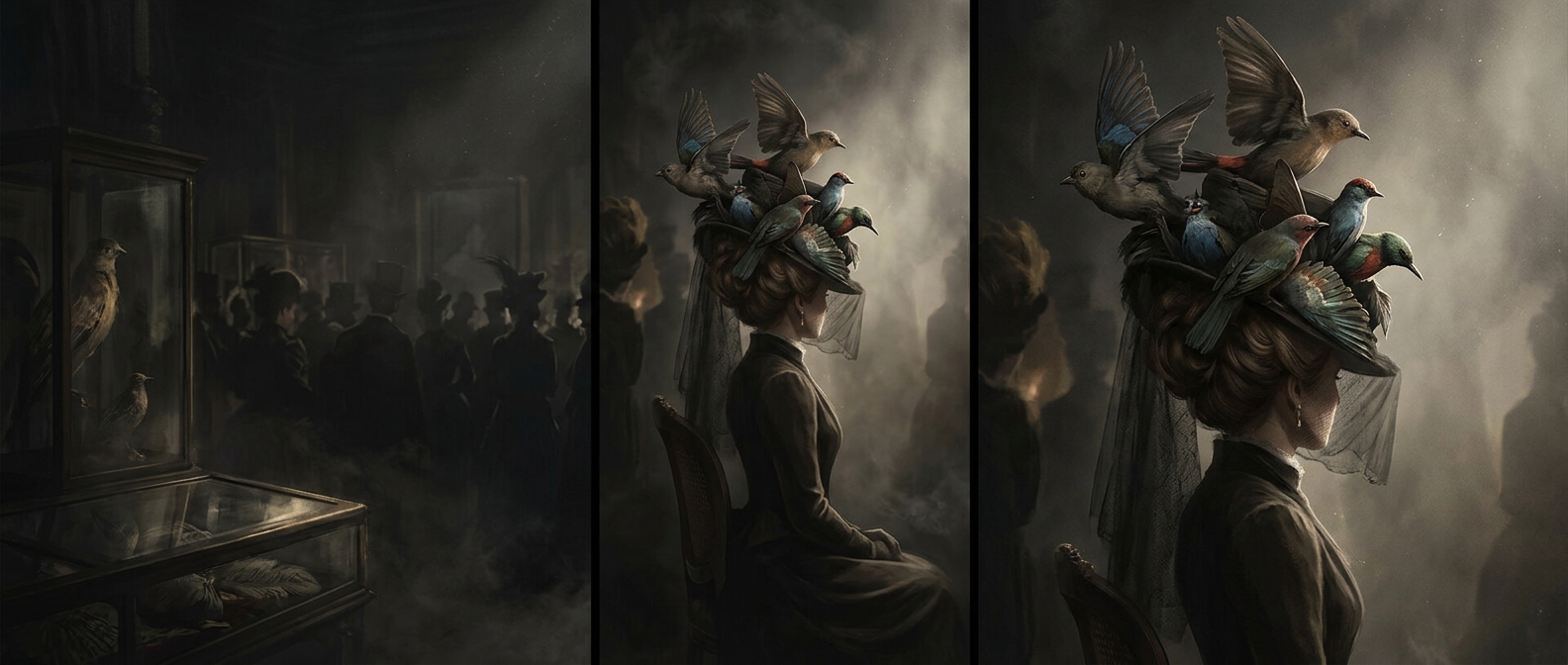
In the late 19th and early 20th centuries, elaborate hats often featured feathers—or even whole stuffed birds. The ornament worked as a visible signal: it suggested access to money, fashionable goods, and the leisure to keep up with changing styles. A bird perched on a brim made that signal especially striking because it turned a natural creature into a conspicuous accessory.
The Distance Between Display and Cost
A shopper saw the finished hat, not the chain of events that put its trim there. Birds were hunted, their plumage prepared, and the feathers incorporated into fashion far from the wearer’s view. That separation mattered psychologically: the benefit was immediate and public, while the harm was distant and easy to overlook.
The same gap can make a costly trend feel harmless. Each purchase may seem like a small personal choice, but fashion demand is repeated across many buyers. When a look becomes desirable, that collective demand can make more killing commercially worthwhile—even if no individual wearer sees the birds or feels responsible for their fate.
Making the Hidden Consequence Visible
Opposition to feathered hats helped bring the issue into public view. Bird-protection advocates used displays and campaigns to show what the fashionable trim represented, shifting attention from the elegance of the finished object to the animals behind it. The point was not simply that a hat contained feathers; it was that status could be displayed while the cost remained out of sight.
That is why the image of a dead bird on a hat still resonates: it collapses the distance between an attractive trend and the harm that supplied it.