Why a Frog Could Read Like a Person
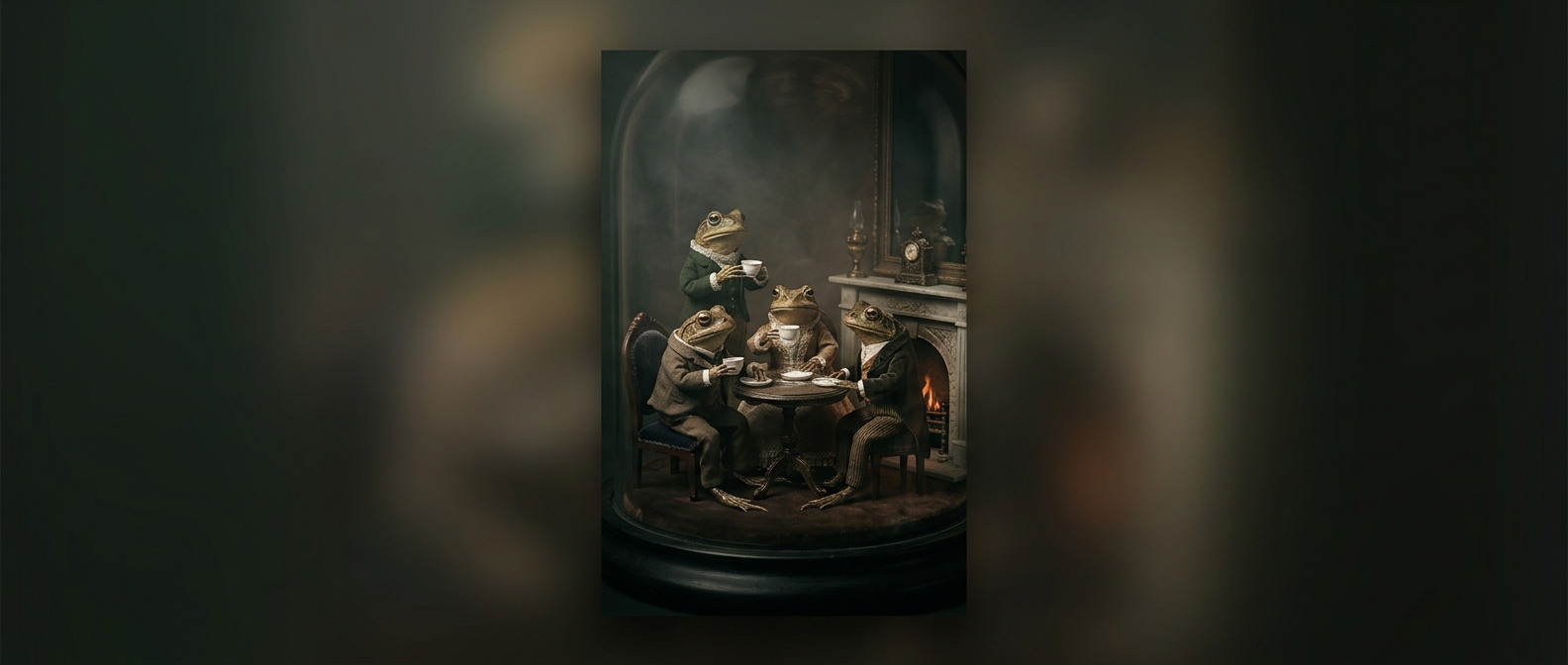
A tiny figure leaning, carrying, or facing another frog gives the eye clues it normally uses to interpret people. We infer intention from posture and relationship before we know much else. In a taxidermy scene, familiar arrangements—companions gathered together, workers at a task, figures placed in a domestic setting—invite the viewer to supply a plot. The animals do not need human expressions; the staging does much of the work.
That quick act of interpretation is a form of anthropomorphism: treating a nonhuman creature as if it had human feelings or intentions. It makes an unfamiliar subject easy to read. A frog becomes not just a preserved body but a character with a social place.
The Appeal—and the Unease
The scene works because recognition and difference arrive together. The gestures and roles feel familiar, but the figures are unmistakably frogs—and they are dead animals arranged by human hands. That gap can make the display funny, charming, or unsettling. The viewer is drawn into imagining a little society, then reminded that the apparent activity is frozen and constructed.
Scale sharpens the effect. A miniature scene encourages close looking: the viewer bends toward it and searches for details, much as one might inspect a toy setting. But the lifelike bodies resist being treated as mere toys. The story feels alive even though every action has been fixed in place.
A Story Built for the Viewer
These displays offered a compact kind of visual storytelling. Rather than explain a scene in words, they used pose, grouping, and recognizable human roles to prompt viewers to complete it mentally. The result depended on the audience bringing its own ideas about work, home, and social behavior to the case. That is why the oddness is not incidental: the tension between human-like narrative and nonhuman bodies is what makes the miniature scene memorable.