The Roast Was Only Half the Effect
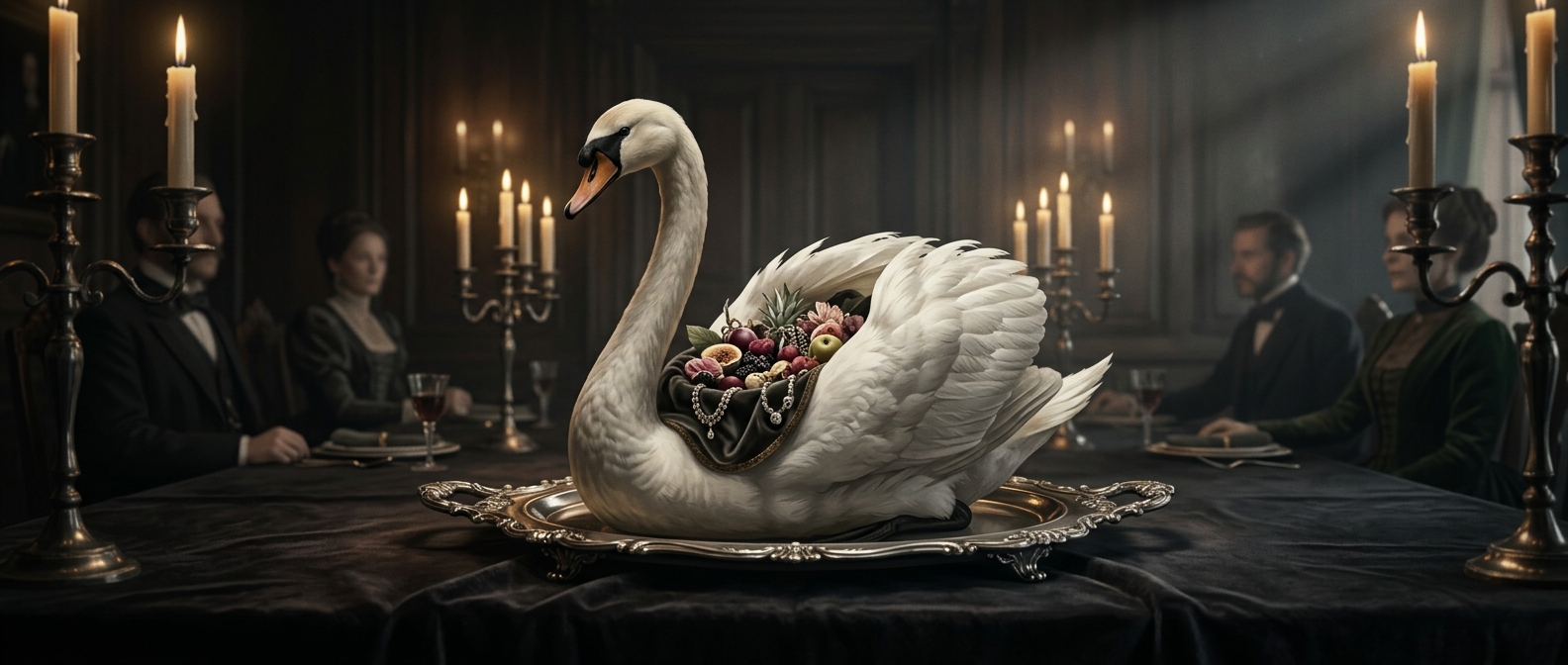
A hollowed swan skin turned a cooked bird into a visual reconstruction: the meal appeared to return to the shape of the living animal. The contrast mattered. A roast on a platter announced food; a swan-shaped centerpiece made guests pause and look before serving began.
That pause was part of the performance. The host was showing not just what would be eaten, but that the household could afford the ingredients, skilled preparation, and time needed to stage the dish. In a dining room where guests watched one another as well as the food, visible effort could carry social meaning.
Why the Illusion Worked
People make quick judgments from what they can see. A recognizable animal shape gives a dish a story before anyone tastes it, while the hidden roast creates a small surprise: the elegant exterior conceals an ordinary practical purpose. The presentation joined spectacle to hospitality, making the meal feel like an event rather than simply a course.
The skin also connected the centerpiece to the animal being served, instead of letting carving erase that connection. That could make the dish striking—and potentially unsettling—as well as impressive. Its impact depended on the same visual recognition that made the display legible.
Status, Made Visible
Such a centerpiece worked because it was public. Guests could see the result, even if they did not know exactly how it had been prepared. The display therefore converted behind-the-scenes labor into a signal at the table: someone had arranged for dinner to be remembered. In this case, the swan was not merely served; it was presented as an image of itself.