Why tomorrow’s energy feels so dependable
When a task is far off, your mind often represents it as a clean intention: I’ll tidy up. The details that make cleaning tiring—finding a place for things, deciding what to keep, getting interrupted—are easy to leave out. Psychologists call one related habit the planning fallacy: people tend to underestimate how long tasks will take, even when they have experience with similar delays.
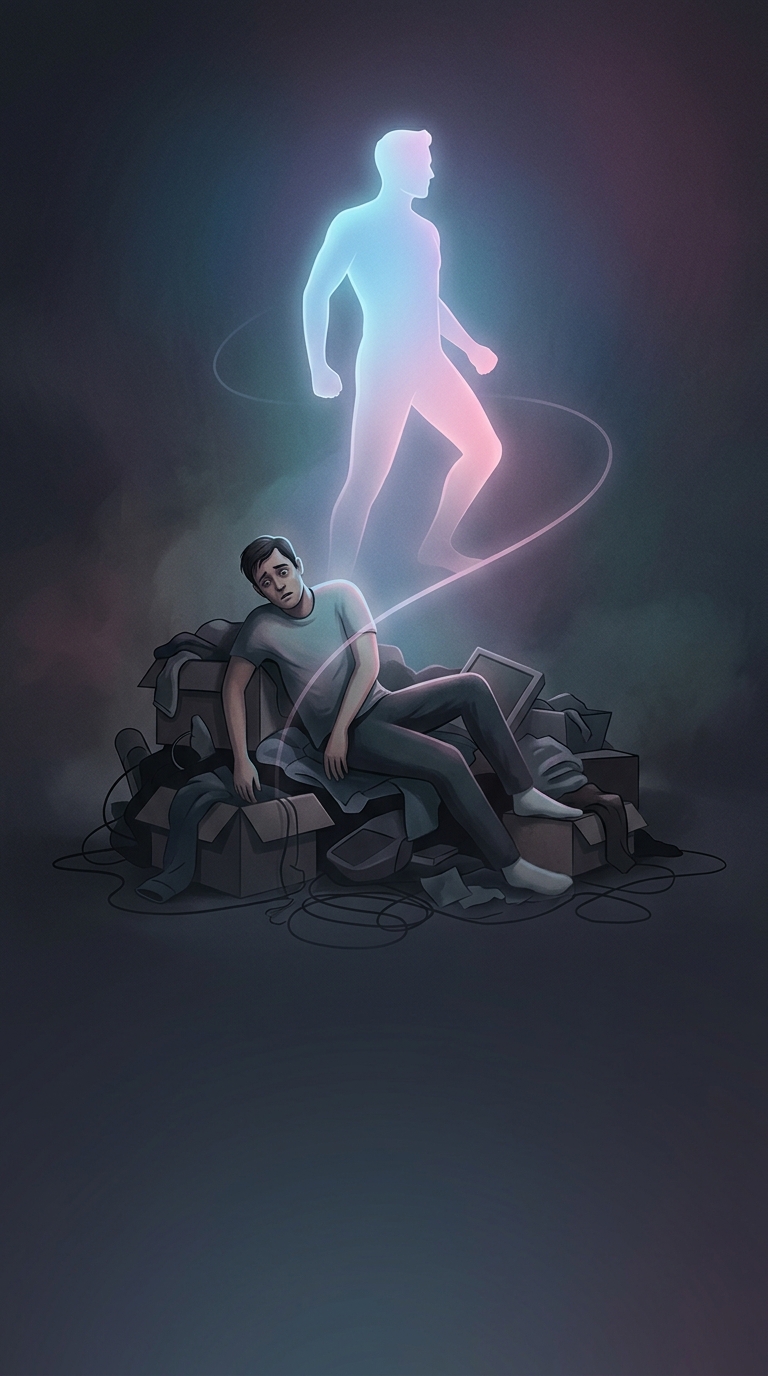
The future also feels less constrained than the present. Right now, you may be tired or distracted; tomorrow’s version of you is imagined without those immediate limits. That gap can make a plan seem realistic even when it depends on having more time and energy than you usually do.
A plan can feel good before it is done
Imagining a freshly cleaned room offers the satisfying result without requiring the effort yet. Making the intention can therefore feel like progress, while the actual work—with its small, unglamorous steps—remains abstract. As tomorrow becomes today, those steps become concrete, and the plan has to compete with whatever else is happening.
This is not simply a failure of willpower. People are often better at picturing a desired outcome than at forecasting the conditions under which they will act. A useful adjustment is to plan for the task as it usually unfolds: choose a specific starting point, such as clearing the desk, and allow time for interruptions or decisions. A smaller plan built around real constraints is more dependable than a perfect plan that assumes a different, endlessly energetic future self.