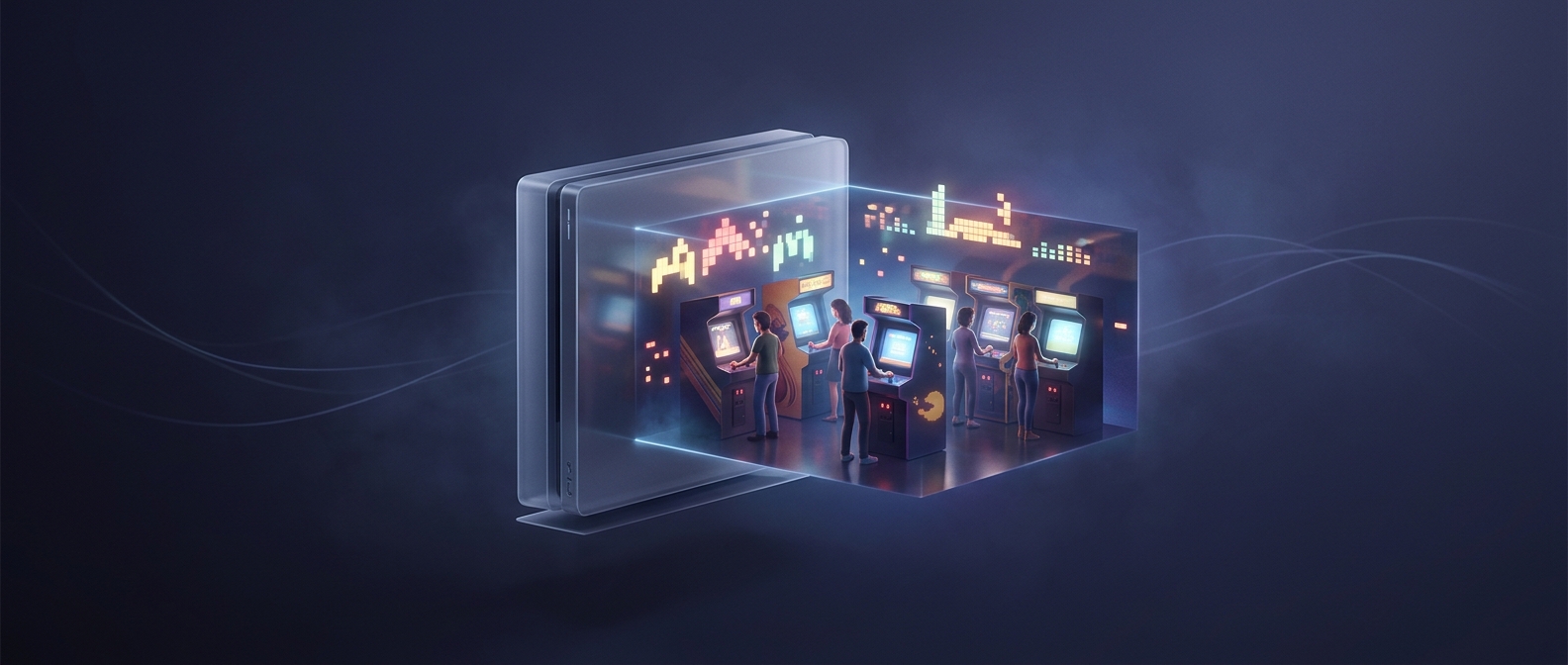
Rebuilding a machine’s behavior in software
A program written for one device expects a particular set of parts: a processor with certain operations, memory arranged in a certain way, and devices that respond when the program reads or writes specific values. An emulator recreates those expectations on a different computer. The original program can then run without being rewritten because it encounters the behavior it was built for, even though the underlying hardware is absent.
The emulator keeps track of the simulated machine’s state—such as processor registers, memory, and the position of a running program. When that program performs an operation, the emulator works out what the original processor would have done and updates the simulated state accordingly. It must also model other hardware the software can observe, such as a display, sound chip, or input device. If one of those pieces behaves differently, a game or application may run incorrectly even when its basic instructions are understood.
Why imitation can be computationally expensive
A host computer does not necessarily have a direct equivalent for the original machine’s operations. It may need to perform several of its own operations to reproduce one step of the simulated processor, while also keeping the simulated devices in sync. Timing matters: a program can rely on events happening in a particular order or at a particular pace, not just on the final result.
Some emulators interpret instructions one at a time; others translate groups of instructions into code the host processor can run more directly. That translation can reduce the repeated work, but the emulator still has to preserve the original machine’s observable behavior. The more precisely it models timing and unusual hardware quirks, the more detail it must manage.
This is why the age of the original device does not determine how easy it is to emulate. A modest machine can be demanding to reproduce faithfully, while a less exact imitation may run faster but produce glitches or incorrect behavior. The emulator’s real task is not to copy the old machine’s parts, but to make software experience their consequences.