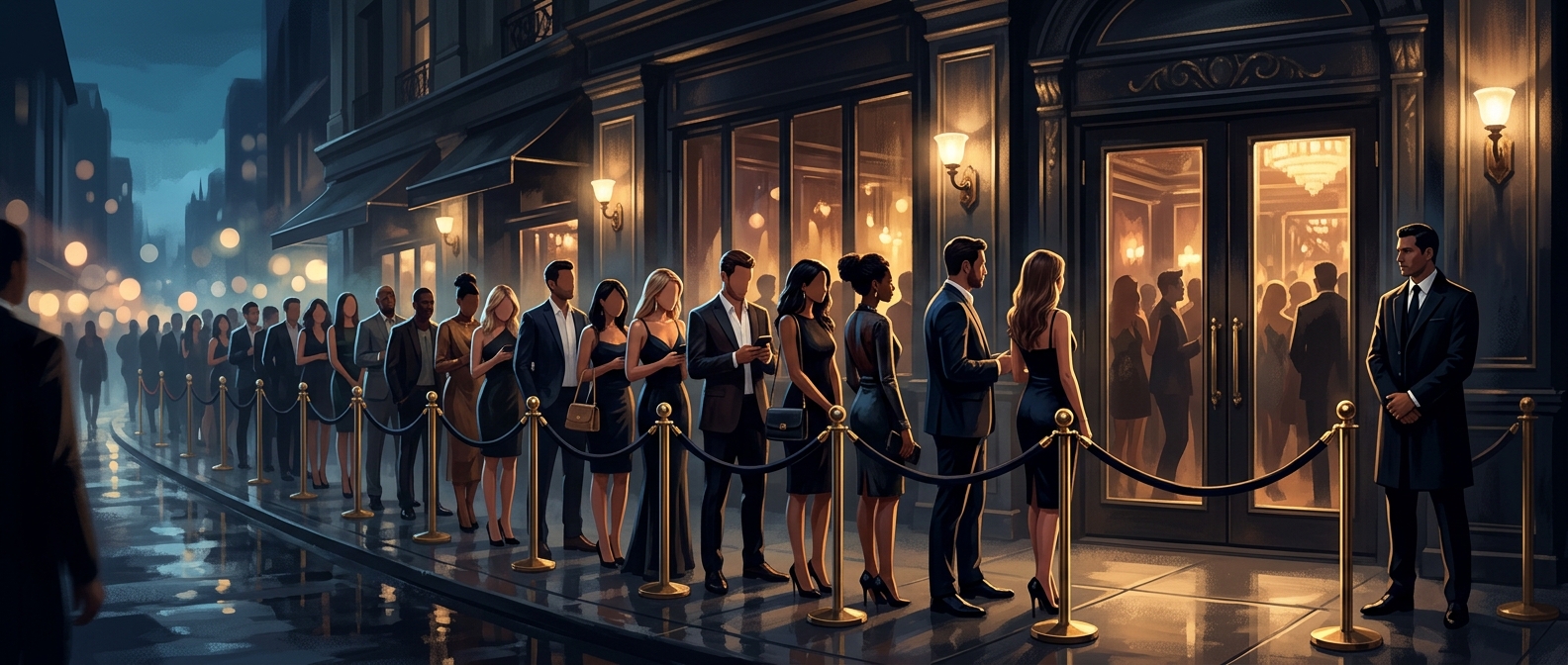
The queue sells a feeling before the club sells a drink
A line outside is visible proof of demand. Passersby cannot see how busy the dance floor is, but they can see people waiting to get in. That gap lets a venue project popularity even when the room itself looks quiet: the queue becomes a public signal that entry is limited and the place may be worth choosing.
Why waiting can raise the value of entry
Scarcity changes how people judge an option. If access seems easy, a club may feel interchangeable with nearby venues. If people appear to be waiting for a chance to get inside, the same club can seem more desirable. The wait also creates social proof—the impression that other people’s choices are evidence of quality, even when a passerby has no way to assess the night firsthand.
Once guests are inside, that impression can shape spending. Someone who believes they have gained access to a sought-after place may be more inclined to settle in, buy drinks, and treat the evening as an occasion. The queue does not guarantee those purchases, but it can help establish the mood and expectations that make them more likely.
The tradeoff behind the appearance
A line can also be practical. Clubs manage entry to keep arrivals orderly and control how quickly people enter. But making a queue look active when the room has spare space turns that operational tool into a marketing signal. The risk is that guests who feel deliberately stalled may leave or resent the experience. The strategy works best when the wait suggests demand without making entry feel like a waste of time.