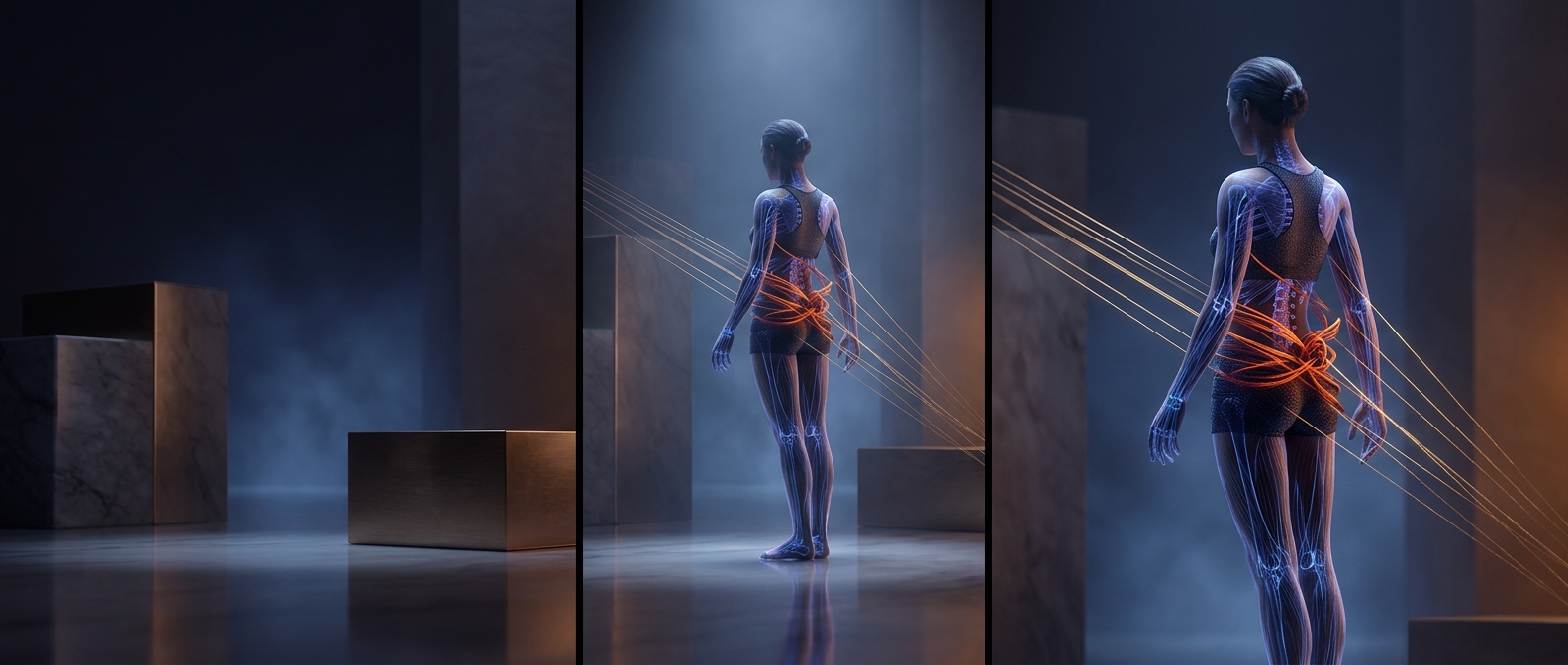
The energy hidden in ordinary movement
The calories used to stand, shift posture, carry groceries, or take the stairs are often grouped under non-exercise activity thermogenesis, or NEAT. “Thermogenesis” means heat production, but the useful idea is broader: these everyday movements require muscles to use energy even when they are not part of a planned workout.
Each muscle contraction spends chemical energy to move the body and maintain posture. One small movement costs little; repeated across hours, the costs add up. The total varies widely with a person’s job, routines, mobility, and how much time they spend sitting—not just with how often they visit a gym.
Why the pattern matters beyond calories
A workout is a distinct burst of activity. NEAT is woven through the rest of the day, so it can change how long the body remains still. Brief walks or standing breaks make muscles contract and use fuel at moments when prolonged sitting otherwise asks very little of them. These movements are not a substitute for exercise, but they add activity that a workout alone may not provide.
The energy accounting is not perfectly predictable. People may unconsciously move more or less after a workout, and the body can adjust appetite or activity in response to changes in energy use. So an extra walk does not translate into a fixed number of calories burned or guarantee a particular weight or health outcome.
Make movement part of the day
The practical consequence is that activity need not come only in a scheduled block. Taking stairs, walking to a nearby errand, or standing to do a task can turn otherwise sedentary stretches into small bouts of muscle work. The lasting difference is often the rhythm of the whole day, not a single dramatic effort.