Why Glastonbury Needs a Fence on the Scale of a Small Town
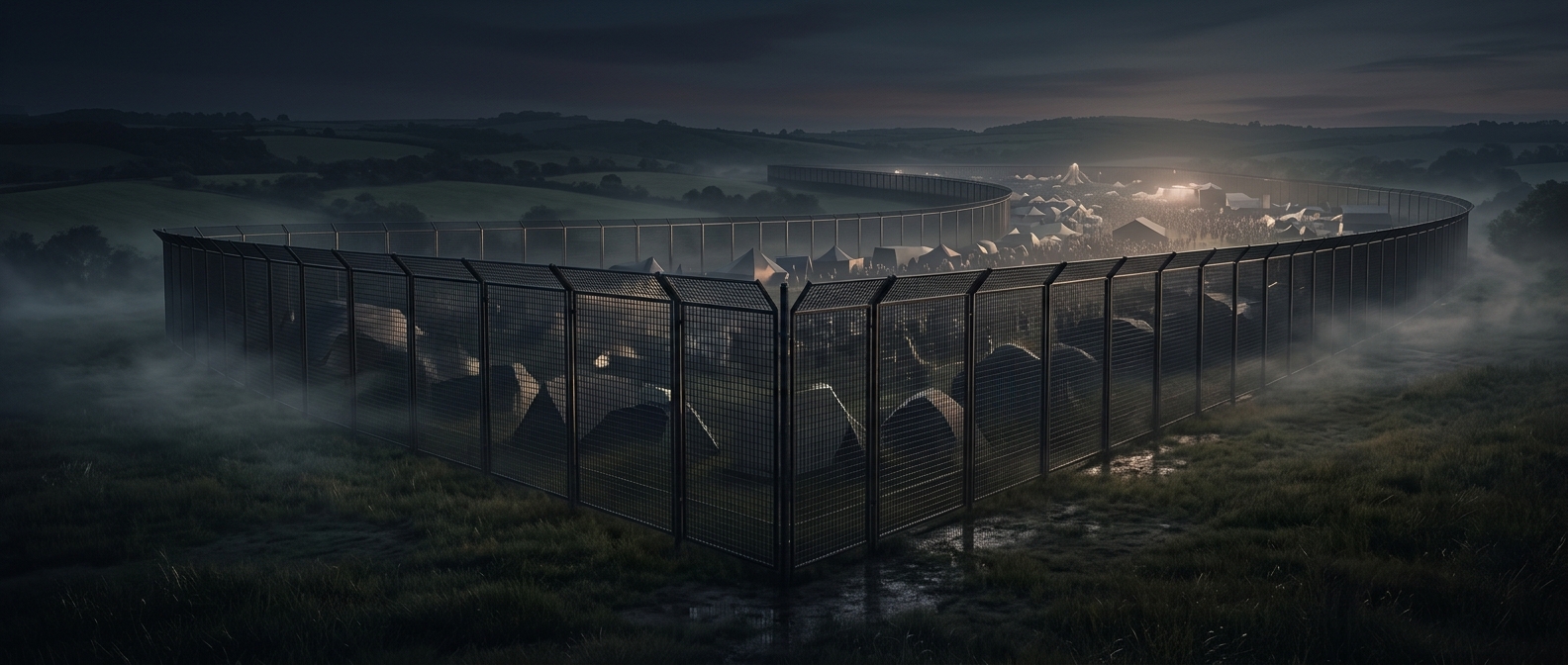
A festival spread across open countryside cannot rely on the entrance arrangements of a conventional venue. Fields have broad edges and many possible approaches, so organizers need to mark a clear boundary around the temporary event site—not just put barriers beside a few gates. The result is a long perimeter fence assembled for the festival and removed afterward.
That boundary makes ticket checks workable. If people can enter through gaps elsewhere, entrance gates no longer control who comes in, and the crowd can grow beyond the number the event is set up to accommodate. A fence is therefore part of managing the site, not simply a way to protect ticket revenue.
A Temporary Boundary for a Temporary City
Inside, the festival has to function as a concentrated settlement, with routes and facilities serving large numbers of people. Mud makes the distinction between a path, a field, and a potential way in less dependable: wet ground can turn open approaches into churned, difficult terrain. The fence gives organizers a more definite edge to manage, even when conditions underfoot change.
It also shapes the experience of arriving. Visitors are directed toward controlled entrances rather than treating the surrounding fields as extra access points. The miles of barriers are the hidden outline of the festival itself: a temporary line that helps turn open farmland into an event with a manageable boundary.