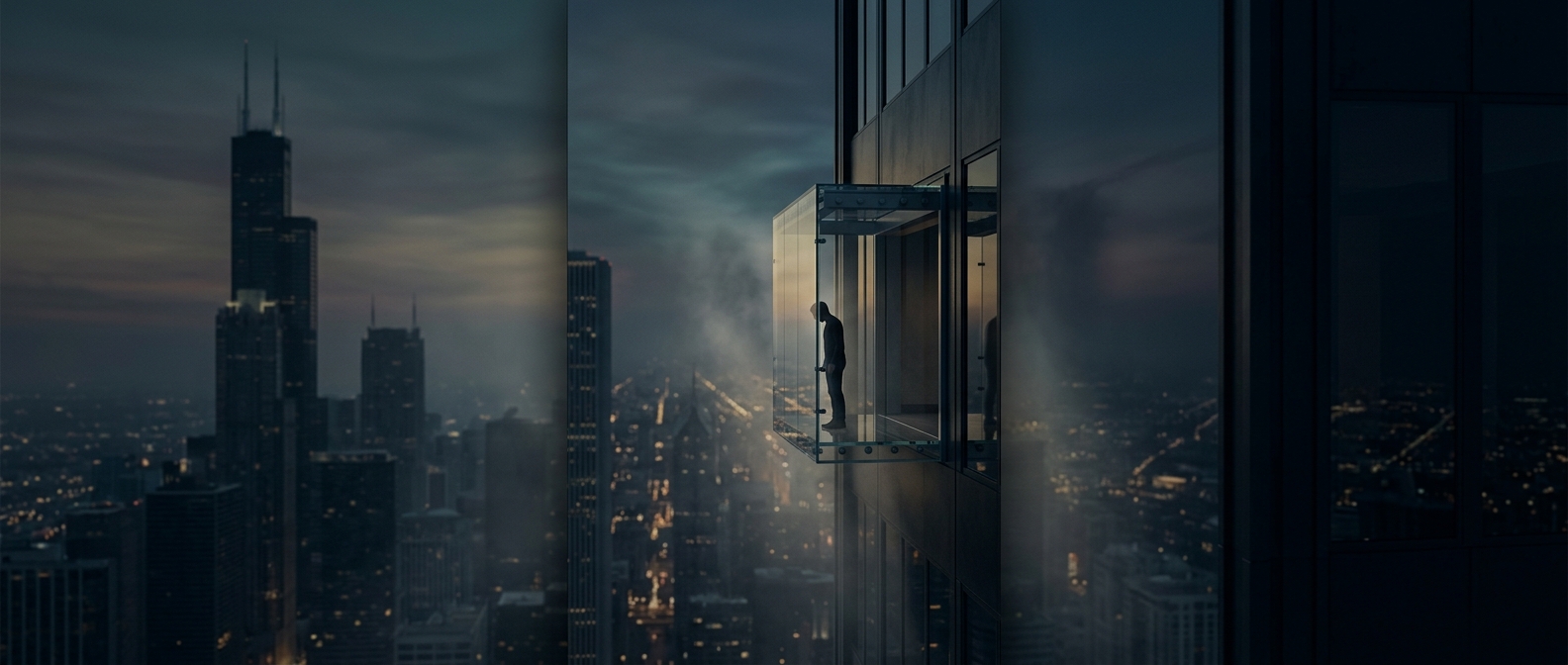
How the Skydeck’s glass boxes work
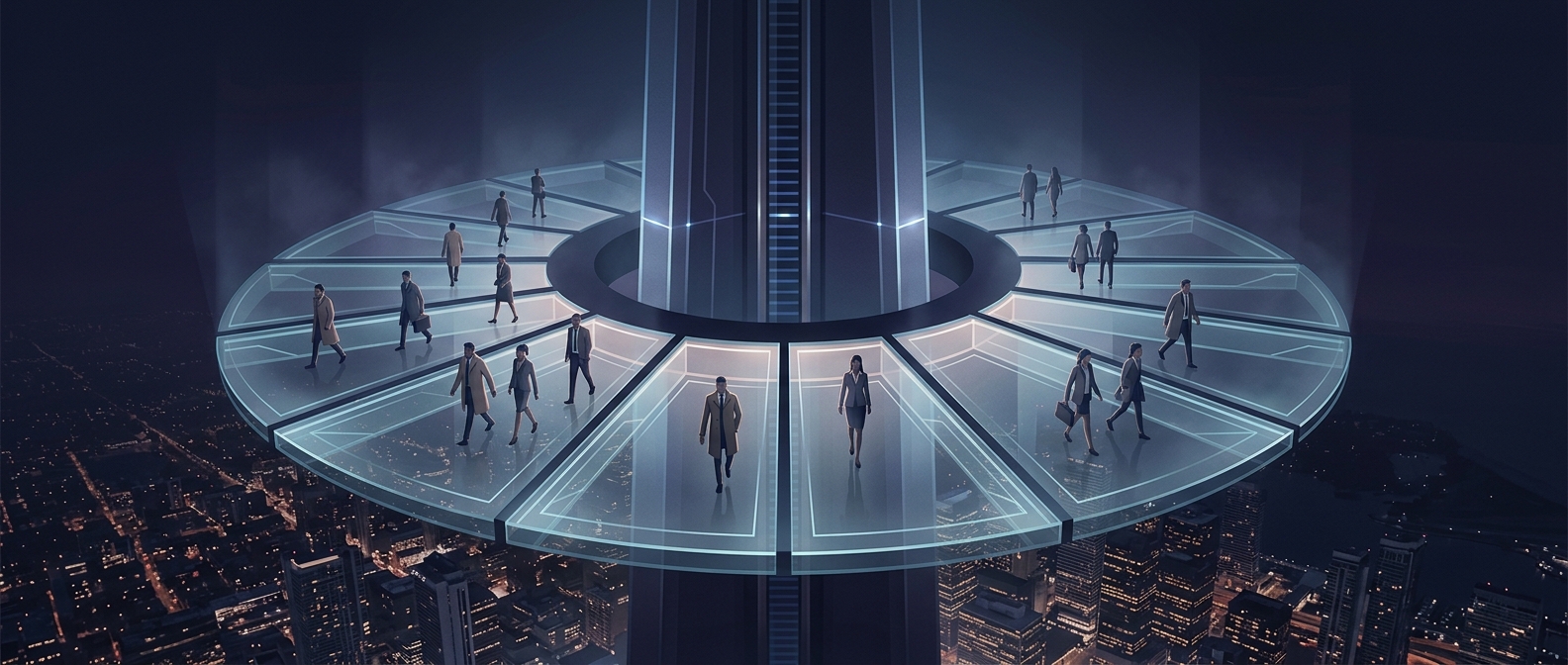
The clear balconies at Chicago’s Willis Tower are called The Ledge, part of the observation experience on the tower’s 103rd floor. Each is a glass enclosure that projects from the building’s west side, so visitors stand beyond the exterior wall rather than behind a conventional window. That small shift changes the view: the street and pavement appear directly beneath visitors’ feet, with no visible floor edge to soften the drop.
Glass carries the load
The Ledge is built from thick, laminated glass—layers bonded together so the panel can remain intact even if one layer is damaged. The floor and walls form a rigid enclosure attached to the tower’s structure. The transparent material lets visitors see downward while carrying the forces created by people standing inside and by wind on the exposed projection.
Because the boxes extend outside the building, they can also be moved back into the tower for cleaning and maintenance. Their mechanism makes the experience possible without leaving the observation deck permanently exposed to the elements.
A view engineered for vertigo
From inside the tower, a window frames the city; on The Ledge, the building seems to disappear beneath you. The design turns the height of the Willis Tower into something visitors can feel rather than merely measure. Looking down, the pavement is visible through the floor, while the tower’s own façade remains beside and behind the enclosure—a reminder that the apparent leap into open air is supported by a carefully engineered glass structure.