A ride becomes part of the building
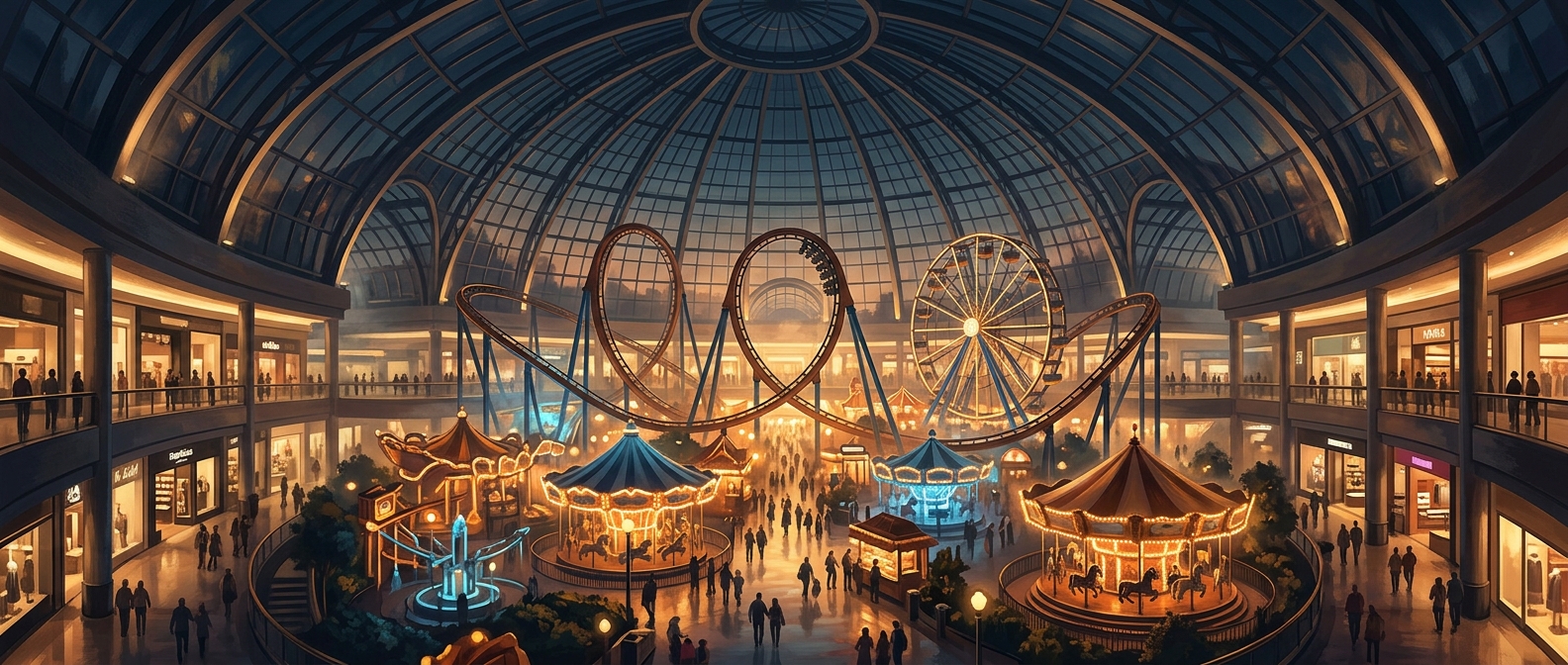
An indoor roller coaster is more than an outdoor ride placed under a roof. Its track and supports must fit around the mall’s structure, leaving room for shops, walkways, utilities and the ride’s moving trains. Engineers have to account for the forces a coaster sends into its supports as cars climb, turn and brake, while coordinating those supports with the building’s own columns and floors.
The enclosure changes the visitor experience, too. Riders can visit regardless of rain, cold or heat, and the park can operate alongside the mall’s ordinary circulation of shoppers. The tradeoff is that sound, lighting and airflow all have to be managed indoors, where there is no open sky to disperse noise or heat.
Shopping trip, theme-park visit
Putting a coaster inside turns the mall into a destination in its own right: visitors can move from stores and food courts straight into a ride without stepping outside. That makes the unusual sight of a coaster winding through an enclosed space part of the attraction—and lets a rainy day become a ride day.